- All
- Product Name
- Product Keyword
- Product Model
- Product Summary
- Product Description
- Multi Field Search


Views: 147 Author: Site Editor Publish Time: 2025-12-01 Origin: Site


Have you ever wondered how metal can be joined with almost no heat marks? A laser welding machine makes this possible using a focused beam of light. In this article, we explain how it works, from the science behind the beam to the parts that control it. You’ll learn the full process step by step, in simple terms anyone can understand.
A laser welding machine works by turning concentrated light into heat strong enough to melt metal instantly. The process begins inside the laser source where energy builds, forms a narrow beam, then focuses onto a tiny point. That point receives extreme power density, which melts the material in milliseconds. As the heat moves or stops, the molten pool cools into a solid joint, and each step needs precise control of optics, energy, and shielding conditions.
A laser welding machine first needs a beam, and different sources create it in different ways. Fiber lasers push energy through doped optical fibers, producing strong and efficient beams suited for metal fabrication. YAG systems rely on crystal rods, which amplify light through repeated stimulation, then send it out in pulses or continuous waves. CO₂ lasers use gas to form infrared light, ideal for thicker materials. Each source begins by exciting particles inside the medium; they release photons, and the machine forces these photons into a single direction until the beam becomes strong enough for welding.
Laser beams work because they carry special properties. They are monochromatic, meaning they use a single wavelength, allowing precise control. They are coherent, which means all waves move in sync, creating a stable and powerful beam. They remain collimated as well, traveling in tight parallel lines. It allows the beam to move far without spreading or losing strength. These qualities help the machine place energy exactly where welding must happen, reducing heat loss and creating narrow, clean welds.
After generation, the laser beam travels through lenses or mirrors that squeeze it into a very tiny point, sometimes only a few micrometers wide. This tiny area contains the full power of the beam, creating extreme energy density. It reaches temperatures high enough to melt steel or titanium almost instantly. Fiber delivery systems make this easier because they guide the beam along flexible paths, helping handheld and robotic machines reach small or awkward spaces.
When the beam hits the surface, the power density rises to millions of watts per square centimeter. It blasts the metal surface, breaking molecular bonds and melting it in milliseconds. The molten pool forms and moves along the joint as the operator or robot guides the beam. Because the heat stays focused, the surrounding metal barely warms. This reduces warping, increases accuracy, and speeds up production. High-power systems weld thick plates, while micro units handle tiny components.
Mode Type | How It Works | Best For |
Conduction Mode | Heat stays on the surface; the metal melts but does not vaporize. | Thin sheets, cosmetic welds, smooth bead surfaces |
Keyhole Mode | The beam penetrates deeper, forming a vapor cavity that melts through the thickness. | Thick materials, deep weld penetration, structural joints |
In conduction mode, energy melts the surface and spreads through a shallow zone. The result is smooth and clean. In keyhole mode, vapor pressure forces metal aside, forming a deeper channel. It creates strong structural welds with narrow widths.
Shielding gas flows around the weld to block air and prevent oxidation. Oxygen can weaken the molten pool, so gases like argon, helium, or nitrogen push it away. They stabilize the pool, reduce sparks, and improve bead appearance. Some machines place nozzles directly on the welding head, while robotic systems bring gas from external units. Shielding gas also protects lenses from metal fumes, keeping the optics clean.
After melting, the pool cools and hardens into a solid joint. Rapid cooling helps the metal form tight grain structures that protect strength. As the laser continues moving, this cycle repeats, leaving a consistent weld line behind it. Cooling rates change based on power, beam speed, gas flow, and the material itself. Automated systems use sensors to watch temperatures and adjust parameters, keeping the weld uniform.
A laser welding machine relies on several core parts that work together to create, guide, and control the beam. Each component affects power, accuracy, and weld quality, so the system depends on stable optics, strong laser output, and intelligent control. These parts form a complete chain of energy creation and beam delivery, allowing the machine to melt metal quickly and precisely.
The laser source provides the main energy. Fiber lasers use long optical fibers packed with rare-earth elements. They offer strong efficiency and stable beams, so many industrial machines prefer them. YAG sources rely on crystal rods, which amplify light after repeated stimulation. They handle micro-welding well and work for mold repair tasks. CO₂ lasers push electrical energy into gas mixtures, forming infrared beams that handle thicker materials. Each source excites particles until photons move in one direction, letting the system build a powerful and focused beam.
Laser Type | Strengths | Common Uses |
Fiber Laser | High efficiency, stable beam quality | Metal fabrication, robotic welding |
YAG Laser | Good for fine details, long-distance delivery | Micro-welding, mold repair |
CO₂ Laser | Strong penetration for thick sections | Heavy plates, structural parts |
After generation, the beam travels through the delivery system. Some machines use mirrors to redirect the path, especially when the beam stays outside a fiber. Others push the beam through optical fibers, allowing flexible routing. It helps robotic arms reach tight or complex spaces. The delivery system protects the beam from loss or distortion, so it keeps strong power until it reaches the welding head. Designers build sealed optical paths to avoid dust, heat, or vibration.
The focusing system squeezes the beam into a tiny spot. It uses lenses, nozzles, and internal mechanics inside the welding head. The lens acts like a magnifying glass but in reverse, compressing the beam until it becomes extremely dense. The welding head also carries the shielding gas nozzle, sensors, and protective windows. It must stay clean because small bits of dust can ruin the beam. Some heads include air-cooled housings, while high-power units use water-cooled frames to stop overheating.
The control system manages power, motion, and timing. It adjusts the strength of the beam depending on material thickness. CNC tables or robotic arms move the workpiece or the welding head so the weld line stays accurate. Sensors inside the machine watch temperature and beam stability. If anything changes, the controller updates speed or power instantly. Automated systems can store welding programs, making it easy to repeat the same process again. It creates consistent welds even when the operator changes.
Control Function | Purpose |
Power Modulation | Adjusts laser strength for stable melting |
Motion Control | Moves beam or workpiece precisely |
CNC/Robot Link | Automates positioning and path |
Real-Time Sensors | Detects heat, alignment, and beam quality |
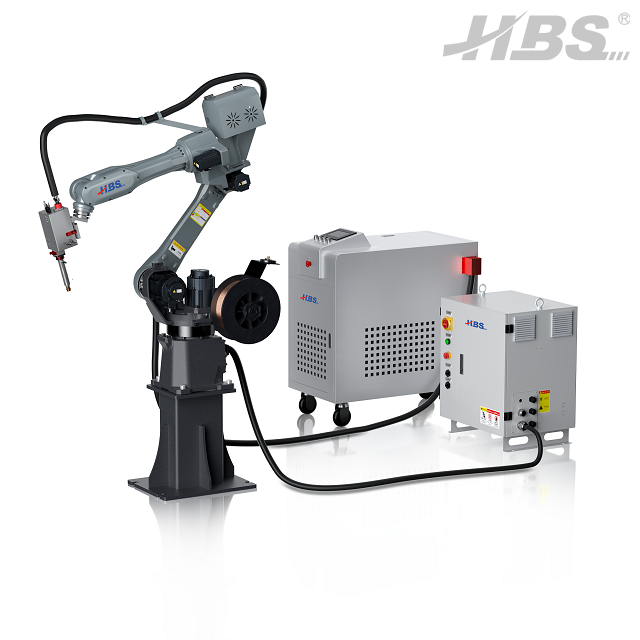
A laser welding machine follows a clear workflow that turns a focused beam into a strong welded joint. Each step shapes the final result, so the process combines material preparation, precise parameter tuning, controlled movement, and fast cooling. The machine relies on stable optics and accurate motion systems to keep the weld clean, narrow, and strong.
The workflow starts long before the laser fires. The surfaces must stay clean because dirt, oil, and rust can block energy. Operators wipe the metal, remove coatings, and check the edges. They align the joint tightly so the beam reaches both sides evenly. Clamps or fixtures hold everything in place, preventing movement. Good alignment helps the energy flow straight into the joint, reducing defects, porosity, or weak bonding.
After preparation, the operator or software sets key parameters. Power affects how deep the beam melts the metal. Speed controls how far the heat spreads, so fast travel reduces distortion. The spot size changes the beam density; a small spot increases penetration. Gas flow protects the molten pool. Each parameter interacts, so machines often include presets for different materials. High-power systems adjust settings automatically while sensors watch the workpiece and beam conditions.
Parameter | Role | Impact on Welding |
Power | Energy level sent to the joint | Depth, melt pool size |
Speed | Movement rate | Heat spread, distortion |
Spot Size | Beam diameter | Density, penetration |
Gas Flow | Shielding protection | Oxidation control |
When the machine activates the beam, energy hits the metal surface instantly. The spot reaches extremely high temperatures, melting the area in milliseconds. The molten pool forms a small circle that follows the beam. Gas surrounds the pool, blocking air and stabilizing the melt. The machine adjusts the beam if sensors detect small temperature shifts. Robots and handheld systems both rely on the same melting principle, but robots deliver more consistent activation.
Movement plays a major role because the laser must follow the joint accurately. In handheld systems, operators guide the welding gun. It allows flexible use, especially for large or curved parts. Robotic systems follow pre-programmed paths using CNC control. They move smoothly along edges, corners, and complex shapes. Fiber delivery makes both systems easier to handle since the beam travels through flexible cables. Motion affects bead shape, so machines monitor position constantly.
Once the beam passes, the molten pool cools quickly. The metal hardens into a narrow bead that matches the joint shape. Fast cooling forms a fine grain structure, improving strength. Shielding gas remains for a moment to protect the hot material from air. Automated systems control cooling through speed and power changes, keeping the weld smooth. The cycle repeats as the beam continues along the seam.
Laser welding machines come in several forms, and each type follows a slightly different workflow. The machine’s structure, power level, and motion system influence how it delivers the beam. These differences affect speed, precision, penetration, and the operator’s control. Understanding how each type works helps users choose the right system for specific tasks.
A handheld laser welding machine gives the operator direct control over the welding gun. It sends the beam through a fiber cable into a lightweight head. The operator aims the gun at the joint, moves it along the seam, and adjusts angle or speed while welding. This style suits large parts, curved surfaces, or field repairs. The machine provides stable power, while sensors inside the gun monitor beam status. It uses shielding gas from a small nozzle near the lens. Air-cooled handheld units stay portable, and operators guide motion by hand.
Robotic systems follow programmed paths using CNC or multi-axis robots. They receive the beam through fiber delivery. The robot moves the welding head along exact coordinates, creating a repeatable workflow. It reduces human error and increases production speed. The robot activates the beam when it reaches the start position. Sensors watch temperature, motion, and alignment. The system adjusts speed or power automatically when conditions shift. It works well for mass production or precise industrial assembly. Beam splitting options let multiple robots work at once.
Machine Type | Movement Style | Best Use Case |
Handheld | Manual movement | Large parts, flexible work |
Robotic | Automated path | High-volume production |
Micro laser welding systems work on extremely tiny components. They use YAG or specialized fiber lasers to create small spot sizes, sometimes only a few micrometers wide. These machines rely on high precision optics. It focuses the beam sharply to avoid overheating nearby material. Motion systems often include microscopes or micro-positioning tables. Operators watch the weld through a camera or magnifier. These systems handle electronics, jewelry, and medical parts. They provide low power but excellent detail and accuracy.
High-power machines use multi-kilowatt fiber or CO₂ lasers. They melt thick materials quickly. The beam penetrates deep, often forming narrow keyhole welds. The machine’s power source stays water-cooled, so it operates for long periods. Robotic systems or gantry tables move the welding head to maintain a stable weld path. These systems support heavy manufacturing, such as automotive frames or large metal plates. They rely on strong gas shielding to protect the deep melt pool. Beam stability matters because small changes affect penetration depth.
Tip: For best results, choose your laser welding machine based on material thickness, production volume, and precision needs.
A laser welding machine creates strong joints by generating focused energy, melting metal, and forming clean welds. Its precise control offers speed, accuracy, and low heat distortion. These advantages come from the machine’s advanced design and beam technology. Companies like HBS continue improving laser systems, delivering stable performance and greater value for modern manufacturing needs.
A: A laser welding machine generates a focused beam that melts metal and forms a narrow, strong joint.
A: A laser welding machine can weld steel, aluminum, titanium, and many thin or reflective metals.
A: It uses a tiny spot size and high energy density, allowing clean welds with minimal distortion.
A: Handheld units rely on manual control, while robotic systems use programmed motion for repeatable accuracy.


