- All
- Product Name
- Product Keyword
- Product Model
- Product Summary
- Product Description
- Multi Field Search


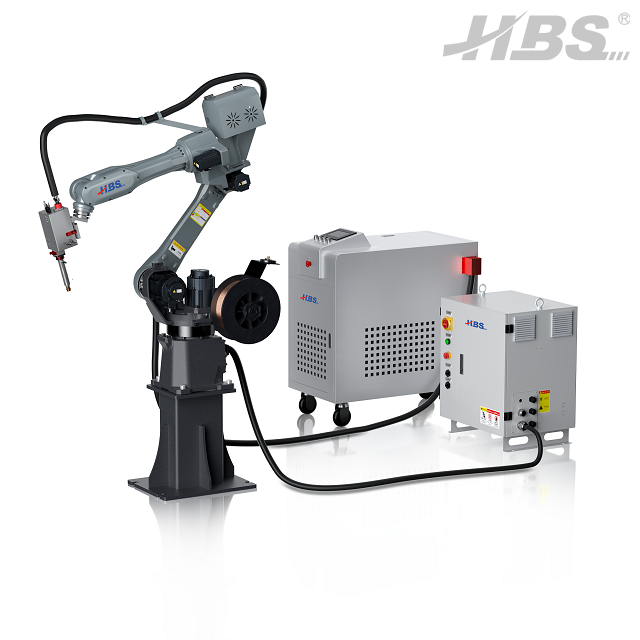
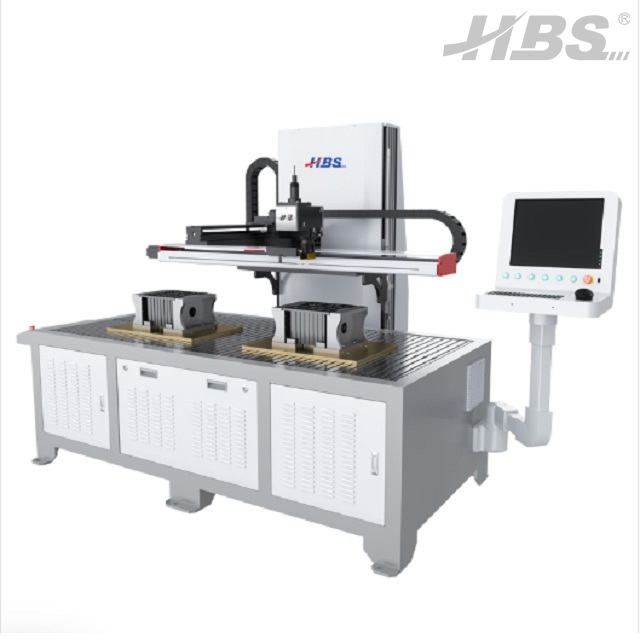
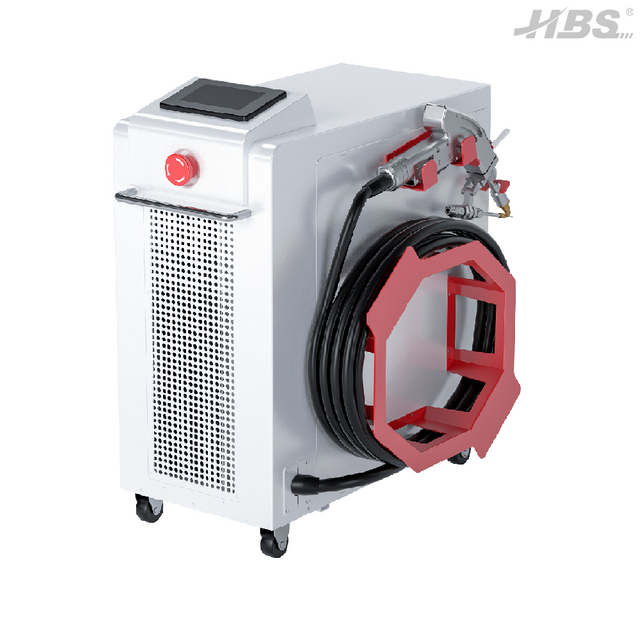
Our welding machines offer supreme welding solutions. From manual to automatic and robotic fiber laser welding machines, we deliver unparalleled performance for varied industrial needs.
Leveraging advanced laser technology, our welding systems provide deep penetration, minimal heat distortion, clean weld seams, and high automation compatibility, making them ideal for both heavy-duty fabrication and precision applications.
Compared with traditional welding methods such as TIG or MIG, laser welding offers faster processing speed, lower heat input, higher strength welds, and reduced post-processing requirements. HBS welding solutions are engineered for long-term industrial use, ensuring consistent performance and production stability.
1. High speed with significant depth and minimal deformation.
2. Welding can be performed at room temperature or under special conditions with simple equipment requirements. For example:
The laser beam remains stable even when passing through an electromagnetic field.
Lasers can weld in vacuum environments as well as in air or specific gases.
Welding through glass or transparent materials is possible.
3. Capable of welding refractory materials like titanium and quartz with excellent results on heterogeneous materials.
4. High power density after laser focusing allows aspect ratios up to 5:1 or even 10:1 for high-power device applications.
5. Suitable for micro-welding due to its ability to focus into a very small spot with precise positioning—ideal for assembling micro-sized components in large-scale automated production.
6. Enables non-contact long-distance welding for hard-to-reach areas offering great flexibility—recent advancements include fiber optic transmission technology enhancing YAG laser processing applications.
7. Facilitates time-division and spatial beam splitting enabling simultaneous multi-beam processing across multiple workstations ensuring more precise operations.
Q1: What materials can laser welding machines weld?
Laser welding machines can weld stainless steel, carbon steel, aluminum, galvanized steel, and various alloys.
Q2: What is the advantage of robotic laser welding?
Robotic systems improve welding consistency, reduce labor costs, and are ideal for high-volume automated production.
Q3: Is high-power laser welding suitable for thick plates?
Yes. High-power models (e.g., 12000W) are specifically designed for deep penetration welding of thick metal materials.
Q4: Can laser welding replace traditional TIG/MIG welding?
In many industrial applications, laser welding offers higher efficiency and better seam quality, making it a strong alternative.
Q5: Does laser welding require filler material?
Depending on the application and joint design, it can be used with or without filler wire.