


UV laser marking has become an important technology for manufacturers that need extremely fine, permanent marks on plastics, glass, electronic components, medical-related products, packaging, and other heat-sensitive materials.
Operating at a wavelength of approximately 355 nm, UV lasers interact differently with materials than conventional 1064 nm fiber lasers or 10.6 μm CO2 lasers. Their shorter wavelength provides high photon energy, strong absorption on many materials, and a small focused spot, allowing manufacturers to create fine marks while reducing the heat-affected zone.
These characteristics make UV technology particularly valuable when conventional laser marking creates excessive melting, burning, deformation, discoloration, or damage around the marking area.
However, UV is not automatically the best laser for every application. Understanding both its advantages and limitations is essential when choosing a laser marking machine.
What Is UV Laser Marking?
UV laser marking uses ultraviolet laser light, typically around 355 nm, to create permanent text, serial numbers, QR codes, barcodes, logos, graphics, and traceability information on a material surface.
Compared with infrared laser technologies, the shorter UV wavelength is absorbed efficiently by many polymers, glass products, ceramics, coatings, and sensitive materials.
This often enables a photochemical or photolytic processing effect commonly described as cold marking.
Cold marking does not mean that absolutely no heat is produced. Instead, compared with many conventional thermal laser processes, UV marking can significantly reduce heat transfer and minimize the surrounding heat-affected zone.
For a more detailed explanation of the technology itself, see HBS's guide to what a UV laser marking machine is.
1. High Precision and Fine Marking
One of the most important advantages of UV laser marking is its ability to produce very fine details.
Because the 355 nm wavelength is much shorter than the wavelength of a typical fiber laser, UV systems can achieve a small focused spot. This is particularly useful when the marking area is limited or when very small characters and codes must remain readable.
Typical precision-marking applications include micro text, small QR codes, Data Matrix codes, serial numbers, electronic component identification, fine logos, product traceability information, and high-density graphics.
This level of detail makes UV laser marking particularly attractive in electronics, medical-related manufacturing, precision instruments, packaging, and other industries where the marking itself may be only a few millimeters in size.
HBS's cold-processing UV laser marking machine for glass and delicate materials is designed specifically for applications requiring fine marking and reduced thermal impact.

2. Reduced Heat-Affected Zone
Another major benefit of UV lasers is their ability to process many materials with less thermal influence than conventional infrared laser systems.
Many plastics, thin films, glass products, coatings, and electronic components are sensitive to heat.
Excessive thermal input can cause problems such as melting, warping, cracking, edge burning, discoloration, bubbling, or deformation.
UV laser energy can interact strongly with the material at the surface, reducing the amount of heat that must spread through the surrounding area.
This is why UV marking is commonly referred to as a cold-marking process.
However, manufacturers should avoid interpreting “cold marking” as “zero heat.”
The actual thermal effect depends on laser power, pulse characteristics, marking speed, frequency, focal position, material composition, and the number of passes.
Proper parameter testing remains essential.
3. Excellent Performance on Heat-Sensitive Plastics
Plastic marking is one of the strongest application areas for UV laser technology.
Different polymers respond very differently to laser wavelengths. Some plastics melt, burn, foam excessively, or produce poor contrast when marked with a conventional fiber or CO2 laser.
UV lasers can provide better control on many sensitive plastics because of the strong absorption and reduced heat input associated with the shorter wavelength.
Depending on the polymer formulation, UV laser marking can create high-contrast identification while reducing surface deformation.
Typical applications include electronic housings, medical consumables, cables and connectors, plastic packaging, switches, buttons, automotive plastic components, consumer electronics, cosmetic packaging, and product identification parts.
It is important to note that “plastic” is not a single material.
ABS, PC, PA, PE, PP, PVC, POM, PET and other polymers contain different pigments, fillers and additives. Two plastics with the same generic material name may respond differently to the same UV parameters.
For this reason, actual material sample testing should be performed before final machine selection.
4. High-Quality Marking on Glass and Brittle Materials
Glass is another important application for UV lasers.
Traditional thermal processing can create localized stress in glass, increasing the risk of cracking, chipping or unwanted thermal effects.
UV laser marking can provide finer processing with a smaller heat-affected zone, making it suitable for many glass products where precision and surface quality are important.
Potential applications include photovoltaic glass, pharmaceutical packaging, cosmetic containers, laboratory glassware, optical-related products, electronic glass, consumer products and traceability marking.
For production environments centered on fragile materials, HBS offers a dedicated UV laser marking machine for glass and precision workpieces that supports both precision marking and production-line applications.
Results still depend on glass composition, thickness, surface treatment and required marking effect, so testing the actual production material is strongly recommended.
5. Broad Material Compatibility
One reason UV laser systems are attractive to manufacturers is their ability to process many different material categories.
They are commonly evaluated for plastics, glass, ceramics, selected metals, coated materials, semiconductor-related materials, electronic components, thin films, packaging substrates and composite products.
However, broad compatibility should not be confused with being the best laser for every material.
For example, if a factory mainly performs high-speed serial-number marking or deep engraving on steel, aluminum or brass, a 1064 nm industrial fiber laser marking machine will often be the more appropriate and economical solution.
If the primary materials are wood, leather, paper or other organic substrates, a CO2 laser should normally be evaluated first.
UV technology provides the greatest value when the application requires a combination of precision, small spot size, high material absorption and controlled heat input.
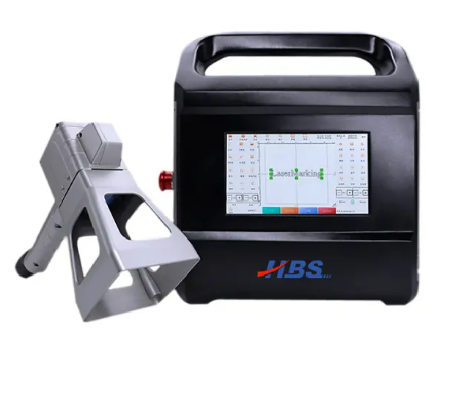
UV vs Fiber vs CO2 Laser Marking
Choosing the correct laser wavelength is more important than simply choosing the machine with the highest power.
| Feature | UV Laser | Fiber Laser | CO2 Laser |
| Typical wavelength | ~355 nm | ~1064 nm | ~10.6 μm |
| Strongest application | Sensitive and precision materials | Metals and selected plastics | Organic and many non-metal materials |
| Plastics | Excellent for many sensitive plastics | Suitable for selected plastics | Suitable for selected plastics |
| Glass | Very good for precision applications | Generally limited | Commonly used |
| Metals | Can mark selected metals | Excellent | Limited for bare metals |
| Wood | Not normally first choice | Not recommended for most wood | Excellent |
| Heat-affected zone | Generally small | Higher in many applications | Material-dependent |
| Fine detail | Excellent | Excellent | Application-dependent |
| Deep metal engraving | Not the primary choice | Excellent | Not normally suitable |
HBS provides Fiber, MOPA, CO2 and UV technologies within its industrial laser marking machine range so that the laser source can be selected according to the actual substrate rather than attempting to use one wavelength for every application.
6. High-Contrast Marking on Suitable Materials
UV lasers can produce excellent visual contrast on many plastics and coated materials without requiring inks or labels.
Depending on material formulation, laser parameters and surface properties, the process can create dark, light or otherwise visually differentiated marks.
This is particularly useful for permanent information such as serial numbers, QR codes, production dates, batch codes and traceability identifiers.
Because the mark is created through a controlled interaction with the material rather than applied as a separate adhesive label, it cannot simply peel away.
However, the statement that every UV mark is automatically resistant to all chemicals, temperatures and abrasion should be avoided.
Mark durability depends on how the mark was produced, the substrate, marking depth and the product's service environment.
For regulated or demanding applications, durability should be verified using the customer's actual test requirements.
7. No Ink or Chemical Marking Consumables
UV laser marking does not normally require inks, dyes, printing plates or chemical etchants to create the mark.
This can reduce recurring consumable purchases and simplify production environments where manufacturers currently use ink-based coding.
For applications involving variable data, digital laser control also makes it easy to change serial numbers, codes or production information without changing a mechanical printing plate.
However, laser marking should not be described as producing “no waste” or “no emissions.”
Processing certain plastics, coatings or other materials can produce fumes, gases or fine particles.
An appropriate fume-extraction and filtration system should therefore be considered as part of the production cell.
The exact extraction requirements depend on the material being processed.
8. Suitable for Automation and Traceability
UV laser marking systems can be integrated into automated manufacturing lines.
This is particularly useful in industries that need unique identification and traceability for every product.
A laser marking system can potentially work together with conveyors, sensors, PLCs, cameras, databases, barcode systems and production management software.
Applications can include automatic serial-number generation, QR code marking, Data Matrix marking, batch tracking, product identification and production-line traceability.
For manufacturers processing different laser wavelengths or complex surfaces, HBS also provides a multi-wavelength 3D laser marking system with Fiber, CO2 and UV configurations for more specialized marking requirements.
Which Industries Benefit Most From UV Laser Marking?
Electronics and Semiconductor Manufacturing
Electronic components are often small, sensitive and densely packed.
UV laser marking can create fine codes on electronic housings, PCB-related products, connectors, semiconductor components and other precision parts while minimizing the thermal effect around the marking area.
Medical and Healthcare-Related Products
UV technology can be useful for marking selected medical plastics, consumables, packaging and precision products where clarity and material protection are important.
When products are subject to medical regulations, manufacturers must still validate the final marking process against the specific regulatory, biocompatibility, sterilization and durability requirements applicable to that product.
Using a UV laser alone does not automatically make a marking process regulatory-compliant.
Glass Manufacturing
UV lasers are frequently evaluated for glass products requiring high-resolution logos, codes, serial information or traceability marks.
The small heat-affected zone can be especially valuable for thin or fragile workpieces.
Packaging
UV lasers can create permanent batch information, QR codes, production codes and branding on selected plastic, film, glass and coated packaging substrates.
The correct system depends on production-line speed, substrate and required contrast.
Automotive Components
UV laser marking can be used on selected plastic and electronic automotive components where conventional marking generates excessive thermal effects.
For metallic automotive components, a fiber laser may be the better choice.
Precision Consumer Products
Cosmetics, electronics, premium packaging, optical products and other high-value consumer goods may benefit from the fine visual quality available with UV marking.
Is UV Laser Marking Always Better Than Fiber Laser Marking?
No.
This is one of the most important points for buyers to understand.
A UV laser is not a premium replacement for every fiber laser.
The two technologies solve different processing problems.
Fiber lasers are generally highly effective for industrial metal marking, deep engraving, serial numbers, barcodes and high-speed traceability on steel, aluminum, brass and many other metals.
UV lasers become especially valuable when the substrate is highly sensitive to heat, the mark is extremely small, or the material absorbs 355 nm energy much more effectively.
If the production requirement is primarily metal processing, buyers should compare UV technology with an industrial fiber laser marking machine before making a purchase decision.
What Are the Limitations of UV Lasers?
Although UV laser marking has major advantages, it also has limitations.
UV laser sources are generally more specialized and can cost more than conventional fiber systems of comparable industrial quality.
Many UV systems also use water cooling, adding a chiller and additional maintenance requirements to the machine.
They are not normally the first choice for deep engraving or aggressive material removal on thick metal.
Production speed can also vary considerably.
UV lasers can be fast in the right application, but it is inaccurate to claim that UV technology is automatically faster than every fiber or CO2 marking system.
Actual cycle time depends on marking area, content size, required contrast, laser power, repetition frequency, number of passes, material absorption and automation configuration.
For this reason, manufacturers should compare technologies using their actual production samples and required cycle times.
How to Choose a UV Laser Marking Machine
The first question should not be “How many watts do I need?”
Start with the application.
Identify the exact material, including its grade, color, coating and additives. Define whether the required result is a dark mark, light mark, surface change, shallow engraving, QR code, logo or micro-character.
Then determine the size of the workpiece and the required marking field.
Production volume is also important. A machine used to mark a few hundred precision parts per week has different requirements from an inline system processing thousands of products per shift.
Manufacturers should also evaluate cooling, enclosure design, extraction, automation interface, software compatibility, safety configuration and after-sales support.
Before purchasing, request a marking test using the actual production material.
A successful sample test should evaluate not only appearance but also contrast, barcode readability, edge quality, heat impact, durability and cycle time.
UV Laser Maintenance Considerations
UV marking machines are generally solid-state systems without ink cartridges or mechanical marking pins, but this does not mean they are maintenance-free.
Depending on machine design, routine checks may include cleaning the protective lens, inspecting optical components, maintaining the water chiller, checking coolant quality, cleaning ventilation systems, inspecting extraction filters and verifying focus and calibration.
Correct maintenance helps maintain marking consistency and protects the laser source and optical system.
Operators should always follow the maintenance schedule specified for the actual machine configuration.
For broader guidance on equipment operation, see HBS's guide on how to operate a laser marking machine.
Frequently Asked Questions
What is the main advantage of a UV laser?
The main advantage is the combination of a short 355 nm wavelength, small focused spot and reduced thermal impact, making UV lasers especially useful for precision and heat-sensitive materials.
Why is UV laser marking called cold marking?
UV photons can create photochemical changes at the material surface with less dependence on bulk thermal heating than many infrared laser processes. This reduces the heat-affected zone, although it does not mean absolutely zero heat is generated.
What materials can a UV laser mark?
UV lasers can process many plastics, glass, ceramics, coated materials, electronic components and selected metals. Actual compatibility and mark quality depend on material composition and process parameters.
Is UV better than fiber laser for plastic?
Sometimes.
UV often performs better on plastics that are sensitive to heat or difficult to mark with a 1064 nm fiber laser, but some plastics respond very well to fiber or MOPA technology. The actual polymer should be tested.
Can a UV laser mark metal?
Yes, UV lasers can mark selected metals, but for general high-speed industrial metal marking and deeper engraving, a fiber laser is usually the first technology to evaluate.
Can a UV laser mark glass?
Yes. Glass is one of the important application areas for UV laser marking, particularly when fine detail and reduced thermal influence are required.
Does UV laser marking require consumables?
The marking process itself does not normally require inks or chemical marking agents. However, the machine still requires normal maintenance, and extraction filters, cooling-system components or protective optics may require periodic attention.
How long does a UV laser marking machine last?
Service life depends on laser source design, operating conditions, duty cycle, cooling, maintenance and component quality. Buyers should request the specified laser-source lifetime and warranty for the exact model rather than relying on a universal lifetime figure.
Conclusion
The key advantages of UV laser marking are not simply “precision” and “speed.”
Its real value comes from the combination of a 355 nm wavelength, strong absorption on many sensitive materials, a small focused spot and reduced thermal impact.
These characteristics make UV laser marking especially useful for plastics, glass, electronics, precision components, packaging and other products where conventional thermal marking can create unacceptable damage.
At the same time, UV is not the ideal laser for every application.
Fiber lasers remain highly effective for metals, while CO2 lasers are generally better suited to wood, leather and many other organic materials.
The correct choice should therefore be based on the material, required marking effect, production speed, marking area and operating environment.
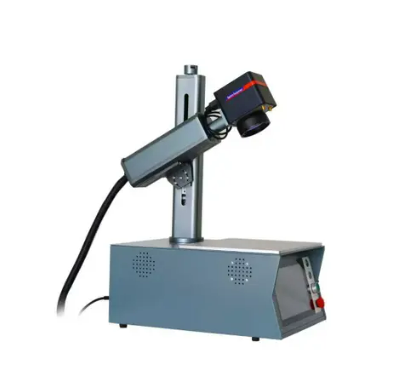
HBS provides Fiber, MOPA, CO2 and UV solutions within its laser marking machine portfolio. For applications involving delicate glass, plastics or other heat-sensitive products, you can also review the HBS cold-processing UV laser marking machine.
Before selecting a machine, send HBS your actual material, workpiece dimensions, required marking content and expected production volume. Sample testing can then be used to identify the appropriate wavelength, laser power, marking field and machine configuration.


