- All
- Product Name
- Product Keyword
- Product Model
- Product Summary
- Product Description
- Multi Field Search


Views: 0 Author: Site Editor Publish Time: 2025-11-10 Origin: Site


Laser marking machines are crucial for precise engraving and marking in various industries. However, with numerous options available, how do you choose the best one for your needs?
In this article, we will discuss the key factors to consider, including material compatibility, marking types, and power. You'll learn how to select the right laser marking machine for your business, ensuring efficiency and high-quality results.
A laser marking machine uses a high-powered laser beam to make precise, permanent marks on materials. The process can involve engraving, etching, or even coloring materials by using focused laser beams to remove or modify the surface layer. Laser marking offers advantages over traditional methods, such as greater precision, faster processing, and less wear on the materials being marked.
Laser marking machines can be used on a wide variety of materials, including:
Metals: Fiber lasers are ideal for engraving or marking metals like aluminum, steel, and titanium.
Plastics: CO2 and UV lasers work well for plastics, allowing for clean, precise marks.
Wood and Cardboard: CO2 lasers are effective for engraving wood and cardboard, leaving high-contrast marks.
Glass: CO2 and UV lasers are used for engraving glass, creating detailed designs without damaging the material.
When choosing a laser marking machine, understanding the materials you need to work with is crucial, as each laser technology performs differently on various substances.
The first and most important factor when selecting a laser marking machine is the material you'll be working with. Different laser technologies are suited to different materials. For example:
Fiber lasers are best for metals and some plastics due to their high energy and precision.
CO2 lasers are ideal for organic materials like wood, cardboard, and plastics.
UV lasers are perfect for delicate or heat-sensitive materials like medical devices, plastics, and glass.
Understanding the materials you frequently work with will help you select a laser that delivers the best performance and results.
Laser marking machines can perform different types of marking depending on the application:
Engraving: This involves removing material to create deep, permanent marks. Fiber lasers are ideal for this type of marking, especially on metals.
Etching: This method uses a laser to melt and raise the surface material, creating a lighter mark. It is often used for softer materials like plastic.
Layer Removal: This technique vaporizes the top layer of a material to reveal a contrasting color beneath. CO2 lasers are typically used for layer removal.
Choosing the right marking type is essential, as it directly affects the appearance and durability of the marks. Ensure that the laser technology you choose supports the specific marking style you need.
The power of the laser is a critical consideration for both marking quality and speed. Higher-power lasers can mark deeper and faster but may be unnecessary for lighter applications. Here's a general guide:
Low Power (10W–30W): Suitable for marking plastics and lighter materials.
Medium Power (30W–100W): Works well for metals, plastics, and more substantial materials.
High Power (100W+): Required for deep engraving and cutting thicker metals.
The marking speed is also essential for production efficiency. A higher power laser typically offers faster marking speeds, which can be a critical factor in high-volume production environments.
Two of the most commonly used laser technologies are fiber lasers and CO2 lasers. Here's how they differ:
Fiber Lasers: Best for marking metals and some plastics. They offer high precision, deep engraving capabilities, and are highly efficient for industrial applications.
CO2 Lasers: Best for marking organic materials like wood, glass, and plastics. These lasers are affordable, have a broad material compatibility, and are suitable for large-area markings.
If your primary materials are metals, a fiber laser is the best option. For organic materials, CO2 lasers will likely suit your needs.
UV lasers and green lasers are specialized options used for marking delicate materials:
UV Lasers: These lasers operate at a shorter wavelength and create minimal thermal damage, making them perfect for marking heat-sensitive materials such as medical devices or electronics.
Green Lasers: These are ideal for marking highly reflective surfaces such as silicon wafers or ceramics, providing high precision without causing heat damage.
While UV and green lasers tend to be more expensive, their precision and ability to handle sensitive materials make them worth the investment for certain industries.
In industries like automotive and aerospace, traceability is crucial. Fiber lasers are ideal for these applications because they provide permanent, precise marks on metals that can withstand harsh conditions such as high temperatures, oils, and exposure to wear and tear. Fiber lasers are also fast, which is essential for high-volume production environments. For industries where traceability is critical, fiber lasers offer a permanent and readable solution.
UV lasers are particularly useful in the medical and electronics industries, as they can mark delicate materials such as plastics and micro-electronics without causing heat damage. UV lasers are also FDA-compliant and ideal for marking medical devices that require precise identification. In medical device manufacturing, UV lasers ensure compliance with industry regulations while preventing damage to sensitive components.
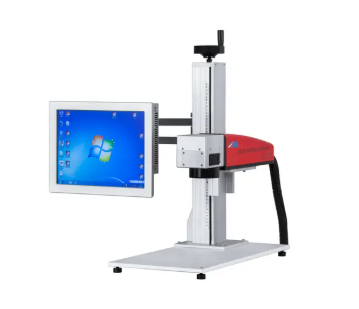
To ensure longevity and reliable performance, regular maintenance is required. Key tasks include:
Cleaning the lens and mirrors.
Checking the cooling system and replacing filters as needed.
Ensuring proper calibration for accurate marks.
Regular maintenance can prevent costly downtime and ensure that your machine performs at peak efficiency.
Laser marking machines can be hazardous, particularly those with high-powered lasers. Implement safety measures such as:
Class I safety systems with laser-safe enclosures.
Warning lights and safety curtains.
Protective eyewear for operators.
Always ensure that your laser marking system is installed according to safety standards to protect workers and prevent accidents.
When selecting a laser marking machine, it’s essential to consider how it integrates with your existing production line. Look for systems that offer compatibility with PLC, MES, or barcode verification for seamless automation. This will improve overall production efficiency and reduce human error.
The upfront cost of a laser marking machine can vary significantly depending on the type of laser technology. Fiber lasers, for example, typically have a higher initial cost than CO2 lasers but offer lower maintenance costs and higher durability. When evaluating cost, consider the total cost of ownership (TCO), including maintenance, consumables, and potential downtime.
While initial costs are important, long-term costs such as maintenance, parts replacement, and energy consumption should be factored in. Fiber lasers generally have lower maintenance costs, while CO2 lasers may require more frequent servicing. Always calculate the TCO to ensure that the machine you choose aligns with your long-term financial goals.
Selecting the right laser marking machine for your business involves understanding your specific material needs, marking type, and the machine's overall efficiency. By evaluating factors like material compatibility, marking type, power, and cost, you can make an informed decision that will benefit your production process.
Ultimately, whether you choose a fiber, CO2 or UV laser, the key is ensuring that your choice meets both your technical and budgetary requirements. With the right machine, you can achieve high-quality, efficient, and cost-effective laser marking for your business.
At HBS, we offer a range of advanced laser marking solutions designed to meet diverse industrial needs. Our products are known for their reliability, precision, and efficiency, making them a valuable investment for your business.
A: A laser marking machine uses a focused laser beam to create permanent marks on materials. It is used for engraving, etching, or marking text, logos, and designs with high precision.
A: To optimize your fiber laser marking machine, adjust settings like power, speed, and resolution based on material type. Regular maintenance, including cleaning optics, also helps maintain performance.
A: Proper maintenance ensures that your laser marking machine operates at peak efficiency. It reduces downtime, prevents costly repairs, and ensures high-quality, consistent markings.