- All
- Product Name
- Product Keyword
- Product Model
- Product Summary
- Product Description
- Multi Field Search


Views: 0 Author: Site Editor Publish Time: 2026-10-15 Origin: Site


In today’s high-speed manufacturing environment, product identification isn't just about printing a logo. It is the backbone of traceability, quality control, and regulatory compliance. From strict aerospace standards to the complexities of real-time inventory tracking, the clarity of a serial number or barcode directly dictates operational throughput. As production managers navigate the digital transformation of their factory floors, a common dilemma arises. They must choose between traditional, fluid-based printing technologies and modern solid-state photonic solutions. This ongoing debate requires a hard look at operational mechanics, long-term fiscal impact, and material versatility. By evaluating these factors objectively, this guide provides the clarity needed to make a sound investment for your production line.
Industrial inkjet printers typically function through Continuous Inkjet, known as CIJ, or Thermal Inkjet mechanisms. These systems operate on the principle of fluid dynamics. They propel microscopic droplets of ink toward a target substrate to construct alphanumeric characters, barcodes, or branding logos. Because the process is non-contact, the printhead remains distanced from the product, allowing for integration onto lines moving at high velocities. CIJ systems circulate pressurized ink through a nozzle, using electromagnetic fields to deflect individual droplets into precise patterns. You will frequently see these setups in high-volume bottling and canning facilities where speed is paramount.
In contrast, a Laser Marking Machine leverages the power of concentrated optical energy. Rather than depositing a liquid onto a surface, the system directs a high-intensity beam of light to physically modify the material itself. This modification can take the form of ablation, where the top layer is vaporized, or annealing, which induces a localized color shift via a thermal reaction. Since this method relies entirely on light, it is consumable-free. It eliminates the need for inks, solvents, or curing times. The resulting mark becomes a permanent part of the substrate, ensuring the integrity of the code is preserved regardless of harsh environmental exposure.
Recent industry analyses reveal a decisive shift in factory automation regarding product coding. Driven by stringent global supply chain mandates and aggressive corporate sustainability goals, manufacturers are moving away from consumable-heavy processes. The demand for permanent, tamper-proof traceability is higher than ever, especially in sectors like medical devices and automotive manufacturing. Furthermore, the integration of Industry 4.0 and the Internet of Things requires marking systems that offer absolute consistency. Fluid-based systems introduce variables like ink viscosity changes and nozzle clogs, which can disrupt automated scanning. Consequently, the market is witnessing a strong migration toward solid-state photonic technologies, which provide the predictable, maintenance-free reliability required by modern smart factories.
Navigating the requirements for color-coded branding can be challenging. Your choice of technology significantly alters your packaging strategy. When standard CMYK graphics, multi-colored logos, or high-visibility alerts are necessary for consumer-facing packaging, inkjet printing remains the practical standard. These systems provide the flexibility to switch ink formulations rapidly. You can swap to high-contrast whites for dark cables or vivid reds for glass, allowing for rapid adaptation to various design needs. For personalized consumer packaging requiring multi-colored, vibrant graphics applied at high speeds, inkjet continues to hold its ground.
However, the outdated perception that laser marking is strictly monochromatic has been shattered by advanced MOPA technology, which stands for Master Oscillator Power Amplifier. By precisely modulating pulse frequency and duration, a MOPA laser can generate structural coloration on metals like stainless steel and titanium through controlled surface oxidation. Rather than applying a chemical dye, the laser adjusts the oxide layer thickness to produce a permanent spectrum of blues, golds, and greens. While inkjet is better suited for high-speed cardboard packaging, the permanent structural colors provided by MOPA lasers offer an unparalleled, tamper-proof finish ideal for high-end automotive parts, medical implants, and luxury goods.
Selecting the right technology always comes down to the specific substrate you are processing. A Fiber Laser Marking Machine typically operates at a 1064nm wavelength. This specific wavelength is highly optimized for deep absorption into metals and rigid engineering polymers. In demanding sectors like aerospace or electronics, parts endure extreme heat, chemical washes, or mechanical friction. Here, laser-etched codes provide necessary, indestructible traceability. The mark essentially becomes part of the material, surviving industrial processes that would effortlessly strip away conventional ink.
On the other hand, while laser technology dominates metal and hard plastic sectors, inkjet printing maintains a clear lead in flexibility and porosity. Corrugated cardboard, uncoated paper, and soft-touch textiles are natural candidates for ink-based marking. These porous materials absorb the fluid quickly for reliable drying. Inkjet systems are also the preferred choice for flexible packaging films, such as thin shrink wrap, where the intense focal heat of a laser might inadvertently melt or compromise the substrate's integrity. Understanding these material-specific nuances allows engineers to balance durability requirements with packaging constraints.
It is easy for procurement teams to be swayed by the lower initial price tag of an inkjet printer. Yet, calculating the Total Cost of Ownership reveals a much more complex financial story. While the entry cost for inkjet is low, the operational burden is relentless. These systems demand a steady, daily cycle of proprietary inks, makeup solvents, filters, and professional maintenance to resolve inevitable nozzle clogs and printhead degradation. Over a typical three-to-five-year production cycle, the labor and material costs associated with these consumables far exceed the initial equipment savings.
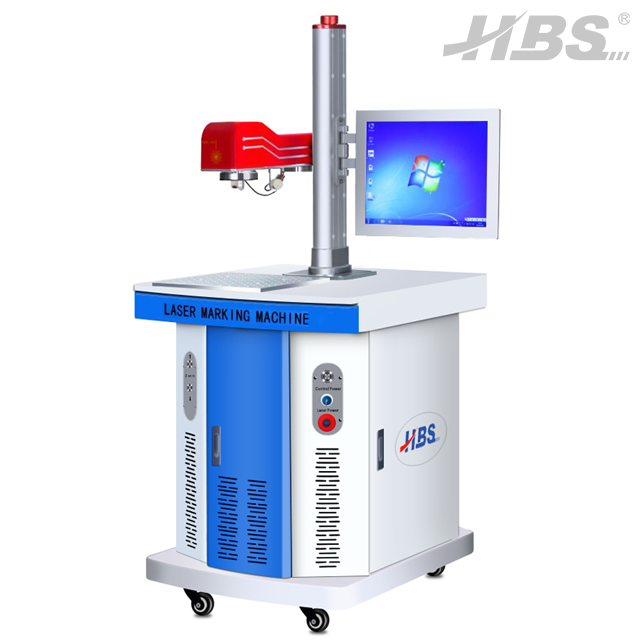
Transitioning to laser-based solutions shifts the budget profile from a variable-cost nightmare to a predictable fixed-asset model. Take the classic style HBS-GQ-20A fiber laser, for example. Because it utilizes a solid-state fiber source with no moving parts in the beam delivery and requires zero consumable fluids, it essentially operates at zero marginal cost. These industrial-grade units boast a Mean Time Between Failures of up to 100,000 hours. By eliminating reliance on chemical vendors for ink supplies and drastically reducing maintenance shutdowns, production facilities achieve a highly stable and rapid return on investment.
Feature | Fiber Laser Marking | Industrial Inkjet Printing |
|---|---|---|
Consumables | None. Operates purely on electricity. | High. Requires inks, makeup solvents, and filters. |
Maintenance | Near zero. Occasional lens wiping. | Frequent. Daily printhead cleaning and purging. |
Best Materials | Metals, rigid plastics, ceramics. | Cardboard, paper, flexible films, glass. |
Mark Permanence | Permanent. Resistant to heat, chemicals, and wear. | Temporary to semi-permanent. Can smudge or fade. |
Total Cost of Ownership | Higher upfront, extremely low running costs. | Lower upfront, high continuous operational costs. |
In a high-capacity production environment, every second of downtime bleeds profitability. Modern inkjet systems are fully capable of keeping pace with high-velocity lines, applying thousands of characters per second. However, they introduce hidden inefficiencies. The periodic need for reservoir refills, solvent replenishment, and manual printhead purging creates micro-stoppages. These seemingly minor interruptions severely impact the overall equipment effectiveness of a line over an entire shift.
Furthermore, the precision required for modern track-and-trace requirements, such as high-density Data Matrix codes, heavily favors the laser approach. A laser beam provides microscopic, micrometer-level control. This allows for sharp, high-contrast edges that remain legible to automated factory scanners regardless of environmental degradation. While inkjet codes may fade or smudge when exposed to shipping friction or chemical cleaners, a laser-engraved code remains readable for the life of the product. As global supply chains move toward more stringent safety recalls and documentation, permanent, scanner-ready quality is an absolute necessity.
As sustainability becomes a central pillar of corporate strategy, the environmental footprint of factory equipment is under intense scrutiny. Laser technology is inherently greener because it creates no hazardous chemical waste. There are no spent plastic cartridges to discard and no volatile organic compounds to manage. Integrating a standard industrial fume extraction unit ensures the workspace remains clean, capturing the minimal dust generated during the ablation process without venting toxins into the factory atmosphere.
Conversely, traditional inkjet processes rely heavily on aggressive fluids like Methyl Ethyl Ketone. These chemicals are widely recognized for their environmental and respiratory health risks. The storage, handling, and legal disposal of these hazardous materials require rigorous compliance measures, increasing both administrative overhead and workplace hazards. For manufacturers looking to improve their corporate sustainability scores and simplify hazardous waste management, laser technology offers a dramatically cleaner and safer path forward.
Determining the right equipment requires a practical evaluation of your specific operational environment. Abstract advice is unhelpful, so apply these concrete engineering parameters to your selection process:
First, evaluate your factory environment. If your facility experiences high humidity, heavy dust, or drastic temperature shifts, the sealed, solid-state nature of a laser provides inherent reliability that sensitive ink nozzles simply cannot match. Second, assess your regulatory landscape. If your sector is governed by Unique Device Identification mandates, the permanence and non-destructive nature of laser marking make it a strict regulatory requirement, not just a preference.
Ultimately, success depends on matching your exact substrate and line speed with the correct hardware. Whether you lean toward the packaging versatility of inkjet or the industrial longevity of a laser, consulting with engineers who understand the full spectrum of an Industrial Marking System is critical. Always demand sample tests on your actual production parts to verify contrast, readability, and cycle times before committing to a full-line installation.
The choice between laser and inkjet technology hinges on the physical realities of your production floor. While inkjet systems remain a viable, flexible solution for porous materials and multi-colored cardboard packaging, laser marking has firmly established itself as the superior solution for long-term permanence, precision, and operational efficiency. By eliminating the daily headache of consumables and minimizing maintenance-related downtime, laser systems deliver a vastly superior financial and operational return for modern manufacturers. Stop letting consumable costs drain your maintenance budget. Visit https://www.hbs-lasers.com today to explore our industrial-grade laser solutions, request a free sample marking test, and let our engineering team help you future-proof your production line.
The fundamental distinction lies in the physical method of marking and the requirement for ongoing supplies. A laser marking machine uses a focused beam of light to permanently alter the material structure, requiring zero consumables. In contrast, an inkjet printer sprays liquid chemical ink onto the product surface, which necessitates the continuous purchase of inks, solvents, and regular maintenance to prevent printhead clogging.
The better choice depends entirely on your substrate. If your goal is to print multi-colored, vibrant graphics on cardboard boxes or flexible plastic films, inkjet is the practical solution. However, if you require permanent, high-contrast color coding on metal surfaces like stainless steel or titanium, a MOPA color fiber laser is superior, as it creates structural colors through oxidation without using any chemical inks.
Although an industrial inkjet printer usually features a lower initial purchase price, a laser marking machine is significantly more economical over its operational life. Because lasers do not require expensive recurring purchases like makeup solvents or filters, and demand virtually zero maintenance, the Total Cost of Ownership is substantially lower for laser systems over a standard three-to-five-year period.
Not at all. Fiber laser systems are widely favored by production engineers specifically for their high reliability and minimal maintenance requirements. Since they lack moving internal parts in the laser source and do not use liquids that dry out, industrial models can operate for up to 100,000 hours with nothing more than an occasional lens wipe, making them perfect for high-uptime manufacturing.
Yes, fiber lasers can mark on many rigid engineering plastics, such as ABS, PEEK, and polycarbonate. The 1064nm wavelength interacts well with these dense polymers, often creating a high-contrast color change through carbonization or foaming. However, for highly transparent or very soft plastics, UV lasers or green lasers might be recommended over standard fiber lasers to prevent melting.
High-quality industrial fiber lasers are built for longevity. The core component, the fiber laser source, typically boasts a Mean Time Between Failures of 100,000 hours. In a factory running standard eight-hour shifts, this translates to over a decade of reliable service without the need for major component replacement or the daily wear-and-tear associated with fluid-based systems.

