- All
- Product Name
- Product Keyword
- Product Model
- Product Summary
- Product Description
- Multi Field Search


Views: 0 Author: Site Editor Publish Time: 2026-10-19 Origin: Site


Modern manufacturing demands flawless, high-speed joints. From the intricate battery cells powering electric vehicles to the robust structural components of commercial aerospace, engineers face a continuous challenge. How do you bond metals with maximum strength while maintaining minimal distortion? The answer increasingly lies in advanced optical joining techniques.
At the forefront of this manufacturing evolution is Deep Penetration Welding, frequently referred to as keyhole welding. Unlike traditional surface-level melting, this highly efficient process utilizes a concentrated light beam to instantly vaporize metal. This rapid vaporization excavates a deep, narrow cavity. It allows the materials to fuse seamlessly from the inside out.
In this comprehensive guide, we will break down the underlying mechanics of the process from an engineering perspective. We will compare it to conventional conduction methods and outline essential optimization techniques for your assembly line. Understanding these critical parameters is absolutely vital before you invest in commercial equipment tailored to your specific production needs.
Key Takeaways
The process utilizes the keyhole effect to achieve exceptionally high depth-to-width ratios, minimizing heat distortion and maximizing structural integrity.
Optimizing variable parameters such as power output, travel speed, focal position, and ambient pressure is critical for achieving flawless, repeatable joints.
The technology is highly versatile. It is capable of joining thick heavy-industry metal plates as well as handling delicate 1mm thin-plate applications.
Advanced real-time penetration detection methods and deep learning AI are currently revolutionizing quality control in modern automated assembly lines.
Selecting the right equipment requires carefully matching your material thickness and production volume with the correct optical source and automation framework.
To fully grasp the structural advantages of this advanced manufacturing process, it is essential to understand the underlying physics. The behavior of light and metal at extreme energy levels separates this technique from traditional joining methods.
The core mechanism driving this technology is the keyhole effect. Imagine a beam so intense that it does not simply melt a steel plate—it instantly vaporizes it. This phenomenon occurs when the beam strikes the surface of a workpiece with an immense power density, typically exceeding one million watts per square centimeter.
As the solid metal transitions directly into a gaseous state, the rapid vapor expansion creates substantial recoil pressure. This physical force pushes the surrounding molten metal outward and downward, carving out a microscopic, cylindrical tunnel known as a keyhole. Once established, this cavity acts as an optical trap. The incoming light bounces against the molten walls, undergoing multiple internal reflections. With each bounce, the material absorbs more thermal energy, leading to near-total energy absorption. This efficient energy transfer is precisely why the method excels even on highly reflective metals like aluminum and pure copper.
When the processing head glides across the workpiece, the intense thermal energy ionizes the expanding gas. This creates a bright plasma plume that hovers just above the weld zone. While plasma is a natural byproduct of metal vaporization, it presents a distinct engineering hurdle.
If left unmanaged, this plume can scatter and absorb the incoming light—a phenomenon known as plasma shielding. This shielding reduces the energy reaching the bottom of the cavity. It often causes the keyhole to collapse, resulting in shallow, inconsistent penetration. To counteract this, operators introduce a shielding gas, typically argon or nitrogen, directed precisely at the molten pool. The gas serves a dual purpose. It physically blows the plasma plume away from the beam path to maintain optical clarity, and it blankets the molten metal to prevent atmospheric oxidation.
Manufacturing engineers frequently must choose between conduction and keyhole profiles based on the thermal tolerances of their specific assemblies. Recognizing how these two profiles differ is vital for optimal process selection.
To provide a clear engineering perspective, the table below highlights the core differences between the two methods:
Parameter | Conduction Welding | Deep Penetration Welding |
|---|---|---|
Energy Transfer | Surface heat conduction | Direct vaporization and internal reflection |
Aspect Ratio | Shallow and wide, typically 1:1 | Deep and narrow, up to 10:1 or higher |
Heat-Affected Zone | Larger, higher risk of thermal distortion | Minimal, highly localized thermal input |
Power Density Required | Low to Moderate | Extremely High |
Ideal Applications | Cosmetic seams, thin foils, visible outer joints | Structural joints, thick plates, aerospace components |
Heat management remains a critical factor in precision manufacturing. Conduction inherently spreads heat over a wider surface area. This significantly increases the overall thermal load on the component, which can lead to warping in heat-sensitive parts.
Conversely, deep penetration techniques are generally superior for structural assemblies. Because the energy is deposited rapidly and deeply into the joint, the surrounding ambient material has less time to absorb excess heat. Consequently, the Heat-Affected Zone is remarkably small. A narrower affected zone directly translates to reduced thermal warping, lower residual stress, and preserved dimensional accuracy in the final product.
Achieving the perfect joint requires a meticulous balance of multiple physical parameters. When transitioning from traditional arc methods to advanced optical systems, understanding how to manipulate these variables is the key to maximizing production throughput.
The foundational relationship in this process is the ratio between raw power and travel speed. These two parameters dictate the overall energy input and directly control the stability of the vapor cavity.
Higher wattage naturally drives deeper penetration by delivering more energy to vaporize the substrate. For example, utilizing a 2000W fiber source paired with a travel speed of 1.5 meters per minute is an excellent baseline for achieving full penetration on 4mm stainless steel. However, this power must be strictly synchronized with the movement of the processing head. If the travel speed is too sluggish, the excessive heat input causes the molten pool to grow uncontrollably, leading to heavy distortion or catastrophic burn-through. Conversely, moving too quickly deprives the keyhole of the energy required to maintain vapor pressure. The cavity prematurely collapses, trapping gases and resulting in severe internal porosity.
The exact point where the beam reaches its minimum diameter drastically impacts energy density. For shallow cosmetic passes, the focus is typically placed exactly on the surface. However, to optimize deep joints, engineers typically set a negative defocus. This means positioning the focal point slightly below the metal surface.
Placing the focal point inside the material ensures that the maximum energy density is driven directly into the developing cavity, sustaining the necessary vapor pressure. Furthermore, equipment featuring a lower Beam Parameter Product indicates higher optical quality. This allows the light to be focused into a much tighter spot over a longer distance, which is critical for penetrating thick plates effectively.
Looking at recent manufacturing trends, particularly within the electric vehicle and aerospace sectors, there is a massive industry shift toward advanced plasma management. Standard atmospheric conditions often result in dense plasma plumes that scatter incoming light.
To combat this, the industry is rapidly adopting vacuum-assisted environments and beam oscillation strategies, especially when processing highly reflective materials like pure copper battery busbars. Lowering the ambient pressure drastically reduces the density of the plasma plume. Studies show that reduced-pressure environments can increase penetration depth by up to 50 percent without requiring any additional wattage. This simultaneously smooths out fluid dynamics to virtually eliminate spatter, a critical requirement for sensitive electronic assemblies.
The unique characteristics of this technology—specifically its high aspect ratio and minimal thermal footprint—make it an indispensable tool across a vast array of manufacturing sectors.
In heavy infrastructure sectors like shipbuilding and commercial aerospace, joining thick metal plates efficiently is a constant challenge. Traditional arc processes often require extensive edge preparation like V-grooves and multiple passes to join plates thicker than 10mm. This outdated approach consumes massive amounts of filler wire and introduces severe thermal stress.
Modern high-power fiber systems revolutionize this workflow. Manufacturers can now achieve full-penetration joints on thick steel or aluminum in a single pass, often with zero edge preparation. This capability drastically reduces production cycle times and preserves the strict dimensional tolerances required for large-scale structural assemblies.
A frequent question among production engineers is whether the keyhole mechanism can be applied to very thin substrates, such as 1mm plates. While traditionally associated with heavy industry, micro-keyhole processing is entirely feasible and highly advantageous for delicate applications.
Achieving a stable keyhole in a 1mm plate requires incredibly precise parameter control. The margin for error is microscopic. To prevent burn-through, operators utilize high-frequency pulsed sources or highly modulated continuous wave systems moving at extreme speeds. For instance, integrating specialized Industrial Laser Welding solutions is now standard practice in battery manufacturing. Joining 1mm copper foils requires a robust electrical connection without damaging the sensitive chemical cells nearby.
As automated assembly lines become faster, traditional post-process inspection methods like destructive sectioning are no longer viable. Ensuring that every single joint achieves the exact required depth necessitates advanced, non-destructive evaluation technologies.
Modern facilities deploy a variety of sophisticated sensor arrays to monitor the molten pool dynamically. These systems allow operators to verify depth and detect internal defects the millisecond they occur.
Optical Emission Sensors: Capture infrared radiation emitted by the plasma plume, providing instant feedback on surface stability.
Acoustic Monitoring: Microphones record the high-frequency sound waves generated by vaporization. Sudden acoustic shifts often signal a collapsed cavity.
Optical Coherence Tomography: Utilizes an interferometric measuring beam to calculate the exact depth of the keyhole in real-time, providing micrometer-level accuracy.
Inline X-Ray Imaging: Projects X-rays through the joint to reveal internal porosity and definitively verify penetration during high-speed runs.
Analyzing current manufacturing trends, the integration of Artificial Intelligence and deep learning into closed-loop control systems is rapidly becoming the industry standard. As gigafactories scale up production, relying solely on human operators or post-weld inspection creates massive bottlenecks.
Today the trend is shifting entirely towards predictive, smart automation. Modern sensor arrays generate gigabytes of data per minute. Deep learning algorithms, specifically trained on thousands of hours of acoustic and optical signatures, process this data in milliseconds. If the AI detects a microscopic anomaly indicating the keyhole is about to destabilize, it autonomously communicates with the machine controller. The system adjusts power, speed, or focal position on the fly. This self-optimizing approach ensures absolute consistency across high-volume runs.
Transitioning to advanced optical joining requires a significant capital investment. Selecting the correct equipment is paramount to achieving your desired return on investment and maintaining long-term operational efficiency.
Before procuring hardware, engineers must execute a rigorous assessment of their specific materials and thicknesses. Different metals absorb light differently. Carbon steel absorbs standard 1-micron wavelengths beautifully, whereas highly reflective materials like copper reflect a massive portion of the energy.
Power selection must directly align with your production goals. If your facility primarily processes 1mm to 3mm sheet metal, a 1500W system provides ample energy density for clean, rapid seams. For structural components ranging from 4mm to 6mm, upgrading to a 2000W or 3000W source ensures a stable vapor cavity without forcing you to drastically reduce travel speed. Investing in a commercial-grade Laser Welding Machine guarantees access to the consistent power density required to maintain a stable keyhole over thousands of operational hours.
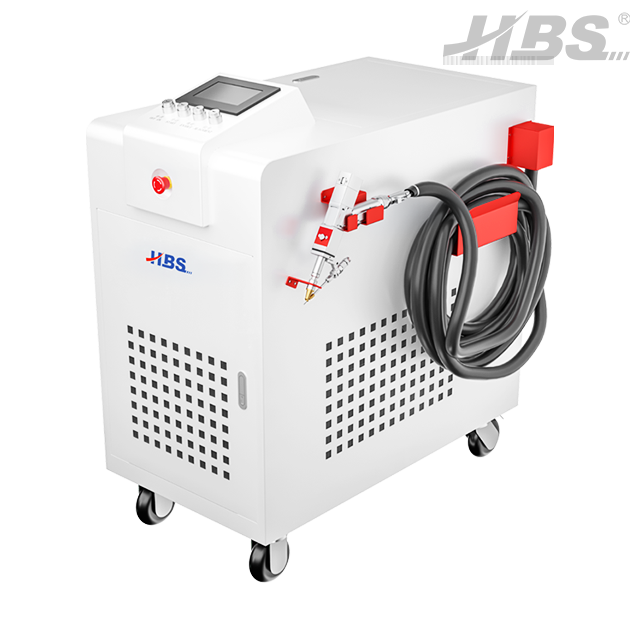
Beyond the standalone power source, high-speed manufacturing demands the right delivery method. For job shops handling varied, low-volume custom parts, modern air-cooled handheld units offer incredible flexibility and a fast learning curve.
However, for true high-volume deep penetration tasks, standard manual setups rarely suffice. We highly recommend reviewing customized, automated frameworks that integrate robotic arms, CNC gantries, and real-time monitoring. Matching the right optical source with the appropriate automation tooling is the ultimate key to eliminating human error and guaranteeing flawless joint integrity.
Deep penetration joining offers immense commercial and technical value to modern manufacturing. It delivers unmatched processing speeds, superior structural integrity, and minimal thermal distortion. By harnessing the keyhole effect, industries can achieve deep, narrow profiles that traditional arc methods simply cannot replicate.
Mastering the delicate balance of process parameters—ranging from precise wattage and focal positioning to managing ambient plasma—is the secret to flawless, repeatable manufacturing. As intelligent monitoring continues to evolve, the reliability of these systems will only increase. We encourage production managers and engineers to evaluate their current assembly lines and explore advanced industrial systems tailored to their exact material specifications. Upgrading your equipment today is an investment in the structural integrity of tomorrow.
They technically describe the exact same industrial process from two different perspectives. Keyhole welding refers to the specific physical phenomenon, which is the creation of a rapidly expanding vapor cavity that traps optical energy. Deep penetration welding is the term used to describe the resulting structural outcome, producing a deep, narrow profile boasting a high depth-to-width aspect ratio.
The maximum thickness depends entirely on the power output of the optical source. Standard 3000W industrial systems can comfortably penetrate 6mm to 8mm of stainless steel in a single pass. Ultra-high-power systems utilized in shipbuilding, operating at 20kW to 30kW or more, can achieve single-pass penetrations exceeding 25mm to 30mm in heavy steel plates.
In many cases, no. One of the primary advantages of this process is autogenous welding, meaning it joins the base metals directly without the need for consumable filler wire. However, if the joint fit-up is poor or there are significant gaps between the plates, automated wire feeders can be integrated into the process to bridge gaps and prevent undercutting.
Operating in a reduced-pressure or vacuum environment drastically reduces the density of the plasma plume that naturally forms above the molten pool. In standard atmospheric conditions, this plasma can scatter the incoming beam. By reducing the pressure, more energy reaches the bottom of the cavity uninterrupted. This results in a deeper, much more stable keyhole and virtually eliminates internal porosity.
Yes. Most modern industrial fiber systems are highly versatile. By altering the power output, expanding the focus spot size through beam defocusing, and adjusting the travel speed, operators can seamlessly switch between creating shallow, wide conduction passes for cosmetic purposes and deep, narrow penetration passes for structural integrity using the exact same hardware.
This process is highly effective across a wide variety of industrial metals, including stainless steel, high-carbon steel, titanium, and various aluminum alloys. Thanks to recent advancements in beam oscillation and multi-core fiber technology, even highly reflective and thermally conductive materials like pure copper can now be processed efficiently. This has become a cornerstone technique in electric vehicle battery manufacturing.

