- All
- Product Name
- Product Keyword
- Product Model
- Product Summary
- Product Description
- Multi Field Search


Views: 165 Author: Site Editor Publish Time: 2026-06-25 Origin: Site


Marking heavy, bulky, or immovable parts presents a unique manufacturing challenge on the shop floor. You cannot easily transport a massive steel valve or aerospace casting to a desktop workstation. It is physically impossible in some cases and economically inefficient in others. Poor permanent marking leads directly to failed industry compliance. You lose part traceability and face expensive, time-consuming rework. You risk crippling your entire production line if markings fade after processing. Operators cannot struggle with heavy equipment to apply these marks accurately.
This article provides a straightforward, vendor-neutral evaluation framework. We aim to help procurement and engineering teams separate essential shop-floor features from flashy marketing gimmicks. You will learn exactly what specifications matter most for reliable performance. We will guide you through the technical aspects of selecting the right equipment. By the end, you will understand how to secure permanent traceability for your toughest industrial applications.
The viability of a portable dot peen marking machine hinges on the specific balance between marking force (depth) and operator ergonomics (weight).
Electromagnetic and pneumatic actuation methods serve entirely different operational environments.
True portability requires evaluating battery life under continuous load, not just standby time.
Data connectivity is no longer optional; a modern unit must integrate seamlessly with existing ERP or barcode scanning workflows.
You must establish your exact traceability needs before looking at any hardware specifications. A clear baseline prevents you from overpaying for unnecessary features. It also ensures you do not under-spec a machine for a demanding job.
You need to differentiate between clean assembly lines and harsh industrial environments. Clean environments allow for standard equipment with basic enclosures. Harsh environments expose machines to cutting oil, metallic dust, and extreme temperatures. You must assess where the machine will physically operate. Equipment operating in a foundry faces different threats than equipment in an electronics lab. Evaluate your shop floor conditions honestly to choose the right level of ruggedization.
Industry standards strictly dictate precise marking depth and legibility. You cannot afford to guess what depth is acceptable. Aerospace manufacturers follow rigorous specifications to avoid creating stress risers in metal parts. Automotive VINs require specific character heights and depths to prevent tampering. The oil and gas sector relies on API standards for pipe identification. You must match machine capabilities to these exact regulatory frameworks. Failing to meet these standards results in rejected batches.
Address the upfront assumption regarding equipment mobility. You must confirm that a handheld unit is truly necessary. Portability introduces operator variability into the marking process. When operators hold a machine, their hand movements can affect mark consistency. Desktop machines remove this variability by locking the part in place. However, if your parts weigh several tons, a handheld unit becomes mandatory. Acknowledge this inherent trade-off early in your buying journey.
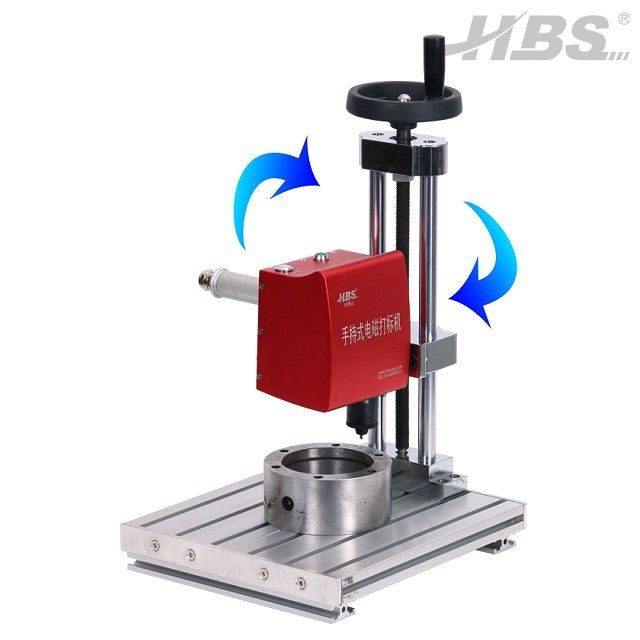
Evaluating hardware requires you to look beyond standard specification sheets. You must understand how different technologies perform during an active, busy shift. Let us break down the core dimensions you should evaluate when choosing a portable dot peen marking machine.
The method used to drive the marking pin determines both mobility and depth. You generally have two choices here.
Pneumatic Actuation: This method uses compressed air to drive the stylus. It is best for creating extremely deep marks in hard metals. However, it requires a tethered air hose. This tether limits true portability and creates a tripping hazard on busy shop floors.
Electromagnetic Actuation: This technology uses an electric solenoid to strike the pin. It is truly cordless and battery-operated. This method is ideal for maximum mobility across large facilities. Historically, it offered slightly less marking force, but modern designs have closed this gap significantly.
Actuation Comparison Matrix | ||
Feature | Pneumatic Actuation | Electromagnetic Actuation |
|---|---|---|
Power Source | Compressed air + electricity | Battery / pure electricity |
Marking Depth | Extremely deep | Moderate to deep |
Portability | Limited by air hose | Fully cordless mobility |
Best Application | Heavy steel fabrication | Inventory yards, large assemblies |
Weight distribution matters just as much as the total weight of the unit. A machine that is top-heavy will severely strain an operator's wrists over an eight-hour shift. You must prioritize balanced designs. Look for dual-handle designs that allow operators to stabilize the machine with both hands. You should also seek out stabilizing accessories. V-shaped front plates help operators mark securely on curved surfaces like pipes and cylinders. These ergonomic features directly improve mark legibility.
You must advise your team to check continuous-use battery life. Do not rely on standby time claims provided by marketing materials. Standby time does not reflect real-world manufacturing conditions. You need machines that utilize hot-swappable batteries. Requirement: Ensure the machine uses standard commercial battery platforms. Many modern machines adapt to 18V or 20V tool batteries found at local hardware stores. This approach is far superior to relying on expensive proprietary batteries that cause unnecessary downtime.
Standard marking force is often insufficient for heavy industrial applications. When standard marks fade, you lose traceability entirely. You must understand when to step up to more aggressive equipment.
You must evaluate machines based on their maximum Rockwell Hardness (HRC) capabilities. Most standard machines handle aluminum and mild steel easily. However, heavy industry often involves hardened alloys. A robust deep engraving marking machine can typically mark materials up to 62 HRC. If you attempt to mark materials harder than the machine's rating, you will shatter the stylus pin. You must verify your material hardness before finalizing any equipment choice.
The physical stylus does the actual work of displacing metal. Carbide stylus pins are the industry standard for durability. The specific cone angle of this pin dictates both marking depth and consumable replacement frequency.
60-Degree Pins: These offer the deepest penetration into metal. They are sharp but wear out faster under heavy use.
90-Degree Pins: These provide a standard balance between readable depth and long-term durability.
120-Degree Pins: These create wider, shallower marks. They last the longest and are ideal for softer materials.
You must match the pin angle to your specific hardness requirements.
Frame the need for deep engraving by analyzing your post-marking treatments. Shallow marks will disappear completely if you paint over them. Galvanizing fills in light indentations. Sandblasting smooths out superficial scratches. If your parts undergo any of these harsh treatments, you must displace more metal. Deep engraving guarantees that the human eye or a scanner can read the serial number after a thick coat of industrial paint is applied.
Mechanical force is only half of the equation. Data connectivity defines modern traceability. You must evaluate how the equipment handles serial numbers and shift codes.
You should critique the shift in user interfaces. Historically, machines featured fragile built-in touchscreens. These screens often cracked in harsh environments. Modern systems shift toward ruggedized mobile apps or integrated wireless controllers. An operator can safely program the job on an industrial tablet. They then transmit the file via Wi-Fi or Bluetooth to the marking head. This separation protects the sensitive computing components from the violent vibrations of the marking process.
Manual data entry is a significant liability on the shop floor. Operators make typing mistakes during long shifts. You must evaluate the ability to pull variable data directly from a central database. A modern system can retrieve serial numbers, shift codes, and time-stamps automatically from your ERP system. By removing manual operator entry, you eliminate human error. This automation ensures your database matches the physical product perfectly.
Integration with optical scanning is vital for high-speed production. You must pair the hardware with 2D or QR code scanners. This connectivity transforms standard equipment into a highly efficient portable metal coding machine. An operator scans a work order ticket, and the scanner instantly triggers the pre-programmed marking job. The machine self-populates the exact serial number. This workflow reduces a five-minute programming task to just three seconds of scanning.
You cannot install industrial equipment and forget about it. Every mechanical process requires upkeep. Understanding the realities of maintenance prevents unexpected production halts.
Warn your team against "zero maintenance" claims from ambitious sales representatives. Dot peen technology mechanically strikes metal with extreme force thousands of times per minute. The physics of this process dictate that parts will degrade. Pins will eventually wear down and lose their sharp points. Internal return springs will fatigue over millions of cycles. You must plan for regular mechanical upkeep rather than hoping for impossible zero-maintenance performance.
You must check if the internal mechanics are sealed properly. Industrial environments are filled with hazards. Metallic dust acts like sandpaper inside moving parts. Cutting fluids and synthetic coolants can short out electrical boards. Ensure the machine carries a sufficient IP rating. A highly rated enclosure keeps environmental contaminants away from sensitive linear guideways and circuit boards.
Evaluate the complexity of replacing consumables. You must determine if stylus replacement and machine recalibration can be done in-house. Your maintenance staff should be able to swap out a worn pin in minutes. If routine calibration requires returning the unit to the manufacturer, you will face unacceptable downtime. Partner with a vendor that empowers your internal team. Securing a reliable portable dot peen marking machine requires verifying that comprehensive service documentation is easily accessible.
Never purchase marking equipment based solely on a specification sheet. You must validate the technology using your actual production parts and personnel.
You must never purchase a machine without a physical test. Always send a sample of your exact production material to the vendor. Ask them to perform a test mark using the data formats you require. Different metal alloys react differently to the same striking force. What looks great on standard aluminum might be completely unreadable on your specialized cast iron. Demand video proof of the marking process on your exact material.
You must establish strict criteria for on-site demos. Do not let the vendor's sales rep perform all the marking during the visit. The sales rep has hundreds of hours of practice holding that specific tool. You must have your actual shift operators use the machine. Have them test the weight, the handle balance, and the software interface. If your operators find it too heavy or the interface too confusing, the implementation will fail.
The best portable marking machine is the one that directly aligns with your operational realities. You must balance material hardness capabilities with operator ergonomics. You need to choose between pneumatic power for depth and electromagnetic power for mobility. Modern data tracking needs demand seamless wireless integration and automated inputs to prevent human error.
Take time to audit your current scrap and rework rates caused by poor marking. Identify where unreadable serial numbers are bottlenecking your production. We invite you to request a technical consultation or a sample marking test today. Protect your traceability by selecting hardware designed for the true rigors of your shop floor.
A: Typically between 0.1mm to 0.5mm depending on the material's hardness, pneumatic vs. electromagnetic power, and the stylus angle. Softer metals allow for deeper penetration, while hardened steels yield shallower marks. Pneumatic systems generally achieve greater maximum depths than electromagnetic systems.
A: Yes, provided the machine is equipped with a V-shaped front mask or stabilizing faceplate to maintain a consistent pin-to-surface distance. This accessory prevents the machine from slipping off pipes or cylinders during the high-vibration marking cycle.
A: Highly variable based on material HRC and marking frequency. Emphasize that evaluating the ease of replacing the carbide stylus is a critical purchasing step. Regular inspection of the pin tip ensures consistent readability and prevents unexpected downtime.

