- All
- Product Name
- Product Keyword
- Product Model
- Product Summary
- Product Description
- Multi Field Search


Views: 135 Author: Site Editor Publish Time: 2026-07-10 Origin: Site


Industrial traceability presents a massive logistical challenge across global supply chains. When metal components are too large, heavy, or integrated to be moved to a stationary marking station, the marking equipment must go directly to the part. You cannot easily transport a fully assembled engine block or a massive pipeline valve to a desktop engraver. Manufacturers require a baseline standard for permanent, audit-compliant metal coding. We see this strict necessity in Vehicle Identification Numbers (VINs), lot codes, and Data Matrix codes operating in exceptionally harsh environments. You need traceability marks surviving rust, extreme heat, and heavy chemical exposure.
This article outlines exactly where portable dot peen technology excels in these demanding industrial scenarios. We will explore how the equipment compares to alternative marking methods on the market. You will also learn how to accurately evaluate a portable dot peen marking machine for enterprise deployment. By understanding these core principles, you can secure reliable, permanent traceability for your largest assets.
Portable dot peen marking machines excel at creating deep, permanent marks that survive post-process treatments like painting, galvanizing, or sandblasting.
They are the industry standard for marking heavy, immobile components in sectors like oil and gas, aerospace, and heavy manufacturing.
While slower than portable lasers, dot peen units offer superior durability in harsh environments and generally require a lower initial capital expenditure (CAPEX).
Evaluating a unit requires balancing portability (battery/electric) against marking depth requirements (often requiring pneumatic power) and software integration for automated serialization.
Understanding the physics behind a portable dot peen engraver helps clarify why it remains an industrial staple. The process falls under the category of Direct Part Marking (DPM). DPM methods engrave data directly onto the substrate rather than applying a superficial label or tag.
The machine operates using a highly durable stylus. Manufacturers typically craft this stylus from tungsten carbide or industrial diamond. An electromechanical solenoid or a pneumatic air pulse drives this pin up and down at rapid speeds. As the stylus strikes the metal, it indents a precise series of overlapping micro-craters. The software guides the X/Y axis motors to form these dots into readable alphanumeric characters, logos, or 2D Data Matrix codes.
The operator positions the marking head securely against the metal surface.
The controller translates the inputted data into exact X/Y coordinate paths.
The drive mechanism rapidly fires the stylus, displacing metal upon impact.
The machine completes the pattern, leaving a permanent indented code.
Unlike laser engravers, dot peen technology relies entirely on cold working. The stylus physically displaces the metal through plastic deformation. It removes no material. More importantly, it generates zero heat. Laser systems melt or vaporize the surface, creating a Heat Affected Zone (HAZ). A HAZ can alter the local metallurgical structure. It often causes thermal stress or material tempering. Aerospace and structural engineering sectors enforce strict compliance rules banning thermal stress on critical load-bearing parts. Cold working avoids this structural compromise entirely.
Marking depth is the primary advantage of this mechanism. A standard portable unit can achieve depths ranging from 0.01mm up to 0.5mm, depending on the metal hardness and the selected drive power. Deep impressions ensure the code remains perfectly legible after rigorous mechanical wear. Furthermore, you can apply thick layers of powder coating, industrial paint, or galvanization over the mark. The deep craters remain visible and scannable through the protective layers.
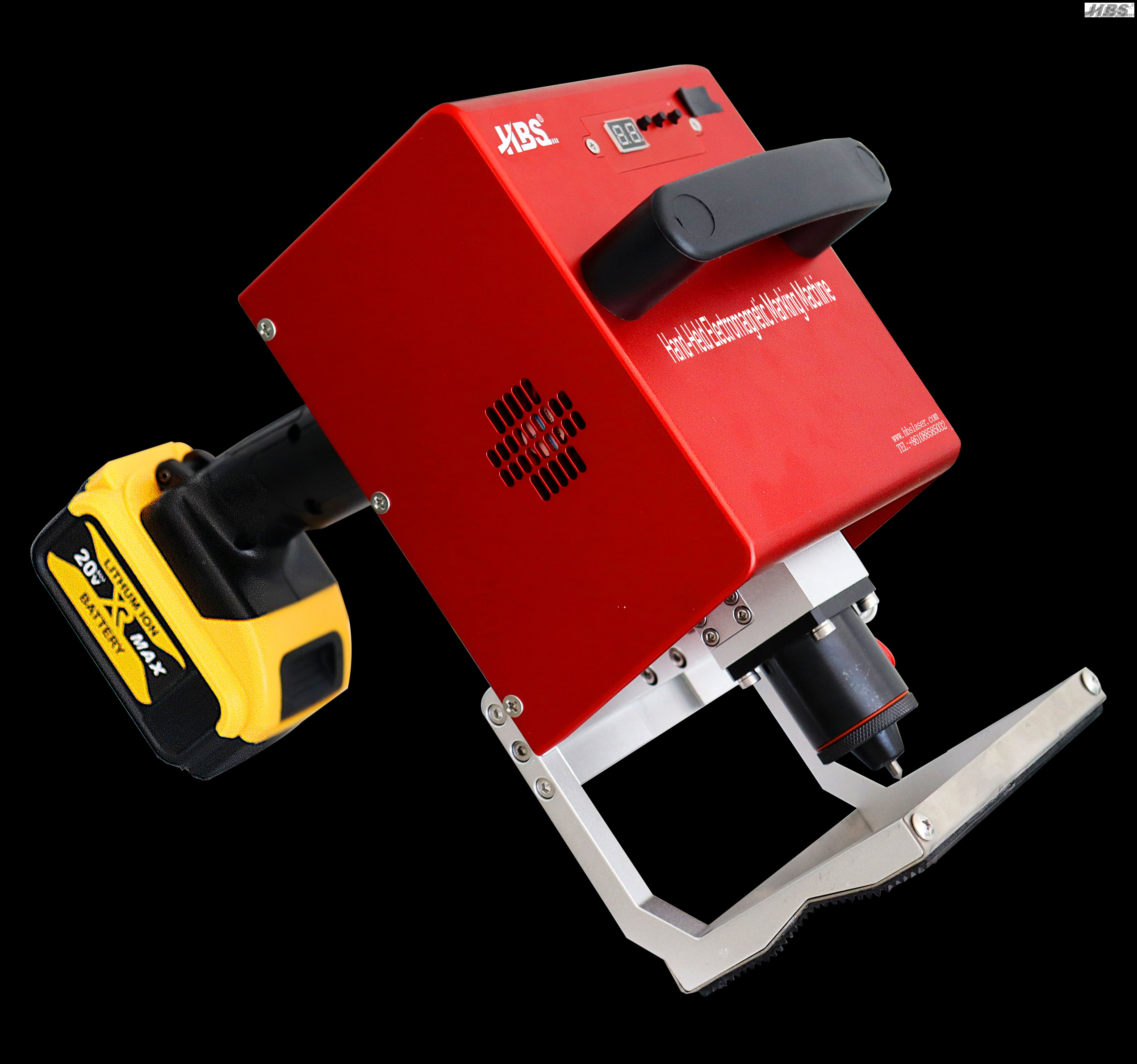
Heavy industries rely heavily on the rugged nature of a metal coding marking machine. When parts cannot move to a cleanroom, the technology must survive the shop floor. We see four major sectors utilizing this equipment daily.
Automotive assembly lines and heavy machinery plants require absolute traceability. Operators use portable units to mark massive chassis frames, cast engine blocks, and large transmission housings directly on the active assembly line.
Core Application: Stamping Vehicle Identification Numbers (VINs) and critical serial codes.
Specific Requirement: Extremely high-depth coding. Regulatory standards require VINs to remain legible even after decades of road wear, rust, or accident damage.
Energy sector assets operate in some of the most brutal environments on earth. Technicians code valves, pipe flanges, and pressure vessels out in the field or on offshore rigs.
Core Application: Field asset tagging and maintenance traceability.
Specific Requirement: Surviving severe surface corrosion. Marks must withstand aggressive sandblasting routines and heavy marine-grade protective epoxy coatings without losing readability.
Aviation components endure immense pressure and vibration. A standard deep scratch could create a stress fracture point. The aerospace industry uses specialized low-stress dot peen techniques.
Core Application: Marking jet turbine blades, landing gear, and structural fuselage components.
Specific Requirement: Strict adherence to compliance standards like AS9132. The machine modifies the dot spacing and stylus angle. This creates rounded impressions preventing micro-cracking while preserving part integrity.
Before construction teams erect a skyscraper or a bridge, every steel beam requires precise identification.
Core Application: Marking I-beams, girders, and structural plates before dispatch.
Specific Requirement: The marking must happen before hot-dip galvanizing. A deep dot peen mark ensures the assembly crew can still read the beam identifier after the thick zinc coating cures.
Facility managers often weigh dot peen systems against modern portable fiber lasers. Both technologies offer unique strengths. Making the right choice depends entirely on your production environment and material requirements.
Dot peen systems generally represent a significantly lower upfront capital investment compared to fiber lasers. Portable lasers require complex optical components and high-end safety enclosures. Conversely, dot peen units rely on simpler mechanical drives. Their primary consumables are cheap, easily replaceable carbide styluses. This makes dot peen an attractive option for facilities needing to deploy multiple units across a large factory floor.
Depth determines survivability in rough environments. You must consider the part's lifecycle.
Dot Peen: Superior for physical depth. It is absolutely required if the target metal will face painting, powder-coating, shot peening, or heavy abrasive wear.
Laser: Superior for high-contrast, shallow surface marks. Lasers excel on anodized aluminum or stainless steel where visual contrast matters. However, thick industrial paints easily obscure flat laser marks.
Lasers are significantly faster. A laser beam travels at the speed of light, rendering complex graphics in seconds. Dot peen requires physical mechanical actuation for every single dot. Therefore, dot peen suits short text strings, VINs, or essential 2D Data Matrix codes. It is not ideal for dense, complex logos or massive blocks of text.
Shop floors are rarely pristine. Dot peen machines are inherently rugged. They remain completely insensitive to ambient light variations. Minor surface contamination, such as thin layers of machine oil, dust, or moisture, does not affect the stylus impact. Lasers, however, require exact focal precision. A dirty lens or heavy surface grease can scatter the laser beam and ruin the mark.
The following technical comparison chart highlights the practical differences between the two methods.
Feature / Capability | Portable Dot Peen | Portable Laser |
|---|---|---|
Mechanism | Mechanical impact (Cold working) | Thermal ablation (Melting/Vaporization) |
Maximum Depth | Up to 0.5mm (Excellent) | Typically < 0.05mm (Surface level) |
Speed | Moderate (Physical actuation) | Very Fast (Optical mirrors) |
Post-Mark Coating | Readable under heavy paint/galvanizing | Often obscured by thick coatings |
Surface Cleanliness | Tolerates oil, dust, and rust | Requires clean, debris-free surfaces |
Initial Upfront Cost | Generally Lower | Generally Higher |
Not all portable units deliver the same performance. When bringing a new machine into your facility, you must evaluate several specific technical criteria. This ensures the equipment matches your exact operational workflows.
The core power source defines the machine's capabilities.
Pneumatic Power: These units require a tethered compressed air line. They deliver maximum impact force. You need pneumatic power for the deepest marks on hard metals or long VIN stamping operations.
Electromagnetic (Battery-Operated): These units use internal batteries and electric solenoids. They offer true, untethered portability. They are ideal for operators climbing around large structures or marking lighter metals. However, their maximum depth capacity is slightly lower than pneumatic systems.
Manual data entry causes typos. In aerospace or automotive sectors, a duplicated serial number creates massive recall liabilities. Assess the onboard software interface. Modern machines must feature seamless integration with your Manufacturing Execution System (MES) or Enterprise Resource Planning (ERP) software. Look for Wi-Fi or Bluetooth capabilities. This allows the system to push automated serialization data directly to the marking gun, completely eliminating operator data-entry errors.
Portability means a human operator holds the device. Evaluate the machine weight, grip handle design, and internal vibration dampening. Heavy-duty pneumatic units can weigh over five kilograms. If an operator uses a heavy machine continuously across an eight-hour shift, fatigue sets in rapidly. For continuous station use, you should install zero-gravity tool balancers. These suspend the weight of the machine, protecting operator health.
Every machine features a specific X/Y marking area limit. Match this window to your specific coding requirements. If you regularly mark long, 17-character VIN strings, you need a wide rectangular marking window (e.g., 150mm x 50mm). If you only mark compact 2D Data Matrix codes on pipe flanges, a smaller, lighter window (e.g., 50mm x 25mm) improves handling and reduces machine weight.
Deploying DPM technology requires realistic expectations regarding maintenance and quality control. Anticipating these realities prevents unexpected downtime.
The stylus acts as the sole consumable. You must establish realistic expectations for carbide stylus lifespan. This lifespan depends entirely on the Rockwell Hardness (HRC) of your target metals. Marking soft aluminum yields a long stylus life. Marking hardened steel degrades the tip rapidly. Operators must inspect the stylus tip regularly. A dull stylus creates wide, shallow craters. This leads directly to unreadable 2D Data Matrix codes. Keep a routine replacement schedule.
A mark holds zero value if a scanner cannot read it later. Highlight the necessity of pairing your new marking machine with an industrial DPM barcode scanner. You cannot rely on standard retail scanners. DPM scanners utilize specialized multi-axis lighting to read indented micro-craters. Always verify your marks against ISO/IEC TR 29158 (AIM DPM) standards. Test the readability under actual field lighting conditions, not just under bright laboratory lights.
We must acknowledge the acoustic reality of mechanical impact. Pneumatic dot peen marking generates significant noise. When the stylus strikes resonant metals like thin sheet metal, empty storage tanks, or hollow pipes, decibel levels spike dramatically. Facility managers must enforce strict Personal Protective Equipment (PPE) compliance. Provide industrial ear protection to operators and nearby personnel to meet occupational safety regulations.
A portable dot peen marking machine remains the definitive tool for deep, indestructible traceability on large metal assets. When parts are too massive to move, or when marks must survive painting and harsh weathering, this technology outshines alternatives. It provides the mechanical depth and rugged reliability required by the world's most demanding industries.
To successfully integrate this technology into your production line, take the following action steps:
Audit your exact marking depth requirements and post-process coating thickness.
Test your target material hardness (HRC) to estimate stylus wear rates.
Assess your facility's compressed air availability versus the need for untethered battery mobility.
Request a proof-of-concept (PoC) demonstration on your actual metal parts before committing to a specific drive type.
Verify the test marks using industrial DPM scanners under your actual shop floor lighting.
A: Yes. Many machines feature specialized V-shaped front plates. These plates rest securely against pipes or cylindrical parts, preventing slipping. Additionally, advanced marking software automatically compensates for minor surface curvatures, adjusting dot placement to maintain readable characters and accurate 2D codes across the radius.
A: High-quality carbide or diamond styluses effectively mark metals up to 62 HRC (Rockwell Hardness). Beyond this threshold, the stylus dulls almost immediately, and the mechanical impact fails to indent the metal deeply. For materials exceeding 62 HRC, you generally require fiber laser technology or specialized machining tools.
A: Yes. Modern units excel at creating Data Matrix codes. The software precisely controls the X/Y axis spacing between individual dots to meet strict readability standards. However, the metal surface must be relatively smooth, and you must use a dedicated DPM barcode scanner equipped with specialized lighting to read the indented craters.

