- All
- Product Name
- Product Keyword
- Product Model
- Product Summary
- Product Description
- Multi Field Search


Views: 151 Author: Site Editor Publish Time: 2026-07-20 Origin: Site


Industrial traceability demands absolute precision across sectors like aerospace, automotive, and oil extraction. Compliance standards require permanent, readable identification on every manufactured component. These rules guarantee safety and supply chain accountability. Selecting the incorrect part-marking technology often causes severe production bottlenecks. Operators might face illegible data matrix codes or increased physical fatigue. Factories frequently require complex facility retrofits to accommodate wrong equipment. These missteps compromise quality control and disrupt high-volume manufacturing lines.
We must objectively compare the distinct advantages of air-driven systems against electromagnetic alternatives. Understanding the contrast between a pneumatic marking machine and an electric dot peen marker clarifies equipment suitability. This choice depends strictly on your specific operational constraints. This guide provides a detailed breakdown of core mechanics, performance capabilities, and facility integration requirements.
Pneumatic Systems: Deliver superior depth and durability, ideal for harsh environments, heavy metals, and pre-painting/coating marking applications, but require dedicated compressed air infrastructure.
Electric Systems: Offer maximum portability, precise dot control for delicate parts, and a lower environmental footprint (no air lines, less noise), making them ideal for highly automated or mobile setups.
The Decision Driver: Your choice ultimately hinges on marking depth requirements, facility infrastructure, and part mobility rather than simply comparing base unit prices.
A pneumatic system uses compressed air fundamentally. The system rapidly fires a specialized stylus against the substrate. Manufacturers typically use carbide or diamond tip materials. These materials withstand thousands of high-speed impacts. The pneumatic action creates deep, continuous, high-impact marks. The core assumption relies on consistent air pressure. Pressure drops directly affect your final mark quality. Substandard pressure produces shallow, unreadable characters. You must supply clean air consistently at 60 to 90 PSI. A high-tension return spring resets the pin quickly after every strike.
Common Mistake: Many facilities ignore air line moisture. Water inside the lines causes internal rust. This ruins the pneumatic cylinder rapidly.
An electric unit operates through electromagnetic principles. It utilizes an electromagnetic solenoid internally. This component drives the stylus downward mechanically. Current flows through the system coil to generate a magnetic field. The system creates highly controlled, uniform dot patterns. It completely eliminates the need for external air. The core assumption involves basic power access. The machine requires only a standard power outlet. Many modern units run on lithium-ion batteries. This allows for immediate deployment across remote sites.
Best Practice: Calibrate the electromagnetic controller regularly. This ensures uniform force distribution across complex automotive or aerospace components.
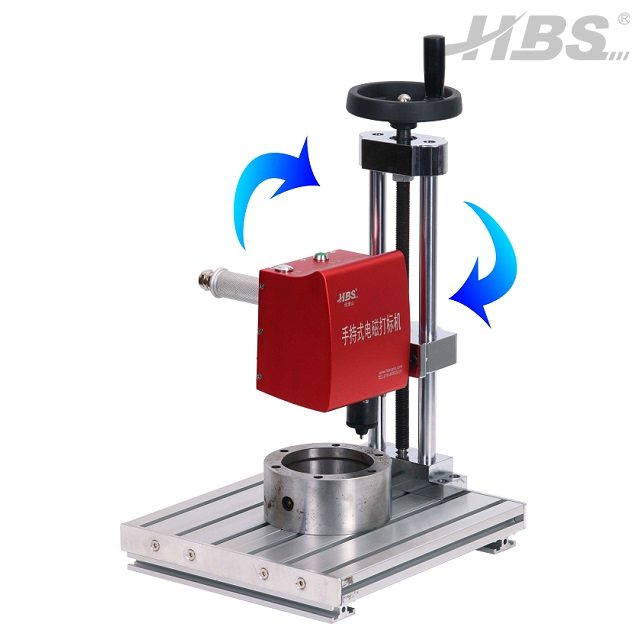
Review the Technology Performance Matrix below. It outlines the exact capability differences between these industrial marking systems.
Feature | Pneumatic Systems | Electric Systems |
|---|---|---|
Primary Power Source | Compressed Air (60-90 PSI) | Electricity (110V/220V or Battery) |
Maximum Marking Depth | Very Deep (Suitable for coatings) | Moderate (Untreated surfaces) |
Data Matrix Precision | Adequate for basic scanning | Exceptional micro-control |
Portability | Low (Tethered to air lines) | High (Fully mobile options) |
Pneumatic technology wins decisively regarding depth. It excels as a heavy-duty pneumatic metal engraver. Heavy industries require deep marks frequently. Parts often undergo aggressive post-marking processes. These include hot-dip galvanizing, thick powder coating, or intense sandblasting. A shallow mark disappears beneath these coatings. Air-driven impact ensures traceability survives these treatments. Heavy metals displace effectively under strong pneumatic force.
Electric markers achieve moderate penetration depth. They provide sufficient traceability on untreated metals. They work perfectly on industrial plastics and aluminum. However, thick post-process coatings easily obscure their shallow marks. You must evaluate your secondary finishing processes beforehand.
Electric systems dominate high-density code generation. They offer superior micro-control over dot spacing. The electromagnetic solenoid adjusts impact force instantly. You can mark dense 2D Data Matrix codes easily. Machine-vision scanners require high contrast and uniform cell alignment. Electric units deliver this precision consistently. They space every dot perfectly without overlap.
Pneumatic systems produce highly legible alphanumeric text. They excel at standard human-readable serial numbers. However, they struggle during ultra-fine code creation. The sheer force of the air impact causes minor material displacement. This displacement sometimes distorts tiny code cells. Machine-vision scanners might reject these imperfect codes.
Industrial production lines demand fast cycle times. Both technologies perform similarly during standard setups. They typically mark three to five characters per second. Operators barely notice speed differences on simple alphanumeric jobs. However, deep-marking requirements change this baseline.
Pneumatic systems maintain a slight operational edge here. They rapidly displace material using high-pressure bursts. Electric units require multiple passes to achieve extreme depth. Multiple passes increase overall cycle times significantly. You must balance speed requirements against depth necessities. High-volume manufacturing usually prioritizes single-pass efficiency.
Facility layout dictates your equipment choices heavily. Electric machines offer exceptionally high mobility. Battery-operated versions free operators completely. Standard 110v or 220v options plug in anywhere. Operators move freely around large fabrication yards. They easily access immense components in massive warehouses. You bring the marker directly to the asset.
Pneumatic systems remain tethered to air hoses. Air lines create potential workplace tripping hazards. They limit operator range significantly. You might need expensive drop-down air lines installed. Putting these at every station disrupts facility workflow. Dragging hoses around heavy machinery introduces constant safety risks.
Maintenance demands vary between both distinct technologies. Pneumatic systems require frequent facility upkeep. Technicians must perform air filter replacements regularly. They monitor moisture traps continuously. Air compressors compress ambient factory air daily. This ambient air contains humidity. Condensation forms inside the metal pneumatic lines. Water travels directly into the marking machine. It rusts the delicate internal springs over time. Dedicated compressor maintenance prevents internal rusting of the marking head.
Electric systems demand near-zero peripheral maintenance. They contain sealed electromagnetic coils internally. Dust and ambient moisture rarely affect them. Technicians simply wipe the machine exterior. They occasionally lubricate the stylus guide rail. You avoid air-line conditioning tasks entirely.
Workplace safety encompasses both noise and vibration. Pneumatic setups generate significantly higher decibel levels. The sheer impact force creates substantial mechanical noise. Extended usage causes localized operator vibration. Operators require robust personal protective equipment during extended shifts.
Electric models support much better workplace ergonomics. They operate quietly during long production cycles. The electromagnetic drive reduces physical kickback dramatically. You improve overall worker comfort and reduce fatigue.
Automotive and Heavy Machinery: Car manufacturers stamp VINs onto chassis frames. Heavy machinery builders identify engine blocks. These parts face extreme environmental abuse. They endure road salt, mud, and intense heat. Only deep pneumatic engraving survives these harsh conditions. Regulatory bodies demand permanent, unalterable identification. Pneumatic machines prevent malicious tampering effectively.
Oil & Gas: Offshore rigs expose equipment to saltwater corrosion. Pipelines transport highly abrasive materials. Valves require clear identification for safety compliance. You must mark these components deeply. Pneumatic impact withstands highly corrosive environments reliably.
Foundries and Casting: Raw castings present rough, uneven surfaces. Shallow markers skip over these intense textures. Air-driven systems penetrate through the rough exterior. They ensure marks remain readable before heavy machining begins.
Aerospace: Aircraft components require zero-defect manufacturing. High-impact strikes cause microscopic material fractures. These fractures create dangerous stress concentrations. Electric systems provide high-precision, low-stress marking. They gently indent the surface without compromising material integrity. Federal Aviation Administration standards dictate strict marking parameters. Electric precision ensures full compliance easily.
Medical Devices: Surgical tools demand pristine manufacturing conditions. Clean room environments strictly prohibit airborne contaminants. Pneumatic exhaust frequently contains aerosolized lubricating oil. This oil violates sterile production protocols. Electric markers operate cleanly without exhausting air. They safely mark titanium implants and stainless steel scalpels.
Logistics & Inventory: Warehouses track massive assets daily. Moving a massive structural beam to a marking station is impractical. You need portable equipment. Battery-powered electric units go directly to the asset. You perform portable marking of large, immovable assets directly on the warehouse floor.
Step 1: Evaluate Post-Marking Processes. Look at your part's entire lifecycle. If the part receives paint, prioritize pneumatic. Galvanizing requires deep craters to remain legible. Assess finishing coats before buying equipment.
Step 2: Audit Facility Constraints. Walk your production floor carefully. Check your existing air compressor capacity. If compressed air is unavailable or unreliable, default to an electric dot peen marker. Unreliable air lines ruin pneumatic consistency.
Step 3: Define Part Mobility. Consider the physical size of your inventory. Operators must often climb over massive parts. Large aerospace fuselages restrict movement. Structural steel beams sit far from air drops. The portability of battery-powered electric markers shines here. Portability easily outweighs the depth of pneumatic options.
Next Steps: Never purchase blindly based on brochures. Request a sample mark on your actual production materials. Ask vendors of both technologies for physical tests. Test scanner readability using your specific factory scanners.
Selecting the right industrial identification equipment requires careful technical evaluation. Neither technology is universally superior across all applications. Their true value remains strictly context-dependent.
Acknowledge the Trade-offs: Pneumatic systems trade ultimate mobility for brute mechanical force. Electric systems trade maximum depth for precision and autonomy.
Audit Your Environment: Base your procurement on a strict audit of your factory conditions. Evaluate your air supply reliability honestly. Understand your operator mobility needs fully.
Verify Compliance: Check your specific industry compliance depth requirements before deciding. Deep coating processes demand air-driven power.
Take Action: Contact our engineering team for a comprehensive feasibility study. We highly recommend requesting a side-by-side sample marking test. We will mark your specific substrate to guarantee perfect scanner readability.
A: Generally, no. High-end electric models can achieve significant depth. However, pneumatic systems inherently deliver higher impact force. They excel at deep-penetration engraving. Air-driven force easily displaces heavy metals. This ensures your marks survive harsh industrial processing and thick protective coatings.
A: They require clean, dry compressed air. Operators usually maintain pressure between 60 and 90 PSI. Standard shop compressors work perfectly fine. However, moisture or oil damages internal pneumatics. You must install inline filters and desiccant dryers to protect the marking equipment.
A: Electric markers are usually preferred for data matrix codes. The electromagnetic drive offers tighter mechanical tolerances. It guarantees consistent dot spacing and uniform cell structures. This precision results in significantly higher machine-vision scanner read rates. Perfect alignment prevents scanning errors on the production line.


