- All
- Product Name
- Product Keyword
- Product Model
- Product Summary
- Product Description
- Multi Field Search


Views: 152 Author: Site Editor Publish Time: 2026-09-04 Origin: Site


Integrating high-speed optical equipment often creates serious tension on the factory floor. Production managers demand rapid cycle times to hit aggressive output quotas. Conversely, safety officers refuse to compromise the physical well-being of floor operators. Integrating a new fiber laser marking machine forces facilities to address this exact conflict immediately.
Deciding between open-style and enclosed systems marks a critical bottom-of-funnel evaluation. This choice directly dictates facility compliance protocols and operator liability. It also shapes daily workflow efficiency for your entire team. Buyers must look far beyond basic performance specifications. You need to understand how machine architecture fundamentally alters workspace hazard levels.
We provide a transparent, evidence-based framework for evaluating these workstations. You will discover how regulatory safety standards influence hardware choices. We also explore the physical operational realities of daily usage. Our guide helps you structure a purchasing decision centered on long-term liability reduction. You will learn to select equipment balancing peak manufacturing output and absolute operator protection.
Safety & Compliance: Enclosed systems typically upgrade a workstation from Class 4 (high risk) to Class 1 (safe under all normal conditions), eliminating the need for dedicated laser safe rooms.
Operator Protection: A full enclosed fiber laser marker prevents accidental exposure to stray laser radiation and contains hazardous airborne particulates.
Compliance Standardization: Opting for a CE laser marking machine with a certified enclosure ensures alignment with international safety and electrical standards.
Trade-offs: While enclosed systems maximize safety, buyers must evaluate interior chamber dimensions against their maximum part size to ensure workflow compatibility.
Shared manufacturing spaces face immense baseline risks when operating high-powered optical equipment. Standard industrial environments constantly feature moving personnel, reflective surfaces, and variable lighting. Introducing intense infrared beams into this dynamic environment creates severe hazard points. We must properly frame these business problems before comparing hardware solutions.
Laser safety classifications offer a strict framework for understanding these hazard points. Facilities typically choose between two primary operational designations:
Class 4 (Open Systems): These devices represent the highest hazard category. They require mandatory personal protective equipment (PPE) for any operator. Facilities must build dedicated safety barriers around the active processing zone. You must also enforce strict access control to keep untrained bystanders out of the firing area.
Class 1 (Enclosed Systems): These workstations enclose the active beam entirely. They remain inherently safe for general retail or industrial environments. Bystanders require no specialized PPE during standard operation. The physical cabinet acts as the primary safety barrier.
Stray reflections pose the most unpredictable threat in any open setup. Highly reflective materials create dangerous scatter risks. Brass, aluminum, and polished steel act like irregular mirrors when struck by intensive light. They bounce invisible infrared beams across the room instantly. Operators cannot dodge wavelengths they cannot see.
Physical enclosures fully mitigate these severe scatter risks. The cabinet absorbs and contains any stray reflections safely. This containment prevents permanent retinal damage to nearby workers. A physical barrier remains the only foolproof defense against unpredictable metallic scatter.
Safety Class Distinction Matrix
Safety Designation | PPE Requirement | Environmental Restrictions | Scatter Risk Mitigation |
|---|---|---|---|
Class 4 (Open) | Mandatory (Laser Glasses) | Dedicated controlled room required | Low (relies on operator caution) |
Class 1 (Enclosed) | None under normal operation | Safe for shared/general floors | High (physical containment) |
Corporate purchasing departments demand strict regulatory baselines for new heavy equipment. You cannot compromise on certified hardware when workplace safety is at stake. Security and authoritativeness drive the procurement process for industrial tooling. Certified enclosed systems deliver both elements reliably.
Legitimate compliance requires adherence to specific international standards. You should prioritize equipment carrying recognized safety marks. A CE laser marking machine ensures alignment with stringent European machinery directives. These standards dictate precise optical density (OD) levels for viewing windows. They also establish rigorous electrical safety thresholds to isolate operators from high-voltage components.
Hardware interlocks represent the most vital fail-safe mechanism in enclosed systems. A true full enclosed fiber laser marker must feature dual-channel interlocks. Single-channel switches can fail silently, creating hidden hazards. Dual-channel magnetic or mechanical interlocks provide redundancy. They immediately shut off the beam source if someone opens the door during an active cycle. This instant termination prevents accidental exposure.
Certified enclosures actively mitigate severe corporate liability. They protect your business from costly OSHA fines during surprise inspections. Furthermore, they drastically reduce the likelihood of worker compensation claims related to eye injuries. Operating an uncertified machine exposes the company to immense legal risks. Compliant cabinets act as both a physical shield for workers and a legal shield for management.
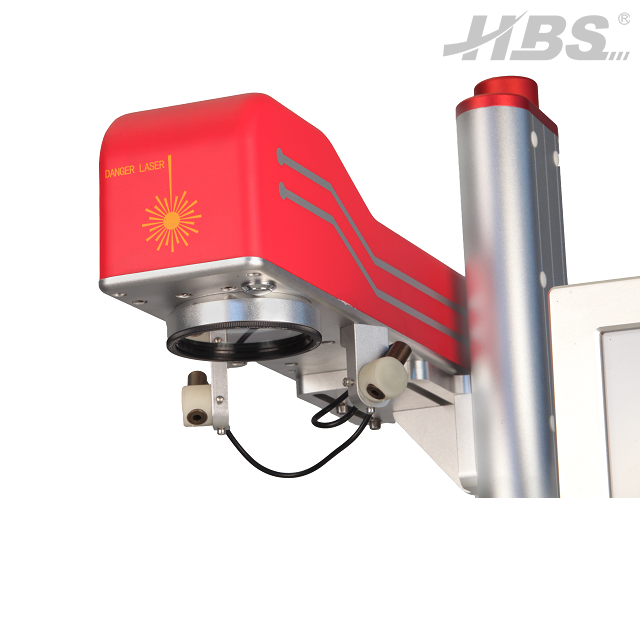
Evaluating shortlists requires a reliable features-to-outcomes framework. Buyers must scrutinize specific cabinet specifications, not just power output. We recommend analyzing three critical hardware dimensions.
First, evaluate fume extraction and containment capabilities. Intense heat vaporizes metals and melts toxic plastics instantly. These processes release hazardous nanoparticles and noxious gases. Enclosures trap these vaporized materials inside the chamber. You must evaluate the integration of exhaust ports. Look for systems utilizing high-grade HEPA and Activated Carbon filtration. These filters capture particulates before they escape into the shared breathing air.
Second, carefully assess the viewing windows. Operators need visual access to monitor the marking process. However, the protective glass must feature a specific optical density (OD) rating. Ensure this OD rating matches the exact 1064nm wavelength of a standard fiber source. Generic tinted acrylic offers zero protection against invisible infrared light. True protective glass blocks the harmful wavelength while letting visible light pass through.
Third, examine the availability of Z-axis automation. Manual focal adjustment proves quite difficult inside a confined safety box. Reaching into a small cabinet to turn a manual handwheel slows down setup times. Therefore, you should evaluate motorized Z-axis pillars. Auto-focus mechanisms use secondary red light pointers to find the perfect focal distance automatically. This automation accelerates changeovers between different part heights.
Specs-to-Outcomes Framework
Hardware Feature | Primary Function | Operational Outcome |
|---|---|---|
HEPA/Carbon Filters | Traps toxic airborne particulates | Prevents respiratory hazards in shared spaces |
1064nm OD6+ Glass | Blocks invisible infrared radiation | Allows safe visual monitoring of active jobs |
Motorized Z-Axis | Automates vertical focal adjustments | Reduces setup time for variable part sizes |
We must maintain skeptical-friendly transparency regarding enclosed workstations. Moving from an open system to a closed cabinet introduces genuine operational drawbacks. Acknowledging these realities helps facilities plan better integration strategies.
Part size constraints represent the primary physical limitation. The interior chamber dimensions dictate your absolute maximum workpiece size. Engraving large or awkwardly shaped industrial parts becomes challenging. Some manufacturers offer removable side panels to handle oversized items. These panels feature safety overrides. However, using these overrides instantly reverts the machine back to Class 4 status. You must then enforce mandatory PPE and clear the room of unprotected bystanders.
Cycle time impact also frustrates high-throughput environments. Manually opening and closing a heavy safety door takes physical effort. It adds several seconds to every single production cycle. Over a thousand units, these seconds compound into hours of lost production time. Operators running fast batch jobs often complain about this added friction.
Facilities can implement smart mitigation strategies to overcome these bottlenecks:
Automated Pneumatic Doors: Install foot-pedal operated doors. They eliminate manual lifting and speed up the loading process significantly.
Rotary Indexing Tables: Use dual-position turntables. The operator loads a fresh part on the outside while the laser processes a part on the inside.
Custom Fixturing: Design multi-part jigs. You can load dozens of small parts into the chamber at once, minimizing door operations.
Establishing clear shortlisting logic justifies the premium price of enclosed systems. Many procurement teams initially balk at the higher upfront hardware costs. We encourage buyers to frame this as a comprehensive risk-reduction strategy.
Compare the initial premium directly against hidden savings. Open systems seem cheaper initially, but they carry massive peripheral expenses. You must build physical safety enclosures or curtained rooms around open workstations. You must purchase specialized safety glasses for multiple staff members. Furthermore, operating open Class 4 equipment often triggers much higher facility insurance premiums.
Enclosed workstations eliminate these cascading peripheral costs. They consolidate safety into a single plug-and-play unit. This consolidation simplifies facility layout planning. It also makes passing corporate safety audits remarkably straightforward. The upfront hardware premium quickly pays for itself by preventing lost-time incidents and regulatory fines.
Take these actionable next steps to finalize your purchasing decision:
Map the exact dimensions of your largest typical workpiece.
Assess your required daily throughput to determine if you need automated doors.
Request material testing videos from the manufacturer to verify internal cabinet lighting and visibility.
Upgrading your workstation goes far beyond a simple machine purchase. A fully enclosed unit represents a strategic investment in scalable, liability-free production. It actively protects your workforce while streamlining your regulatory compliance obligations. Facilities can confidently deploy these systems in shared spaces without disrupting adjacent workflows.
We advise buyers to prioritize specific safety features when requesting vendor quotes. Always insist on certified dual-channel interlocks. Ensure the system supports compatible, industrial-grade fume extraction. Finally, verify that the interior volume comfortably accommodates your largest production parts. These careful evaluations guarantee a safe, highly productive manufacturing environment.
A: If the machine features certified Class 1 status with intact dual-channel interlocks, PPE is generally not required. The physical cabinet blocks harmful radiation entirely. However, you must maintain strict adherence to manufacturer guidelines. If you open safety panels or override the interlocks, operators must immediately wear appropriate 1064nm safety glasses.
A: You are strictly limited by the cabinet's internal volume. Some enclosed systems offer removable side panels or Class 4 override modes for oversized items. When using overrides, the workspace becomes a high-risk zone requiring PPE. For consistently massive parts, a gantry or open system is genuinely the only viable choice.
A: Conformité Européenne (CE) indicates verified compliance with strict European manufacturing standards. In this context, it guarantees the machine meets the Machinery Directive for physical safety. It also proves compliance with the Low Voltage Directive and Electromagnetic Compatibility rules. This label ensures baseline operator protection against radiation and electrical interference.


