- All
- Product Name
- Product Keyword
- Product Model
- Product Summary
- Product Description
- Multi Field Search


Views: 0 Author: Site Editor Publish Time: 2026-07-05 Origin: Site


Moving massive steel pipes or heavy structural beams across a warehouse just to stamp a serial number wastes valuable production time. Manufacturing teams need immediate flexibility on the shop floor. Traditional marking systems anchor your operators to stationary workbenches. Pneumatic air hoses and thick electrical cords create serious tripping hazards and severely limit reach. Transporting heavy components to these rigid setups introduces severe bottlenecks into fast-paced operations. Fortunately, industrial traceability has evolved toward fully autonomous, cordless units. You will discover how a modern setup removes these frustrating constraints and accelerates daily workflows. We will evaluate the immense operational impact of going untethered and analyze core purchasing criteria. You will also learn practical strategies to avoid common implementation failures and ensure your field operators achieve deep, compliant markings anywhere.
Material handling waste silently drains your manufacturing budget. Operators lose hours every week transporting oversized parts to a centralized marking room. A simple structural steel beam requires a forklift, a dedicated driver, and clear warehouse aisles just to reach the engraver. Large pipes and heavy engine blocks demand similar logistical gymnastics. Moving these unyielding workpieces breaks your lean manufacturing flow. The actual marking process takes seconds. However, the internal logistics required for tethered stations can consume twenty to thirty minutes per large component. We see this inefficiency compound rapidly across multiple shifts.
Safety and infrastructure liabilities present another major hurdle. Dragging thick pneumatic hoses across active factory floors introduces severe tripping hazards. Workers constantly step over tangled lines. Forklifts run over air tubes and degrade their integrity. Furthermore, localized air compressors require routine maintenance. They leak oil over time. They generate constant noise pollution. They also demand dedicated electrical drops. These legacy constraints keep your maintenance teams busy fixing infrastructure rather than improving production processes. You spend money maintaining the air supply instead of focusing on the actual traceability application.
Compliance delays directly impact your shipping schedule. Modern quality control demands absolute traceability before any product leaves the facility. Tethered systems force operators to queue up at a single station. When five different production lines funnel their final assemblies into one marking room, delays inevitably happen. Final quality control processes slow to a crawl. You cannot ship a component without its required serial number or data matrix code. Tethered markers become a rigid choke point. They dictate the pace of your outbound logistics and frustrate floor managers trying to hit daily quotas.
Unrestricted mobility transforms how you handle field servicing and heavy construction. Operators simply pick up the tool and walk to the workpiece. A battery powered dot pin marking machine easily travels out to the expansive warehouse yard. You no longer bring the part to the machine. You bring the machine to the part. This untethered freedom empowers workers marking structural steel out in the elements. Field technicians easily apply permanent identification to massive oil valves directly on the pipeline. Construction crews track large bridge components without ever searching for a power outlet or dragging an air compressor through mud.
Consistent marking depth remains critical for industrial compliance. You might assume an untethered tool lacks power. Modern electromagnetic striking mechanisms prove otherwise. They deliver massive force without requiring pressurized air. The internal solenoid drives the stylus down with extreme precision. You achieve deep, permanent, stress-free marks on hardened materials. This mechanical depth is absolutely crucial for parts undergoing post-processing. Marks survive heavy galvanizing processes. They remain highly visible even after thick powder coating applications. You easily meet strict aerospace and automotive identification standards.
Self-contained software ecosystems eliminate peripheral hardware failures. Older portable units often required a fragile external laptop carted alongside the operator. Modern cordless tools feature built-in touchscreens. They utilize integrated Wi-Fi or Bluetooth controllers. Operators manage everything directly on the device. They create templates, input serial numbers, and adjust force settings using the onboard interface. You avoid bringing delicate consumer electronics onto a dirty shop floor. This unified approach protects your data workflow while keeping the hardware footprint incredibly small.
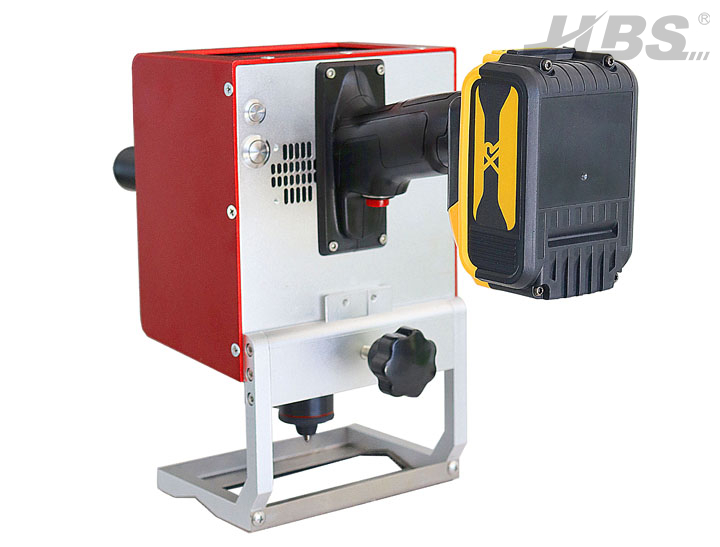
Selecting the right hardware requires careful analysis of your specific daily workflows. A modern on-site dot pin engraver represents a significant upgrade, but models vary wildly in performance. We recommend evaluating these tools across three distinct operational categories to guarantee success.
You must look for real-world metrics rather than vague marketing claims. A specification sheet listing "eight hours of battery" means nothing. You need to know the total marks per charge versus standby time. Continuous deep marking drains power much faster than light scoring. Standardized battery systems offer a massive advantage. Seek out tools compatible with standard commercial tool batteries like Makita or DeWalt. Proprietary cells trap you in an expensive replacement cycle. When an operator runs out of power midway through a shift, swapping a universally available tool battery keeps production moving instantly.
Machine weight is the single most common buyer complaint. Holding a heavy block of metal sideways against a pipe quickly fatigues the operator's wrist and shoulder. Ideal units strike a precise balance. They feature a rigid, durable metal faceplate paired with a lightweight composite body. Handle design drastically impacts daily comfort. Look for pistol-grip configurations or dual-handle designs for heavy-duty applications. Vibration dampening technology is essential for high-volume marking sessions. Excessive vibration not only exhausts the user but can also lead to long-term ergonomic injuries.
The best hardware fails if the software interface frustrates your workers. Evaluate the digital interface for quick data entry. Operators must easily input dates, custom serial numbers, and specific shift codes within seconds. Complex menus lead to costly transcription errors. Advanced data integration speeds up the process significantly. Evaluate the device's ability to import CSV files directly via USB. Check if the tool pairs seamlessly with wireless barcode scanners. Scanning a work ticket to instantly populate the marking field completely prevents human typing errors on the shop floor.
Follow these specific steps when evaluating your next purchase:
Cold weather battery degradation poses a real challenge for outdoor field work. Lithium-ion batteries naturally lose voltage in freezing environments. Their chemical reactions slow down significantly. A battery lasting four hours inside a heated warehouse might only survive two hours on a frozen construction site. You must acknowledge this physical limitation. We strongly recommend purchasing redundant battery packs for winter operations. Keep spare batteries inside a heated truck cab or an insulated jacket pocket until needed. Swapping in a warm battery instantly restores full striking power to the machine.
Drop damage happens in rugged environments. Portable tools inevitably fall off workbenches or slip from ladders. You must evaluate the physical ruggedness of the chassis before deploying it to your crews. Ask suppliers about the availability of protective rubber bumpers. These impact-absorbing shells save internal electronics from shattering. Additionally, the stylus pin acts as a consumable part. Dropping the machine squarely on its front plate often snaps the stylus. You should maintain a small inventory of replacement pins on site to prevent unexpected downtime.
Curved surface challenges frustrate many new operators. Placing a flat metal faceplate against a round pipe creates an unstable connection. The machine will easily slip sideways during actuation. This slipping ruins the data matrix code and damages the component. You must mitigate this risk by utilizing V-shaped front plates. These grooved attachments cradle the pipe perfectly. They lock the tool dead center on the apex of the curve. Custom magnetic masks provide another excellent solution. They firmly grip the steel cylinder and prevent any lateral movement during high-force marking.
Deciding between a portable metal marking machine utilizing dot peen technology and a handheld laser requires assessing your exact environment. Both technologies offer immense value. However, they serve very different industrial applications. Comparing them across practical engineering requirements ensures you deploy the correct tool.
Surface conditions heavily dictate technology choice. Lasers require relatively clean surfaces to focus their beams effectively. They struggle against thick grease or heavy scale. Conversely, dot peen easily punches directly through cutting oil, heavy rust, and accumulated dirt common in field environments. The mechanical stylus violently displaces the debris to reach the base metal. You do not need to pre-clean construction beams before stamping them.
Depth and durability separate the two methods further. Dot peen provides true mechanical depth. This characteristic remains critical for components subjected to harsh post-processing. A deep mechanical stamp survives aggressive sandblasting and thick industrial painting. Portable lasers typically create a high-contrast surface burn or a very shallow engraving. If a part constantly rubs against dirt or undergoes heavy abrasive wear, a shallow laser mark will eventually disappear. The mechanical punch guarantees lifelong traceability.
Safety and compliance protocols differ drastically. Portable lasers emit powerful concentrated light. They require strict personal protective equipment (PPE). Operators must wear specialized safety glasses. They often need physical light enclosures to protect nearby workers from stray reflections. You cannot simply fire a Class 4 laser in an open, busy warehouse without establishing safety barriers. Dot peen machines operate entirely differently. They pose zero optical hazards. You can operate a mechanical marker safely right next to unprotected workers without violating facility safety policies.
Compare the initial capital expenditure and maintenance hardware requirements carefully. Lasers demand higher upfront investments due to expensive optical components and diodes. Mechanical systems cost less initially but require routine replacement of the hardened stylus pin as it physically wears down against steel. Analyzing these distinct hardware paths ensures you align equipment capabilities with your actual shop floor reality.
| Operational Feature | Untethered Dot Peen | Portable Laser |
|---|---|---|
| Surface Tolerance | Marks easily through thick oil, rust, and dirt. | Requires relatively clean, dry surfaces. |
| Marking Depth | Deep mechanical indentation. Survives thick paint. | High contrast surface ablation. Very shallow. |
| Safety Gear Required | Basic ear protection (optional). No optical danger. | Specialized laser safety glasses. Strict area control. |
| Hardware Maintenance | Routine replacement of inexpensive stylus pins. | Minimal mechanical wear. Expensive diode replacement if damaged. |
Battery-powered dot peen markers successfully bridge the gap between heavy-duty industrial traceability and modern lean manufacturing mobility. You no longer have to sacrifice marking depth or compliance standards just to gain portability. By eliminating air hoses and electrical cords, you immediately remove severe logistical bottlenecks from your shop floor. Operators gain the freedom to track heavy, immobile components right where they sit. This shift eliminates wasted material handling time and vastly improves overall warehouse safety.
We advise taking action before completely finalizing your procurement plans. Request a thorough time-study from your vendor to compare your current tethered process against an untethered workflow. Send them physical sample substrates representing your hardest or dirtiest materials. Ask them to return the marked samples for your engineering team to inspect. Physically verifying the mark depth and software usability ensures your investment drives immediate production efficiency.
A: Continuous work cycles dictate exact battery longevity. Most high-quality units offer three to eight hours of operation per charge. Heavy, deep marking density drains the battery much faster than light alphanumeric scoring. Using standard commercial tool batteries allows operators to swap packs instantly and avoid downtime.
A: Yes. Modern untethered units utilize powerful electromagnetic striking mechanisms instead of air pressure. These electric solenoids generate immense downward force. High-end electric pins easily meet strict deep-marking industrial standards required for post-galvanizing or heavy painting applications.
A: These robust tools handle nearly all common industrial substrates. They easily mark aluminum, brass, stainless steel, and titanium. A quality carbide stylus can effectively punch hardened steel up to approximately 60 HRC, covering the vast majority of heavy manufacturing requirements.
A: No. Modern systems function entirely standalone. They utilize onboard, heavy-duty touchscreens or connect seamlessly to dedicated mobile apps. Operators input serial numbers, load templates, and trigger the machine without ever needing a fragile laptop on the shop floor.

