- All
- Product Name
- Product Keyword
- Product Model
- Product Summary
- Product Description
- Multi Field Search


Views: 0 Author: Site Editor Publish Time: 2026-07-04 Origin: Site


Industrial traceability often hits a massive bottleneck. Operators must constantly move heavy, unyielding components to stationary marking stations. Dragging multi-ton fabricated parts across a busy shop floor consumes valuable time. It also ties up critical material handling equipment like forklifts and overhead cranes.
Corded electric and pneumatic marking machines severely restrict mobility. They create dangerous tripping hazards in busy work zones. They also demand complex infrastructure like large air compressors or dedicated power lines right in the field. Enter the cordless alternative.
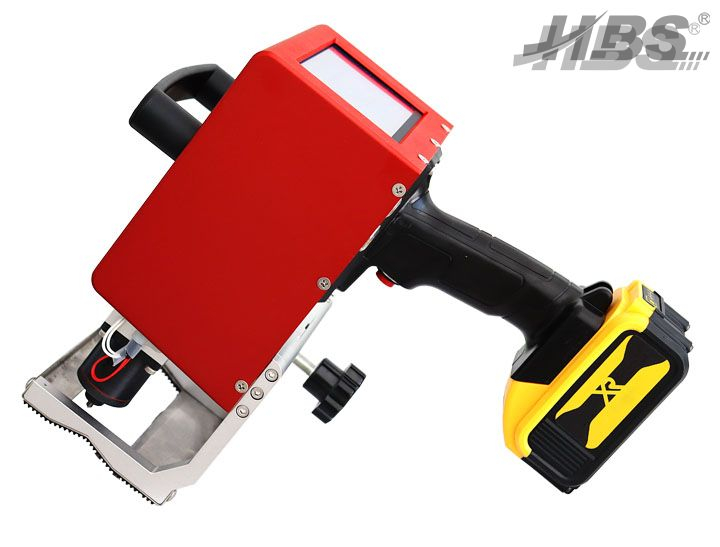
A battery powered dot pin marking machine serves as an untethered, standalone tool. Engineers designed it specifically for tough environments where mobility and compliance tracking must seamlessly coexist. We will evaluate exactly when cordless micro-percussion makes operational sense. You will learn the mechanical advantages, ideal application environments, and critical buying criteria to streamline your heavy-duty part marking process.
A battery powered dot pin marker operates through rapid electromechanical strikes. The device drives a durable tungsten carbide or diamond-tipped stylus into the substrate. This rapid indentation process creates permanent alphanumeric characters. It also generates company logos or scannable 2D Data Matrix codes. Precision onboard stepper motors control the X and Y axes. They guide the stylus accurately across the material surface without relying on external pneumatic pressure.
Power independence defines this tool category. Onboard lithium-ion batteries power every internal component. They drive the heavy-duty striking solenoid. They also power the integrated software controller simultaneously. You get consistent strike force throughout the shift. The voltage remains remarkably stable during the entire marking cycle. This ensures your final digit strikes just as deeply as your first digit.
Modern units completely eliminate peripheral hardware. They feature integrated touchscreens directly on the tool body. Some models connect instantly to mobile apps via Bluetooth. This stand-alone capability removes the need for a tethered PC. You never need an external controller box dragging on the shop floor. Operators gain absolute freedom to move around large assemblies.
Contrast traditional operational drag against cordless freedom. Transporting heavy fabrication parts via forklift wastes countless hours. It disrupts rigid production schedules. Conversely, an operator simply walks to the part. They carry a portable dot pin marking machine right to the chassis. The speed of execution skyrockets instantly. Major workflow bottlenecks disappear from your floor.
Eliminating compressed air requirements brings massive safety and layout benefits. You remove high-pressure air hoses from the workspace floor. You also eliminate heavy 110V or 220V extension cords. This instantly reduces severe tripping hazards. It keeps the shop floor compliant with strict occupational safety standards. Factory layouts become flexible because marking stations no longer require hard-piped air drops.
Bypassing air compressor dependencies frees up your maintenance teams. Air systems require constant leak checks, lubrication, and filter changes. Cordless tools eliminate this burden. Material handling demands also drop significantly. You eliminate long wait times for gantry cranes and heavy lifts. Operations become demonstrably leaner. Safety incidents decrease naturally as material movement decreases.
Remote field usage demands truly untethered tools. Power grids simply do not exist out on an active pipeline. Air compressors cannot easily reach remote desert valves. Workers mark thick steel flanges, pipes, and valves directly in the dirt. Cordless tools survive these harsh realities perfectly.
Operators must permanently mark massive steel chassis assemblies. They stamp traceability data onto structural steel beams. These parts are far too large for standard equipment. They never fit under a conventional column or benchtop marker. Bringing the portable tool directly to the earthmover chassis solves this fundamental manufacturing problem.
Workers stamp Vehicle Identification Numbers (VIN) daily. They apply critical chassis traceability codes. They do this on active, constantly moving assembly lines. Cords pose a major liability here. A dragging cord could easily snag a moving vehicle frame. Cordless markers prevent these costly assembly line accidents.
Outdoor storage yards require ongoing post-production inventory marking. Quality auditors mark replacement parts during routine cycle counts. Untethered tools shine brightly in these sprawling outdoor spaces. Workers walk down endless rows of steel pipes. They mark each piece effortlessly without dragging generators behind them.
Application Environments and Substrate Compatibility Chart
| Industry Sector | Typical Application Focus | Common Substrate Material | Portability Requirement |
|---|---|---|---|
| Oil & Gas | Valve and flange tracking | Cast iron, carbon steel | Extreme (Off-grid field work) |
| Heavy Construction | Chassis and beam stamping | Structural steel, hardened steel | High (Factory floor movement) |
| Aerospace | Landing gear traceability | Aluminum, titanium | High (Active assembly lines) |
| Logistics | Inventory cycle auditing | Various metals, hard plastics | Moderate (Outdoor storage yards) |
Shift your focus away from vague "continuous hours" claims. Instead, evaluate the exact "marks per charge." Recharge times matter heavily for continuous shift work. Look closely for battery swappability. Hot-swap features keep production moving seamlessly. Many top-tier devices utilize standard 18V tool batteries from recognized brands. Others rely on proprietary battery chemistry. Standard tool batteries often provide easier, cheaper replacements locally.
Standard marking areas vary significantly across models. Some offer a highly compact 50x30mm window. Others provide a massive 120x40mm area for multi-line data. Larger window sizes inherently increase the device footprint. Discuss depth capabilities relative to your specific material hardness. A larger window helps for long serial numbers. However, it makes marking tight interior corners difficult.
Standard Marking Window Dimensions and Use Cases
| Marking Window Size | Typical Device Profile | Ideal Operational Use Case |
|---|---|---|
| 50 x 30 mm | Highly compact and lightweight | Short serial numbers, tight geometric spaces |
| 80 x 30 mm | Balanced footprint and capability | Standard QR codes, medium-length part numbers |
| 120 x 40 mm | Heavier, wider baseplate | Full VINs, multi-line compliance data plates |
Consider the physical toll on your workforce. We recommend evaluating several ergonomic benchmarks before purchasing.
Ensure the onboard software supports strict industrial compliance standards. This includes aerospace UID formats and strict automotive traceability rules. The device should achieve this data formatting seamlessly. It must not require complex network setups or third-party middleware. Look for software that automatically increments serial numbers and generates error-free Data Matrix codes.
Portable units handle most common metals perfectly. They easily mark aluminum, brass, and standard stainless steel. They also mark rigid plastics. However, materials exceeding 60-62 HRC (Rockwell Hardness) cause severe issues. High hardness causes rapid stylus wear or incomplete depth penetration. Ultra-hardened substrates often require specialized, heavy-duty stationary equipment.
Marking cylindrical surfaces poses a significant mechanical challenge. Heavily contoured surfaces reject flat-mask handheld devices. The stylus loses contact distance at the edges of the curve. We highly recommend utilizing V-block attachments. These metal fixtures stabilize the device securely. They center the stylus perfectly on curved pipes. This ensures consistent marking depth across the entire code.
Remind your buyers frequently: "cordless" does not mean "maintenance-free." Outline the necessary maintenance intervals early. Expect mechanical spring replacement regularly. Plan for routine pin sharpening to keep barcodes scannable. Anticipate unavoidable battery degradation. Lithium-ion cells naturally degrade over a standard 2-3 year cycle. Plan your spare battery budget accordingly.
A battery-powered dot pin marker represents a strategic investment in workflow mobility. It is far more than just a simple marking tool. It frees your production floor from dangerous cables and restrictive air hoses. By bringing the tool directly to the component, you eliminate massive material handling bottlenecks.
Advise your production team to audit your heaviest manufactured parts. Calculate the exact time spent moving them to stationary markers. Compare that labor time against the upfront cost of a portable unit. The efficiency gains usually justify the transition quickly.
Take immediate action today. Request a sample mark on your specific substrate material. Schedule an on-site demonstration to test the device weight firsthand. Verify the actual battery reality in your own factory environment before deploying fleet-wide.
A: Battery life translates best into "number of markings" rather than continuous hours. A standard lithium-ion battery typically completes 300 to 800 marks per charge. This usually spans a full 8-hour shift under normal intermittent use. However, actual longevity depends heavily on your required marking depth and code complexity. Deep stamping drains the battery faster.
A: While electromagnetic force is exceptionally strong and meets standard traceability depths, it has limits. Cordless markers easily achieve depths required for clear 2D Data Matrix reading. However, heavy-duty pneumatic units may still be required for ultra-deep marking. If your parts must survive heavy galvanizing, thick powder coating, or aggressive sandblasting, a high-pressure pneumatic system remains superior.
A: Cordless dot peen machines handle a wide variety of industrial substrates. They effortlessly mark aluminum, brass, copper, and standard carbon steel. They also excel on stainless steel, cast iron, and extremely hard plastics. The practical limit for most portable units is a material hardness of 60-62 HRC. Beyond this threshold, you risk severe stylus damage.
A: No. Modern battery-powered markers function as 100% standalone units. They feature built-in CPUs and high-resolution touchscreens right on the tool. Operators program serial numbers, logos, and Data Matrix codes directly on the device. Some advanced models also connect seamlessly via Wi-Fi or Bluetooth to standard mobile phones and tablets for remote programming.

