- All
- Product Name
- Product Keyword
- Product Model
- Product Summary
- Product Description
- Multi Field Search


Views: 141 Author: Site Editor Publish Time: 2026-07-07 Origin: Site


Moving a 10-ton structural steel beam simply to apply a serial number wastes time. It drains facility resources. Logistical bottlenecks quickly multiply across the shop floor. You face high crane operational costs. Forklift traffic jams disrupt adjacent assembly lines. Oversized metal components require robust traceability. Oil valves, aerospace frames, and automotive castings demand flawless identification. Regulatory compliance dictates permanent, deep marks. These identifiers must survive harsh outdoor environments. They must withstand industrial painting, heavy galvanizing, and shot blasting.
We will explore a modern alternative to this workflow flaw. You will discover how a mobile strategy bridges a critical gap in industrial identification. You will learn to eliminate severe material handling risks. A smart approach ensures compliant, durable traceability every time. Facilities can drastically improve throughput by altering one simple process step. Bringing the marking equipment directly to the massive component changes everything.
Bringing the machine to the part reduces material handling costs and minimizes workplace safety hazards.
Portable dot peen technology provides the necessary marking depth to survive post-processing (coating, shot blasting) on heavy metal.
Evaluating a battery powered dot peen engraver versus a pneumatic system depends strictly on your balance of facility mobility versus maximum striking force.
Successful implementation requires assessing operator ergonomics, stylus wear rates, and software integration capabilities.
Transporting massive metal assets creates an immediate financial burden. Shop floors rely heavily on overhead cranes and high-capacity forklifts. Moving a large oil and gas valve across a facility requires coordination. You must dispatch certified riggers. Production lines wait while heavy lifting equipment remains occupied. These manual material handling steps add zero value to the final product. Every minute spent rigging a chassis costs money. It inflates labor hours unnecessarily. Crane time directly eats into your operational profit margins.
Moving heavy steel simply for traceability marking introduces unnecessary safety hazards. Heavy load manipulation is inherently dangerous. Dropped loads cause catastrophic facility damage. Swinging structural steel beams threaten personnel on the shop floor. Pinch-point injuries frequently occur during the loading and unloading phases. Minimizing part movement directly correlates to reduced workplace injury rates. Safety directors constantly seek ways to keep multi-ton components stationary during secondary operations.
Traditional stationary marking systems force a severely flawed baseline. They mandate a "part-to-machine" workflow. This method works fine for small brackets or light aluminum housings. It becomes entirely unscalable for structural steel. Oil and gas pipes cannot easily fit into desktop marking enclosures. Large automotive castings require cumbersome custom jigs for stationary marking. Forcing large assets to visit a fixed station creates a massive QA/QC bottleneck. Manufacturers desperately need a "machine-to-part" paradigm to maintain workflow velocity.
Heavy industries require marks surviving decades of abuse. A portable dot peen marking machine excels precisely here. The process uses oscillating carbide or diamond styluses. These hard pins rapidly strike the component surface. They displace metal rather than burning it away. Lasers use heat to ablate material, which can induce micro-cracking. Dot peen systems create continuous, low-stress impact craters. This mechanical displacement proves essential for pressurized environments. Aerospace parts and pressure vessels strictly mandate low-stress marking methods to prevent metal fatigue.
Post-process readability separates adequate marks from excellent ones. Industrial parts rarely stay bare. They undergo aggressive secondary treatments. Components endure hot-dip galvanizing, thick powder coating, or heavy rust accumulation. Standard surface etching vanishes under a heavy zinc layer. Dot peen craters push deep into the substrate. You can clearly read the resulting 2D DataMatrix codes. Machine vision scanners easily decipher these codes post-coating. Human operators can still read alphanumeric serial numbers through thick layers of industrial paint.
Mobility serves as a massive cost-saver on the production floor. Operating a handheld metal marking machine directly on the shop floor changes everything. Inspectors can mark heavy assets right at the welding station. Field technicians can apply identification plates outdoors in storage yards. You completely bypass the traditional QA/QC bottleneck. Parts flow continuously toward shipping without detour. This direct-to-part intervention saves countless hours per week. It reclaims valuable floor space previously dedicated to staging areas.
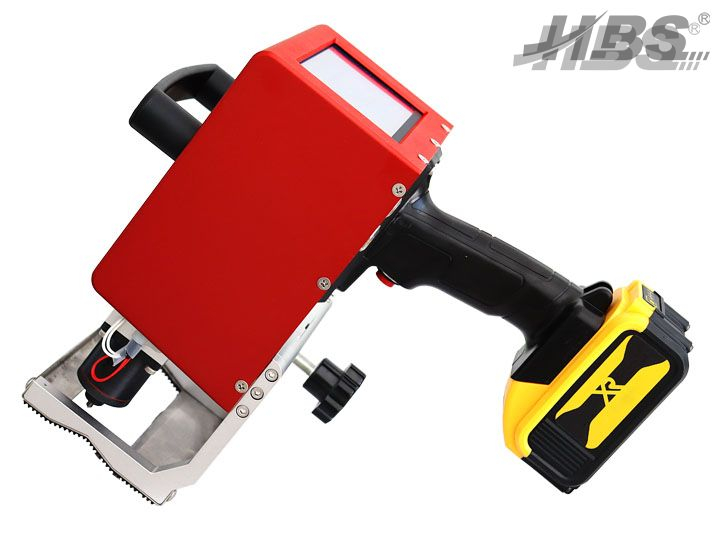
Choosing the right mobile system requires understanding your primary constraint. You must decide between maximum mobility or maximum impact force. Both options offer distinct industrial advantages. They utilize entirely different power delivery methods to actuate the stylus.
Battery-powered models utilize internal electromagnetic coils. They drive the carbide pin using pure electrical pulses. This category offers true, unhindered field mobility. Operators can walk across expansive outdoor laydown yards. They can climb scaffolding to mark installed structural steel. These units prove best for facilities where dragging air hoses creates a severe trip hazard. A battery powered dot peen engraver navigates tight spaces effortlessly. However, it presents specific trade-offs. Electromagnetic actuation typically yields slightly lower maximum impact force. Marking depth might fall short for heavily galvanized layers. You remain limited by battery charge cycles. Continuous shift work requires maintaining multiple backup batteries.
Portable pneumatic models rely on compressed air lines. Air pressure physically drives the marking pin downward with immense force. They deliver extremely deep marking capabilities. This makes them best for pressing VINs into heavy truck chassis. They easily penetrate thick mill scale or heavy protective coatings. When your facility provides accessible air drops, pneumatic units excel. The primary trade-off involves the air hose tether. Tethered operation restricts true 100% mobility. Operators must drag lines across the floor. This limits distance from the primary air compressor infrastructure.
Feature | Battery Powered (Electromagnetic) | Portable Pneumatic |
|---|---|---|
Primary Power Source | Lithium-ion Battery | Compressed Air Line |
Mobility Level | 100% untethered | Limited by air hose length |
Impact Force | Moderate to High | Extremely High |
Ideal Application | Outdoor yards, tight spaces, trip-hazard zones | Deep VINs, pre-galvanized heavy structural steel |
Operational Constraint | Battery life cycle limits continuous use | Requires facility air infrastructure |
Procuring a mobile marking system requires careful technical scrutiny. You cannot rely on basic product brochures alone. Industrial environments expose equipment to extreme conditions. Your evaluation team must weigh several critical operational dimensions. We recommend following a structured technical assessment.
Analyze Striking Force and Depth Control: Different metals present vastly different hardness profiles. Look for systems featuring highly adjustable force settings. You need delicate settings for thin aluminum tags. You need maximum force for hardened steel castings. Precise depth control prevents material warpage.
Assess Ergonomics and Weight: Handheld units must maintain perfect physical balance. Operator fatigue directly reduces marking accuracy. A heavy, awkward gun causes misaligned text. Evaluate the handle placement critically. Aim for a total weight under 10 lbs for frequent daily use.
Evaluate Software and Connectivity: Modern traceablity relies on digital records. Assess the machine's standalone capabilities. Built-in touch screens allow field editing. Wi-Fi and Bluetooth connections enable remote programming. Ask if the system can pull serialization data directly from your ERP or MES. This eliminates manual typing errors entirely.
Verify Durability through IP Ratings: The shop floor destroys fragile electronics. The unit must survive conductive metal dust. It must withstand splashing cutting fluids. Occasional drops onto concrete floors will happen. Look for robust ingress protection ratings to ensure longevity.
By applying these four criteria, procurement teams minimize purchasing mistakes. They align machine capabilities directly with shop floor realities. A well-evaluated system guarantees operator acceptance. It ensures long-term reliability in punishing manufacturing environments.
Introducing handheld equipment introduces specific operational challenges. Facilities often underestimate the physical realities of the marking process. Acknowledging these risks early prevents production delays later. Proper planning mitigates these common implementation hurdles.
Stylus wear requires strict maintenance scheduling. Carbide pins inevitably degrade over time. Continuous impact against hard alloys dulls the tip. A dull tip produces shallow, illegible marks. Establish a clear baseline immediately. Determine exactly how many hours a pin survives on your specific steel alloys. Create a proactive schedule for sharpening or replacement. Waiting for quality control to reject a mark wastes valuable time.
Surface preparation assumptions cause significant frustration. Handheld dot peen systems handle rough surfaces better than lasers. However, they possess physical limits. Severe surface curvature distorts 2D DataMatrix codes. Heavy mill scale deflects the stylus tip. Outline maximum curvature tolerances for your operators. Ensure pipe surfaces fall within acceptable radial limits. Sometimes, a quick localized wire-brushing proves necessary before marking.
Operator training remains an overlooked necessity. A handheld unit requires proper physical technique. We face a definite learning curve here. Operators must hold the machine perfectly flush against the metal. Angling the tool causes "ghosting." Ghosting happens when the pin strikes unevenly, creating double images. Uneven pressure causes varying mark depths. Train personnel to firmly anchor the faceplate against the component before triggering the cycle.
Moving from evaluation to purchase requires methodical shortlisting. You need a structured approach to validate the investment. Do not rush this phase. Follow a deliberate sequence to guarantee equipment suitability.
Define the Application Parameters: Document the absolute hardest material you process. Identify the required mark depth in millimeters. Determine whether a 2D code needs scanning after heavy powder coating.
Request a Proof of Concept: Never buy industrial equipment based on spec sheets alone. Demand a physical sample mark on your exact material. Run that marked sample through your actual coating or blasting line. Verify the code scans perfectly afterward.
Calculate Workflow ROI: Quantify the actual financial benefits. Factor in the saved crane rental time. Calculate the reduced scrap resulting from eliminating manual hand-stamping errors. Add the savings from eliminating outsourced marking services.
Bringing stakeholders together ensures a smooth rollout. Involve quality assurance inspectors early. Let operators hold the equipment during the trial. Their ergonomic feedback proves invaluable. An inclusive shortlisting process guarantees you select the ideal unit for your unique environment.
Portable dot peen systems represent much more than mere convenience tools. They serve as fundamental risk-reduction investments. They act as critical throughput-enhancement mechanisms for heavy manufacturing. By eliminating hazardous material handling, you protect your workforce. By marking components exactly where they sit, you accelerate production velocity. You ensure deep, durable traceability that survives the harshest secondary processes.
Take decisive action to modernize your facility's identification workflow. Encourage your evaluation team to request a custom sample mark immediately. Schedule an on-site demonstration to validate ergonomics and depth capabilities. Experience firsthand how mobile marking technology transforms heavy industrial logistics.
A: Marking depth depends heavily on material hardness and power source. Pneumatic systems generally reach depths up to 0.5mm (0.02 inches) on standard structural steel. They push deeper on softer aluminum. Battery-powered units typically achieve 0.2mm to 0.3mm on carbon steel. Highly hardened alloys will naturally yield shallower marks.
A: Yes, in many heavy industrial scenarios. Dot peen proves superior for achieving mechanical depth. It survives post-coating processes and offers low-cost ruggedness. Lasers excel at fast, high-contrast surface marks. However, lasers struggle if the heavy metal undergoes hot-dip galvanizing or severe shot blasting.
A: Yes, they can accommodate moderate curves. Many units feature V-shaped front plates. These plates physically nest against the pipe exterior to stabilize the machine. Advanced software also compensates for limited radial curves. This ensures 2D codes remain properly proportioned for accurate scanning.
A: They effectively mark a vast range of common industrial metals. This includes carbon steel, stainless steel, cast iron, aluminum, and brass. Most units comfortably mark titanium and hardened alloys up to approximately 62 HRC. Beyond this hardness rating, stylus wear becomes rapidly unmanageable.

