- All
- Product Name
- Product Keyword
- Product Model
- Product Summary
- Product Description
- Multi Field Search


Views: 134 Author: Site Editor Publish Time: 2026-07-23 Origin: Site


Modern manufacturing demands permanent, unalterable component traceability across all production stages. From vehicle identification numbers (VINs) to complex DataMatrix codes, reliable part tracking remains absolutely critical. Harsh industrial environments easily destroy superficial labels. Shallow engravings often fade under heavy wear. Manufacturers solve this by combining compressed air and electromechanical controls. This synergy achieves high-frequency, deep indentation on extremely hard substrates.
Procurement and production teams must rigorously evaluate these systems. A robust pneumatic marking machine ensures lifelong readability for critical components. Factory conditions expose equipment to dust, vibration, and extreme temperatures. You must choose a device built for these rigorous environments.
We will explore the core mechanical principles driving these industrial devices. You will understand when to specify air-driven technology over electric alternatives. We also cover practical implementation risks. Finally, you will learn the exact technical specifications to demand before your next capital equipment purchase.
A pneumatic marking machine utilizes compressed air to drive a carbide or diamond stylus, creating deep, permanent stress-free micro-dots on metal.
Ideal for heavy industrial applications requiring deep marks that survive post-mark processing (galvanizing, painting, sandblasting).
Requires a consistent, dry compressed air supply and stable fixturing, making it less portable than purely electric alternatives but superior in marking depth and speed.
Precision relies on synchronized mechanical movements. X-Y stepper motors handle exact marking head positioning. A dedicated pneumatic cylinder provides the necessary striking impact. We classify this setup as a pneumatic dot peen marking machine. The stepper motors glide along industrial linear guide rails. They move the striking head to precise coordinates. Meanwhile, the pneumatic cylinder delivers controlled vertical strikes. This interplay creates highly accurate characters. It easily forms complex logos or alphanumeric sequences.
Regulated air pressure acts as the primary driving force. Compressed air forces a solid carbide pin downward. It strikes the substrate hundreds of times per second. A heavy-duty return spring instantly retracts the pin upward. This rapid oscillation creates continuous lines of deep micro-dots. Operators adjust the incoming air pressure to change the impact force. Higher pressure yields deeper marks. Lower pressure creates finer, lighter indentations.
These devices do not cut or remove raw material. Instead, they induce localized plastic deformation. The hardened pin displaces the metal downward and outward. This maintains the structural integrity of the component. It never creates stress risers or microscopic cracks. Aerospace and automotive standards require this specific non-destructive method. It preserves the fatigue resistance of critical load-bearing parts.
A CNC or microprocessor controller acts as the central brain. It translates digital CAD files or text strings into physical action. The controller dictates precise air-valve timing. It simultaneously calculates the exact X-Y motor coordinates. This synergy ensures perfect dot spacing. Consistent dot spacing remains vital for machine-readable 2D codes. Modern controllers adjust to curved surfaces automatically. They ensure uniform depth across uneven component geometries.
Common Mistakes:
Running the equipment without a dedicated air regulator.
Using worn-out return springs, causing sluggish pin retraction.
Ignoring daily calibration of the X-Y stepper motors.
Strict compliance mandates govern modern heavy industry. The aerospace, automotive, and oil & gas sectors demand flawless component tracking. Parts often endure decades of extreme friction and harsh weather. Marks must remain perfectly legible after 30 years of wear. An industrial metal part marking machine ensures this lifelong readability. Inspectors rely on these deep marks during routine safety audits. Failure to produce legible serial numbers often halts entire production lines. Regulatory bodies issue severe fines for untraceable components.
Manufacturing rarely stops at the marking station. Parts frequently undergo aggressive downstream processing. They face powder coating, hot-dip galvanizing, or intense heat treatment. Shallow laser engravings often fail during these stages. Heavy industrial coatings fill in superficial marks instantly. Sandblasting completely erodes light surface etching. Pneumatic depth guarantees the serial number remains visible. The deep spherical indents survive thick layers of industrial paint. They remain legible even after aggressive chemical baths.
High-volume production lines require immense operational speed. Traditional metal stamping is fast but lacks variable data flexibility. You cannot change a physical stamp plate between every single part. Electric peening offers data flexibility. Yet, it lacks the heavy impact speed required for deep engraving. Pneumatic systems deliver continuous-duty performance. They strike metal rapidly without overheating. This keeps the assembly line moving forward without costly bottlenecks.
Best Practices for High-Volume Lines:
Integrate barcode scanners to feed serial data directly to the marker.
Use automated part-feeding chutes to reduce manual handling time.
Implement dual-head pneumatic systems for exceptionally large character strings.
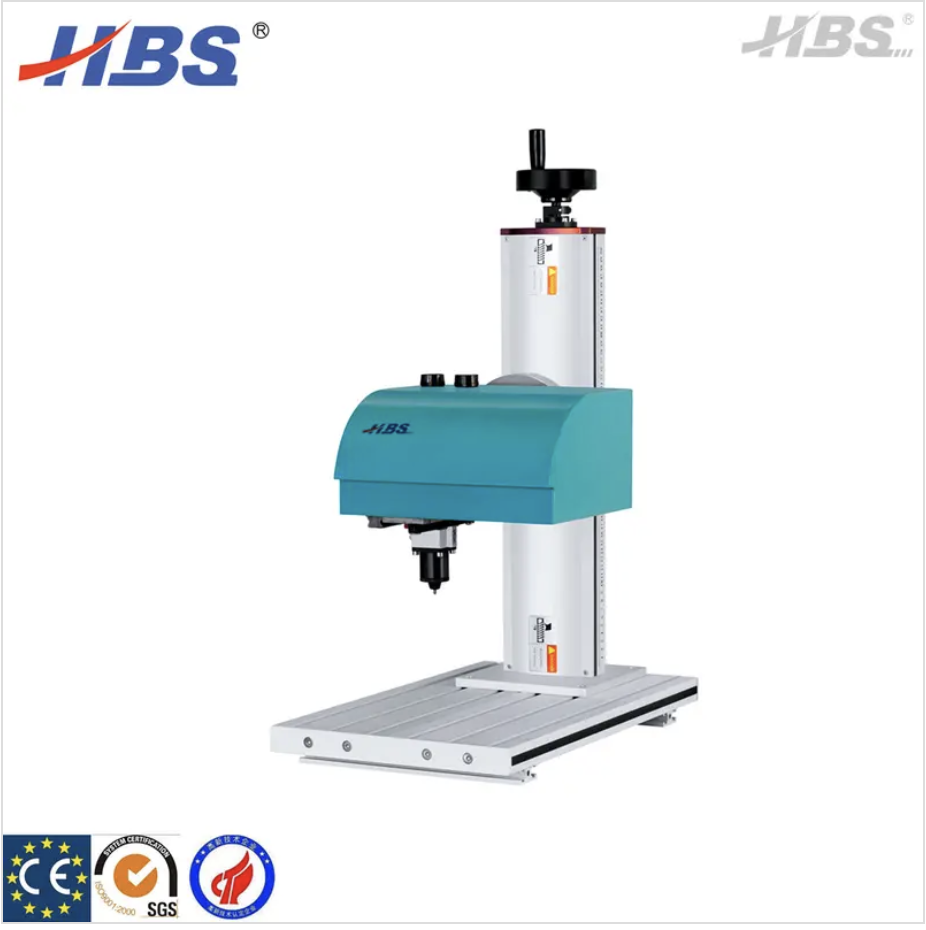
Pneumatic systems deliver incredibly high impact force. You adjust this force easily using a simple air pressure regulator. They achieve deep marks suitable for very hard metals. They easily mark substrates up to 62 HRC. Electric versions rely entirely on electromagnetic coil strength. They generate significantly less downward force. Electric units work better for shallow, precise marks. They excel on delicate or thin-walled components.
Pneumatic tools require a dedicated, regulated shop air supply. They require air hoses, making them slightly less mobile. However, they easily tolerate dirty, high-vibration environments. Metal dust and cutting fluids do not affect pneumatic cylinders. Electric units require only a standard power outlet. They offer high portability across the shop floor. Yet, they remain sensitive to extreme industrial contaminants. Fine metal dust can short-circuit electromagnetic coils.
Pneumatic units experience lower mechanical wear on the impact axis. The compressed air acts as a natural shock absorber. This air cushion protects the internal components from violent recoil. However, they remain highly vulnerable to air line moisture. Electric units face a different set of challenges. They carry a higher risk of internal coil burnout. Continuous, deep-marking applications often cause mechanical fatigue in electric models.
Evaluation Criteria | Pneumatic Systems | Electric Systems |
|---|---|---|
Maximum Impact Force | Very High (Driven by air pressure) | Moderate (Driven by electromagnetism) |
Substrate Hardness Limit | Up to 62 HRC | Typically up to 45 HRC |
Environmental Tolerance | Excellent against dust and cutting fluids | Sensitive to fine metallic dust |
Portability | Low (Tethered to air compressor lines) | High (Requires only 110V/220V power) |
Primary Wear Component | Air valves (due to moisture) | Electromagnetic coils (due to heat) |
Pneumatic reliability depends entirely on air quality. Moisture traps and inline lubricators are absolutely non-negotiable. Water in compressed air lines causes most pneumatic valve failures. Rust develops inside the delicate directional valves. Clean, dry air extends equipment life significantly. Install a dedicated desiccant dryer near the marking station. Inspect your filtration bowls daily. Drain accumulated water before starting every production shift.
Rigid part clamping is an absolute necessity. The striking pin transfers massive kinetic energy into the part. Poor fixturing absorbs this impact energy. The part bounces away from the stylus. This results in shallow, completely illegible characters. It also causes excessive lateral stress on the stylus. Secure your components firmly using toggle clamps or custom pneumatic vises. Eliminate all vertical and horizontal play before initiating the cycle.
Rapid metal striking generates high decibel levels. You must address this acoustic output proactively. Prolonged exposure causes operator fatigue and hearing damage. Implement strict noise mitigation strategies. Build soundproofing enclosures around automated marking stations. Require operators to wear appropriate hearing protection. This ensures strict OSHA and regulatory compliance on the shop floor. Heavy cast-iron fixtures also help absorb excess acoustic resonance.
Modern smart factories require seamless automated data flows. Evaluate the marker's communication protocols thoroughly. It must accept automated serialization data directly. Look for RS232, Ethernet/IP, or Profinet compatibility. Direct integration from a factory ERP or MES eliminates human error. Operators should never manually type serial numbers. Manual entry causes catastrophic traceability failures. The controller must fetch data directly from the central database.
Best Practices for Software Integration:
Test your network latency before deploying the system.
Ensure the controller supports automatic date and time coding.
Set up duplicate data logging to track every successful marking cycle.
Match the machine footprint to your largest required text string. Consider the physical part geometry carefully. You want to avoid repositioning the part mid-cycle. Repositioning introduces severe alignment errors. A standard 100mm x 150mm window suits most automotive tags. Massive pipe flanges might require a 300mm x 200mm marking area. Always buy a slightly larger window than your current minimum requirement.
Specify the exact pin angle and core material. A 90° carbide pin works exceptionally well for general use. It creates highly readable, standard-width characters. A 120° pin suits extremely hard metals. The wider angle prevents the delicate tip from shattering under heavy pressure. Diamond-tipped styluses offer superior longevity but cost significantly more. Choose based on your desired character resolution and daily production volume.
Assess the daily operating setup rigorously. Does the machine require a dedicated Windows PC on the shop floor? Commercial PCs often fail in dusty, un-air-conditioned environments. Windows updates can suddenly interrupt continuous production runs. A robust, standalone touchscreen controller provides vastly better reliability. These industrial interfaces resist oil, dust, and heavy impact. They boot up instantly and run dedicated, crash-proof embedded software.
Cylindrical parts require highly specialized handling. You cannot mark a round pipe accurately on a flat table. Determine if the supplier offers modular rotary chucks. You will absolutely need these for marking pipes, flanges, or engine shafts. The controller must support three-axis interpolation. It must rotate the part simultaneously as the X-Y head moves. This keeps the stylus perfectly perpendicular to the curved surface at all times.
Common Purchasing Mistakes:
Failing to test mark actual production samples before buying.
Ignoring the maximum height clearance needed for bulky parts.
Forgetting to verify local technical support availability.
Investing in reliable traceability equipment protects your brand and ensures regulatory compliance. The decision to choose pneumatic technology hinges heavily on your environment. You must prioritize marking depth, operational speed, and raw durability over basic portability. Air-driven systems deliver the intense impact required for permanent identification.
Before finalizing your procurement process, conduct a physical sample-marking test. Ship your exact production substrates to the manufacturer. Evaluate the resulting marks only after all downstream finishing processes are complete. Check the readability after painting, galvanizing, or heat treatment. Implement rigid fixturing and clean air filtration to guarantee decades of flawless performance.
A: These heavy-duty devices typically mark metals up to 60-62 HRC. They utilize specialized carbide or diamond-tipped styluses to penetrate tough substrates. If your material exceeds 62 HRC, you will likely need an industrial laser marking system instead.
A: Most machines operate efficiently between 30 and 90 PSI (2 to 6 Bar). Consistency matters far more than maximum pressure. You must install a dedicated inline regulator to prevent pressure spikes, which cause uneven character depths.
A: Stylus lifespan varies widely based on substrate hardness, daily marking volume, and pressure settings. In high-volume steel manufacturing, a pin might last three to six months. On softer aluminums, a single pin can last several years before needing replacement.
A: Yes, they easily generate machine-readable 2D DataMatrix codes. This requires high-resolution stepper motors and precise air regulation. The controller meticulously spaces individual micro-dots to form the geometric patterns required for barcode scanners.


