- All
- Product Name
- Product Keyword
- Product Model
- Product Summary
- Product Description
- Multi Field Search


Views: 0 Author: Site Editor Publish Time: 2026-07-08 Origin: Site


Industrial fabrication and field repair often face a massive logistical bottleneck. Moving heavy, immobile parts to centralized marking stations wastes valuable time. It also creates significant safety hazards across the shop floor. Relying on forklifts or overhead cranes just to stamp a serial number slows down entire operations. To solve this problem, many modern facilities now shift from traditional tethered pneumatic or AC-powered systems to battery-operated alternatives. You no longer need to drag air hoses across production areas or search for distant power outlets. A battery powered dot pin marking machine offers the necessary marking depth and compliance traceability without compromising mobility or field safety. In this article, you will discover how untethered tools improve daily workflow efficiencies. We will explore key performance capabilities, real-world industry applications, and crucial evaluation criteria to help you select the right equipment for heavy fabrication needs.
Traditional marking setups rely heavily on stationary workstations. This reliance creates friction in fast-paced industrial environments. Understanding the hidden penalties of corded systems helps justify equipment upgrades.
Pneumatic and corded systems introduce severe hidden costs. Air hoses create dangerous trip hazards on busy shop floors. Limited airline reach forces operators to bring massive parts to the machine. This transport bottleneck wastes hundreds of labor hours annually. Waiting for an available forklift or overhead crane delays the entire production schedule. You lose money every minute a heavy beam sits waiting for a simple identification stamp.
Bringing the tool directly to the part drastically improves cycle times. Operators can walk down a line of assembled components and mark them sequentially. Heavy fabrication yards benefit immensely from this flexibility. Emergency mobile repair units can deploy instantly. A technician grabs the tool, walks to the broken machinery, and applies a new serial number in seconds. This direct approach eliminates transit time. It keeps production moving smoothly and predictably.
Material handling presents major risks in industrial settings. Lifting and moving oversized parts leads to frequent workplace injuries. Reducing crane lifts directly lowers your facility accident rate. Furthermore, on-site marking guarantees immediate compliance. You can instantly apply permanent traceability data exactly where you assemble the part. This ensures accurate CE marks and batch numbers before the component ever leaves the zone.
Understanding how these untethered units function helps establish realistic operational expectations. Modern battery systems rival traditional setups in many industrial applications.
Pneumatic systems rely on compressed air to slam a pin into metal. Battery-driven units use electromagnetic solenoids instead. These internal solenoids generate intense, rapid impact force without external air supplies. You achieve deep, highly visible marks. Realistic marking depths accommodate aluminum, mild steel, and stainless steel effortlessly. A standard 90-degree carbide stylus cuts through rust, paint, and mill scale. This guarantees long-term readability even in harsh outdoor environments.
Common Mistake: Operators often press the machine too hard against the metal. The electromagnetic solenoid requires a slight gap to accelerate the pin. Pressing too firmly restricts the pin movement and results in shallow, faint marks.
| Feature Category | Pneumatic Systems | Electromagnetic (Battery) Systems |
|---|---|---|
| Power Source | Compressed air hose + AC power | Lithium-ion battery packs |
| Mobility | Highly restricted by tether length | Fully untethered and portable |
| Impact Force | Very high (adjustable via air pressure) | High (adjustable via software settings) |
| Maintenance | Requires air filter checks and lubrication | Minimal mechanical maintenance required |
Standard battery lifecycles dictate shift capabilities. A fully charged unit typically provides several hours of continuous marking time. However, standby time often spans an entire eight-hour shift. Power management software puts the machine to sleep between marks. Hot-swappable battery systems remain absolutely necessary. Operators can eject a depleted battery and insert a fresh one in seconds. This prevents production halts mid-shift.
Industrial environments destroy fragile electronics. Corded markers often require an external laptop. Laptops do not survive well near welding sparks or metal dust. Battery units feature built-in control units. These controllers use rugged touchscreens or industrial membrane keyboards. You can program serial numbers, import logos, and adjust force settings directly on the device. This self-contained architecture makes the tool infinitely more reliable outdoors.
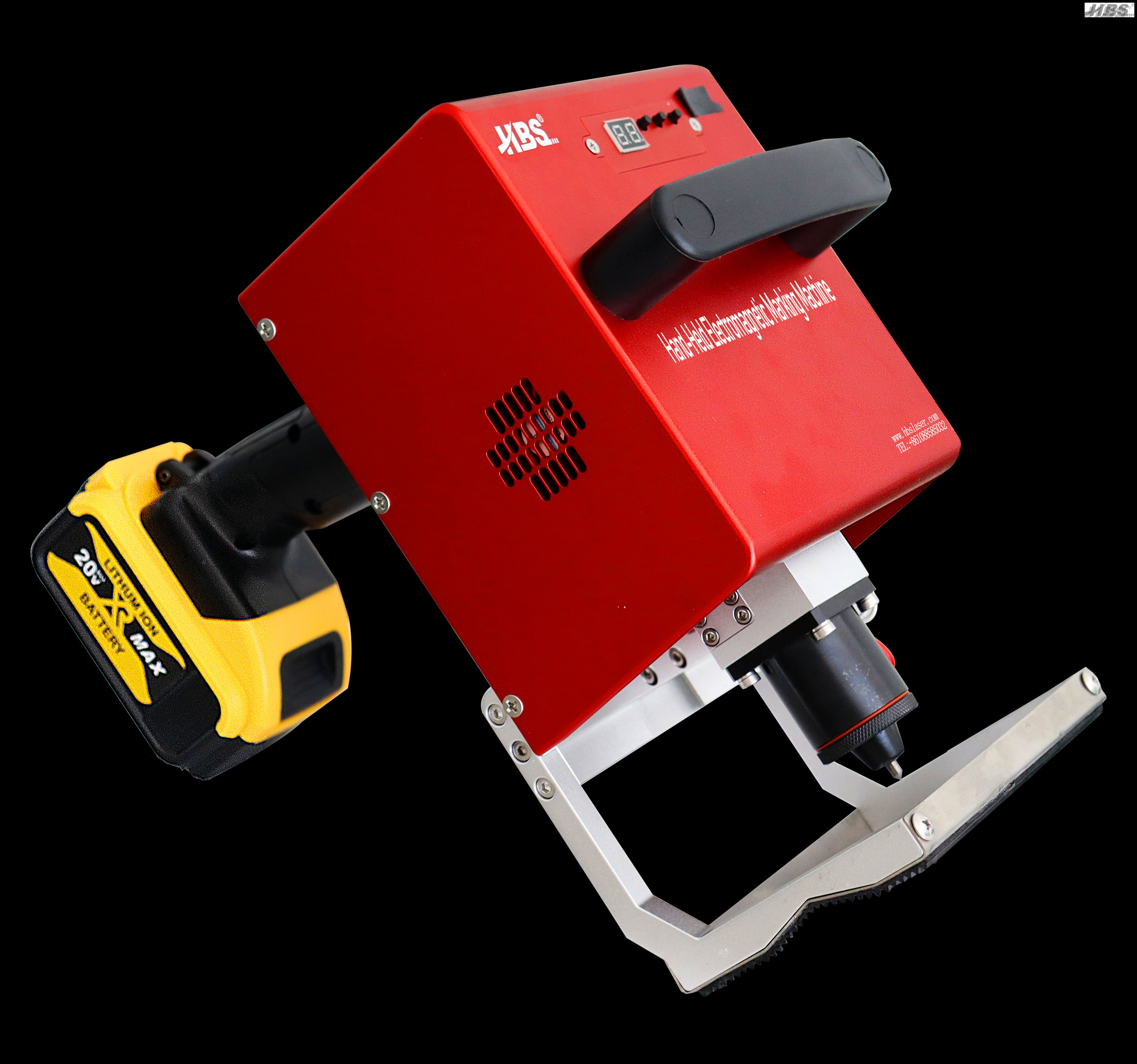
Different sectors leverage untethered marking to solve unique environmental challenges. Examining these use cases reveals the true versatility of the equipment.
Pipeline networks stretch across hostile, remote environments. You rarely find accessible power infrastructure near a remote valve station. Technicians use a mobile dot pin marker to tag flanges and structural components. They engrave inspection dates and pressure ratings directly onto the steel. The deep engraving withstands rain, mud, and intense UV exposure. This permanent traceability ensures compliance with strict energy sector regulations.
Fleet repair presents specific logistical hurdles. Mechanics regularly replace engine blocks or repair damaged chassis frames. Law requires these components to bear accurate Vehicle Identification Numbers (VINs). Moving a massive excavator chassis to a marking station proves impossible. Mechanics grab the untethered tool, walk into the repair bay, and re-stamp the VIN directly onto the frame. This capability dramatically accelerates heavy fleet maintenance schedules.
Steel fabricators handle massive I-beams and columns. Once welded, these oversized components require assembly codes. Welders also engrave specific traceability data to log their work. Doing this post-fabrication prevents the data from being destroyed during the welding process. Workers carry the unit along the staging yard, marking beams just before shipping. This prevents loading errors and ensures construction crews receive the correct parts.
Choosing the right equipment requires careful analysis of your specific operational constraints. Focusing on operator experience and data integration prevents costly purchasing mistakes.
Handheld operation naturally causes operator fatigue over time. You must define the optimal weight threshold for your team. Heavy units cause severe strain during vertical or overhead marking tasks. Operators' arms tire quickly, leading to sloppy, uneven engravings. Lighter units reduce fatigue. However, extremely light machines might sacrifice battery size or impact force. You need to balance robust mechanics against ergonomic comfort. Testing the machine on an actual vertical surface provides the best ergonomic evaluation.
Modern traceability demands connected data. Standalone operation works well, but advanced facilities require more. Assess your need for Wi-Fi or Bluetooth integration. Many units allow seamless barcode scanner compatibility. An operator scans a work order, and the machine automatically loads the correct serial number. This eliminates manual typing. Pulling marking data directly from ERP or MES systems prevents catastrophic manual entry errors. You guarantee that every stamped part perfectly matches your digital database.
Field-deployed machines face brutal conditions. Dust, moisture, and metal shavings infiltrate moving parts. You must review stylus wear rates before purchasing. Calculate the replacement costs for carbide or diamond-tipped pins. Internal rail maintenance requires attention. You must clean and lubricate the guide rails periodically to prevent jamming. Consider these routine maintenance needs when choosing your vendor.
Honest evaluations require acknowledging where technology falls short. Understanding these boundaries ensures you deploy the equipment successfully.
You must transparently assess material limitations. Standard battery markers excel on metals up to approximately 60-62 HRC (Rockwell Hardness Scale). The electromagnetic solenoid delivers excellent results on aluminum, mild steel, and standard stainless variants. Harder materials absorb the impact. If you engrave aerospace-grade titanium alloys or heat-treated tool steel, the marks may appear shallow. You might still require specialized stationary or heavy-duty pneumatic setups for extremely hard parts.
All lithium-ion batteries degrade over time. Extreme temperatures accelerate this degradation. Cold weather field repairs drain batteries rapidly. A battery lasting four hours indoors might only last two hours in freezing temperatures. You must address this natural lifespan. Keep spare batteries in warm truck cabins until needed. Furthermore, budget for the ongoing cost of battery replacement every few years to maintain peak performance.
Acknowledge the higher initial capital expenditure. You pay a premium for advanced battery technology and miniaturized electronics compared to traditional tethered systems. Model a basic ROI calculation based on hours saved. Calculate the hourly labor rate of your crane operators and forklift drivers. Multiply that by the hours currently wasted transporting parts. You will quickly see how untethered operation offsets the initial purchase price within a few months.
Battery-powered markers are not a blanket replacement for high-volume, fully automated assembly lines. However, they represent highly efficient tools for low-to-medium volume, heavy-part applications. By bringing the tool directly to the component, you eliminate massive logistical bottlenecks. You improve shop floor safety, reduce crane dependency, and guarantee immediate compliance.
Before committing to a fleet procurement, we highly recommend conducting a pilot test. Request a sample marking evaluation on your specific fabrication materials. Test the unit in your actual field environments. This practical approach ensures the equipment meets your exact depth requirements and ergonomic standards.
A: Depth typically ranges from 0.1mm to 0.5mm depending on material hardness. Softer metals like aluminum allow deeper marks. Adjusting the software force settings and using a sharper stylus angle (like 90 degrees) maximizes penetration on mild and stainless steel.
A: A standard lithium-ion battery provides roughly 2 to 4 hours of continuous trigger time. However, typical standby usage stretches across a full 8-hour shift. We always recommend dual-battery setups to ensure uninterrupted hot-swapping.
A: Yes. Many units feature V-shaped front masks. These specialized masks stabilize the machine securely against cylindrical pipes. You hold the unit steady, and the software automatically adjusts the pin throw to accommodate slight surface curves.
A: No. These engravers feature robust local storage capabilities. You can save hundreds of templates directly on the device. An internet or network connection is only necessary if you want to pull live data dynamically from an ERP system.

