- All
- Product Name
- Product Keyword
- Product Model
- Product Summary
- Product Description
- Multi Field Search


Views: 141 Author: Site Editor Publish Time: 2026-07-02 Origin: Site


Shifting to in-house, on-the-fly part marking drastically improves traceability across your manufacturing workflows. However, selecting the wrong hardware often leads to serious operator fatigue, frustrating software bottlenecks, or illegible marks. You need reliable systems to maintain high production efficiency daily.
Evaluating dot peen systems requires balancing absolute mobility against necessary marking depth. This challenge becomes especially apparent for heavy, immobile components. You simply cannot drag massive pipe assemblies, aerospace structures, or engine blocks to a static benchtop station.
This guide provides a structured framework to evaluate critical technical specifications, power source dependencies, and software capabilities. You will learn how to ensure your chosen hardware aligns perfectly alongside your specific production environment. Ultimately, we help you satisfy strict industry compliance standards without disrupting your operations.
Power Source Dictates Mobility: Your choice between electric/battery and pneumatic models defines true portability versus marking depth capabilities.
Material Hardness Sets the Baseline: The machine’s stylus assembly must be rated for your specific material’s HRC (Rockwell Hardness) to prevent premature wear.
Software Usability is Critical: Standalone controllers with intuitive software reduce operator error compared to systems requiring tethered PC connections.
Traceability Standards Matter: Ensure the machine natively supports the DataMatrix codes, VINs, or serial logic required by your industry’s compliance framework.
Selecting the correct power source remains the most critical foundational decision. You must frame this choice around where the actual marking happens. Walk your shop floor. Observe your field service operations. Ask yourself if operators mark components in a single bay or across expansive outdoor yards. Facility infrastructure directly dictates your optimal equipment choice.
Air-driven systems rely on compressed air to propel the stylus pin. This mechanical action generates immense impact force. You will find this high force absolutely critical for deep marks. Deep penetration matters significantly if your parts undergo aggressive downstream processes. Components painted, galvanized, or sandblasted post-marking require deep indentations to remain legible.
However, you must accept certain trade-offs. A portable pneumatic dot peen marker requires a constant tether to an air compressor. This umbilical cord restricts true mobility. Dragging an air hose through tight assembly spaces or across large storage yards introduces tripping hazards and slows down operators.
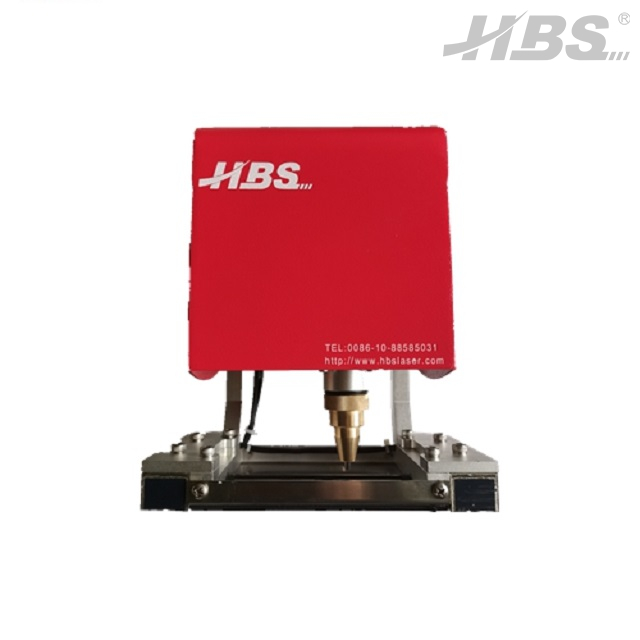
Electric and battery-operated units use electromagnetic coils to drive the pin. Their primary strength lies in autonomous mobility. They offer 100% freedom of movement. They excel in expansive inventory lots, oversized piping yards, or remote field service operations. Operators can carry them anywhere.
The trade-offs involve maximum depth capabilities. You might require multiple passes to achieve maximum depth on hardened steels. Additionally, battery lifecycle management becomes a daily operational requirement. Teams must diligently charge spare batteries to avoid mid-shift downtime.
Power Source Comparison Chart | ||
Feature | Pneumatic Marker | Electric/Battery Marker |
|---|---|---|
Mobility Level | Restricted (Requires air hose) | Unrestricted (100% autonomous) |
Impact Force | Very High | Moderate to High |
Best Application | Pre-paint or pre-galvanizing | Field service and expansive yards |
Infrastructure Need | Reliable compressed air supply | Charging stations for batteries |
You cannot use a universal approach when specifying an industrial part marking machine. Material science dictates how your equipment will perform. Understanding your substrates prevents excessive equipment wear and ensures consistent mark quality.
Establish the maximum HRC (Rockwell Hardness Scale C) rating your materials possess. The stylus pin must reliably penetrate this surface. Standard mild steel poses few problems. However, hardened tool steels or aerospace alloys demand specialized hardware. High-end stylus pins typically handle materials up to 62 HRC. Attempting to mark materials beyond the pin's rating causes rapid dulling or catastrophic pin failure.
Flat surfaces offer straightforward marking scenarios. Conversely, curved geometries require careful stabilization. Evaluate front-plate accessories before purchasing. V-shaped masks act as crucial mechanical stabilizers. They securely grip curved surfaces, cylinders, and pipes during the marking cycle. Without proper V-blocks, the stylus head slips. This slippage ruins the component and poses a safety risk to the operator.
You must define necessary marking depths based strictly on downstream processes. A standard 0.1mm to 0.5mm mark looks perfect on bare metal. Yet, this shallow mark easily disappears under heavy industrial coatings.
Analyze Post-Processing: Identify every coating step the part undergoes.
Measure Coating Thickness: Determine the micron thickness of your paint or zinc layers.
Calculate Necessary Depth: Specify a marking depth exceeding the coating thickness by at least 30%.
Test Substrates: Always run sample tests to verify legibility after the final finish.
Heavy duty paint or galvanizing necessitates heavier pneumatic configurations. Do not underestimate how quickly thick powder coats obscure shallow characters.
Engineers often prioritize technical specifications over human factors. You must remember human operators carry these machines all day. Poor ergonomics silently destroy productivity. They elevate scrap rates and increase workplace injury risks.
Compare the actual handheld weight of the unit carefully. Models range dramatically from 2kg to well over 5kg. Three extra kilograms feel negligible during a five-minute demonstration. They feel agonizing after three hours of sustained vertical or overhead marking. Heavy units drastically increase operator fatigue. Exhausted operators inadvertently let the machine slip, resulting in rejected parts.
Dot peen mechanisms inherently generate recoil. Evaluate how effectively the machine mitigates this vibration. Poor stability directly leads to "ghosting." Ghosting occurs when the pin strikes slightly off-target during a bounce. This creates blurry, misaligned characters. High-quality systems feature internal dampening. They absorb recoil before it reaches the operator's hands.
You must decide between an integrated unit and a two-piece architecture. Both styles offer distinct operational advantages.
Integrated Systems: These feature an all-in-one design. The screen, processor, and marking head share one housing. They eliminate messy cables. However, they place the entire weight burden directly in the operator's hands.
Two-Piece Systems: These tether a lighter marking head to a separate control box. Operators can sling the controller over a shoulder or mount it on a mobile cart. This drastically reduces the handheld weight. It improves precision on difficult vertical marks.
Modern manufacturing demands strict data accuracy. Manual data entry introduces unacceptable human error margins. A robust portable dot peen marking machine acts as a seamless extension of your digital tracking ecosystem.
Highlight the operational risks of relying on fragile laptops on the shop floor. Laptops accumulate metal dust. Their hinges break. Their batteries die. You should favor machines featuring ruggedized, built-in touchscreens. Industrial-grade onboard processors handle complex logic natively. They survive drops, spills, and extreme temperatures effortlessly.
Assess the machine's ability to communicate with external databases. Can it pull data directly from your ERP or MES systems? Does it accept simple CSV or Excel files via USB? The best software interfaces allow operators to scan a barcode route sheet. The scanner feeds the part number directly into the marking software. This eliminates manual data entry errors completely. It speeds up the marking cycle tenfold.
Your industry likely enforces rigid traceability frameworks. Verify native software support for these specific requirements. The software must generate flawless 2D DataMatrix codes. It needs automated time and date stamping capabilities. It must handle shifting codes and serialized alphanumeric sequences effortlessly. Aerospace, automotive, and oil & gas standards require this native functionality. Do not rely on clunky workarounds to meet these critical compliance mandates.
Industrial environments destroy fragile equipment rapidly. You must evaluate long-term durability and maintenance demands before deploying any hardware. Ignoring these factors leads to unexpected downtime and severe production bottlenecks.
Factor in the replacement frequency of critical wear parts. Carbide or diamond stylus pins eventually wear flat. Return springs lose tension. Drive belts occasionally stretch. Ask the manufacturer about typical lifespan metrics under continuous heavy usage. Standard mild steel allows a high-quality pin to perform thousands of cycles. Conversely, marking 60 HRC steel shortens pin life drastically. Keep essential spares stocked on-site to minimize operational interruptions.
Assess the specific IP (Ingress Protection) rating of the machine. Shop floors generate pervasive dust. Machining centers produce sharp metal shavings. Coolants and cutting fluids splash unpredictably. These contaminants rapidly degrade unsealed electromagnetic coils. They destroy unprotected linear guide rails. Ensure your chosen hardware features robust sealing. Gasket-sealed enclosures and dust boots protect internal mechanics from aggressive industrial environments.
Contrast cheap, imported units against established industrial brands. Budget machines often feature limited support. When they break, you wait weeks for international shipping. Established brands offer localized repair centers. They provide rapid loaner programs. A loaner machine arrives overnight, keeping your production line moving while technicians service your primary unit. Strong technical support resolves software glitches remotely, saving you from prolonged operational paralysis.
The optimal portable dot peen marking machine sits precisely at the intersection of required marking depth, operator ergonomics, and seamless software integration. Selecting the right hardware ensures legible, compliant traceability marks across your entire product line.
Assess your facility layout to determine if pneumatic tethers or battery autonomy suits your workflow better.
Match stylus hardness and marking depth capabilities against your raw materials and downstream coating processes.
Prioritize lightweight, ergonomically sound machines to protect operators from fatigue during sustained usage.
Demand rugged, onboard software capable of automating data entry to eliminate costly human errors.
Your next step involves practical validation. Request a sample marking test on your actual raw materials. Hold the machine to evaluate its weight distribution. Finally, navigate the software interface yourself prior to issuing a purchase order. Hands-on validation guarantees long-term operational success.
A: Yes, provided the machine is equipped with a V-block faceplate or custom tooling to stabilize the head against the radius of the pipe or cylinder.
A: Pneumatic units use compressed air to drive the pin, offering deeper marks for post-process coating, but require an air hose. Electric units use electromagnetism, offering superior mobility at the expense of maximum impact depth.
A: Lifespan depends heavily on material hardness, marking depth settings, and volume. On standard mild steel, a high-quality pin can last for thousands of marks before requiring resharpening or replacement.
A: Modern industrial units feature integrated controllers with touchscreen interfaces and internal memory, eliminating the need for a tethered PC during routine operation.

