- All
- Product Name
- Product Keyword
- Product Model
- Product Summary
- Product Description
- Multi Field Search


Views: 132 Author: Site Editor Publish Time: 2026-09-12 Origin: Site


Investing in industrial laser equipment requires balancing available floor space against specific part dimensions. You also must carefully consider your daily production volume. Buying a machine lacking adequate capacity leads to immediate workflow bottlenecks. Operators struggle loading awkward parts. This directly results in higher rejection rates and wasted materials. Conversely, over-specifying your equipment wastes valuable facility footprint. It ties up crucial operational capital unnecessarily.
The ideal machine choice effectively bridges the gap between your largest physical component and your workspace constraints. It smoothly accommodates your required throughput. You might run highly customized single items. You might process massive trays of identical parts. Your equipment must handle these specific demands efficiently. This guide will evaluate both common equipment formats in detail. We will compare their technical capabilities and explore real-world implementation realities. You will gain a clear framework for matching the right machine size to your exact manufacturing needs.
Part Dimension is the Ultimate Constraint: Z-axis clearance and maximum focal field dictate whether a desktop or large-format system is viable.
Batching vs. Single-Piece Flow: Desktop units excel at high-mix, low-volume (HMLV) single-part marking. Large-format systems are necessary for high-volume tray batching.
Workspace vs. Capabilities: A desktop fiber laser marker fits existing workbenches but lacks enclosed safety for high-volume, automated lines.
Hidden Implementation Costs: Facility extraction (fume exhaust), jig manufacturing, and focal lens limitations must be factored into the final ROI calculation.
Machine format directly influences your operator cycle times. Manual loading and unloading consume valuable production minutes. A small station requires careful manual alignment for every single item. A larger station allows operators to load a massive tray once. Operators can then perform other tasks while the laser processes fifty parts automatically. Your chosen format dictates this daily labor rhythm.
We must check focal field realities carefully. Machine size strongly limits your F-theta lens options. Small machines typically accommodate standard 110x110mm focal fields. They lack the physical distance required for larger lenses. Industrial platforms easily support 300x300mm fields. They maintain the necessary distance between the laser head and the table surface. This structural difference determines your maximum single-pass marking area.
Z-axis clearance remains a critical constraint. Part height forces many buyers out of smaller units. You might mark a relatively small logo on a massive engine block. The logo size fits a small lens. However, the sheer height of the engine block demands significant vertical clearance. You cannot squeeze tall parts under short Z-axis columns.
Automation readiness differs drastically between platforms. Manual standalone stations suit simple operations beautifully. Modern factories often require advanced integration. They use robotic arms for part feeding. They integrate lasers directly over moving conveyors. Upgraded formats provide the rigid frames and digital I/O ports necessary for these automated setups.
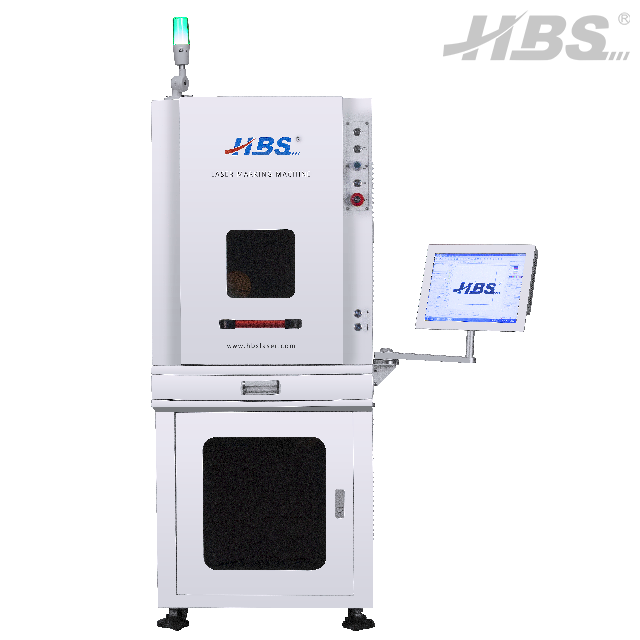
Small-scale laser systems deliver exceptional value for specific applications. A desktop fiber laser marker shines in detailed, high-precision tasks. They serve jewelry makers perfectly. Medical instrument manufacturers use them daily for unique device identification (UDI) codes. Small job shops rely on them for customizing electronic components and small hand tools.
These units offer a remarkably low barrier to entry. Space and deployment strategies remain incredibly straightforward. You can place them on existing standard workbenches. They do not require reinforced flooring. They plug directly into standard 110V or 220V wall outlets. You bypass expensive electrical retrofitting. Maintenance teams can set them up in minutes.
Budget constraints often drive this purchasing decision. Lower initial capital expenditure makes these units highly attractive. Small business owners justify the investment easily. Large factories deploy them for secondary operations. They keep smaller jobs off their expensive, high-volume automated lines. This approach maximizes overall factory efficiency without breaking strict budget limits.
You must understand their critical limitations before purchasing. We observe several common failure points when buyers misunderstand their capabilities.
Inability to process oversized assemblies. You cannot mark awkward parts without specialized, often expensive, custom rotary axes.
Strict limits on focal height adjustability. Tall parts simply will not fit under the laser head safely.
Manual part feeding bottlenecks. Operators must load each part individually. This manual handling severely limits throughput at higher production scales.
Industrial scale production demands heavy-duty solutions. A large format laser marking machine handles tasks smaller units simply cannot survive. Automotive manufacturers use them for large body panels. Foundries use them for heavy cast metal parts. Aerospace facilities mark long aluminum extrusions daily. These applications represent their primary use cases.
Throughput and batching capabilities define their true value. Operators load custom jigs holding fifty or more components. They press start and walk away. The machine runs continuously across the entire tray. This frees up operator time for quality control or secondary tasks. Batch processing reduces per-part cycle times dramatically.
Safety and compliance considerations mandate enclosed systems in busy factories. Large formats often feature fully enclosed Class 1 laser safety housings. These enclosures protect nearby workers from stray laser radiation. They meet strict OSHA requirements. Open-galvo systems pose unacceptable risks in high-traffic, multi-shift manufacturing environments.
Despite their power, they carry critical limitations.
Dedicated floor space requirements. You must allocate significant square footage. Installation requires heavier logistical planning and equipment.
Capital inefficiency on small parts. Using an industrial bed solely for small items wastes resources. It extends your capital recovery period unnecessarily.
Higher replacement costs. Specialized large-format optics and heavy-duty motors cost significantly more to replace when damaged.
You must calculate the exact maximum dimensions of your largest anticipated part. Measure the X (length), Y (width), and Z (height) accurately. Weight plays an equally crucial role. Desktop tables support light items perfectly. Heavy industrial parts crush small aluminum bases. They require the thick, structural integrity of a large-format bed.
Measure your tallest part to define minimum Z-axis column height.
Measure your widest part to ensure the machine housing does not block placement.
Weigh your heaviest assembly to confirm table load capacities.
Machine Format | Max Recommended Part Weight | Typical Z-Axis Clearance | Ideal Component Type |
|---|---|---|---|
Desktop Standalone | Under 10 kg | 150mm - 250mm | Jewelry, small tools, PCB boards |
Large Format Enclosed | 50 kg - 100+ kg | 400mm - 800mm | Engine blocks, long extrusions, batch trays |
Physics dictates how marking fields operate. Larger marking fields require longer focal length lenses. These longer lenses spread the laser energy over a much wider area. They reduce the concentrated energy density at the focal point. You lose engraving depth and speed as the field grows.
Large format operations almost always require higher wattage. You might run a small unit successfully at 20W or 30W. Upgrading to a large tray system usually demands 50W or 100W sources. This extra power maintains your cycle speeds. It compensates for the energy dispersion caused by the wider F-theta lens.
Assess your facility safety requirements carefully. Open-galvo setups classify as Class 4 laser devices. They require dedicated safety glasses. They demand restricted access zones. Enclosed systems classify as Class 1 devices. Operators safely observe the process through specialized viewing windows. Enclosed units typically feature automated pneumatic doors. This improves operator ergonomics by reducing repetitive lifting.
Purchasing the hardware represents only the first step. Unplanned implementation hurdles ruin production schedules. Fume extraction realities catch many buyers off guard. Dust and toxic fumes scale linearly with production volume. Marking certain plastics releases hazardous vapors. You must outline the necessity of appropriately sized extraction units early. Even a tiny machine requires industrial-grade ventilation if it runs constantly.
Tooling and jig fabrication present hidden challenges. An industrial bed looks impressive. However, it remains entirely useless without proper fixturing. Custom jigs hold your batch parts securely in place. They guarantee repeatable precision. You must budget engineering time to design and machine these aluminum or acrylic trays. Your machine is only as efficient as the custom jigs you build for it.
Software and alignment complexity increases significantly as your marking area grows. Managing large fields requires precise software calibration. Programs like Ezcad or LightBurn require advanced distortion correction. You must correct edge-distortion effects. Barrel and pincushion distortions ruin straight lines at the far edges of a wide lens. Technicians must spend hours calibrating grid files to guarantee perfect geometry.
Facility access causes embarrassing and expensive delays. A common failure point involves purchasing an industrial system blindly. The delivery truck arrives, but the crate cannot fit through standard facility doors. We frequently see factories requiring unexpected heavy-lifting equipment. Sometimes they must remove door frames just to move the equipment inside. Measure your loading docks, freight elevators, and hallway corners meticulously.
Implementation Risk | Impact on Production | Mitigation Strategy |
|---|---|---|
Fume Extraction | Operator health risks, lens contamination | Purchase integrated HEPA filtration systems |
Jig Fabrication | Inconsistent alignment, slow batch loading | Design CNC-milled aluminum trays pre-delivery |
Edge Distortion | Crooked logos, rejected flat parts | Perform 9-point grid calibration in Ezcad |
Facility Access | Installation delays, rigging fees | Measure all doorways and freight elevators |
Selecting a fiber laser marking machine requires brutal honesty about your catalog. You must match equipment strictly to your physical realities.
You should shortlist smaller, standalone units when specific conditions align. Choose this route if your largest part easily fits within a standard 6x6 inch (150x150mm) window. They fit environments characterized by high-mix, low-volume production. Custom job shops changing parts every ten minutes benefit greatly here. Finally, choose this route if your floor space remains at a premium and capital budgets remain extremely strict.
You must shortlist industrial, large-format platforms when your physical demands scale up. Choose these systems if you process long extrusions, large metal plates, or tall assemblies. You need them if you process parts in high-volume trays. Trays drastically reduce operator touch-time. Furthermore, you must choose them if you plan future integration. Automated production cells and robotic loading arms require the rigid infrastructure of an industrial enclosure.
Your immediate next-step action involves gathering physical evidence. Collect the three largest and heaviest parts in your catalog. Next, collect your three highest-volume components. Send exact engineering drawings or physical samples to your vendor. Request a sample mark based strictly on those specific geometries. This prevents expensive assumptions.
The final choice between platforms represents a strict engineering decision. It is driven primarily by component geometry and production volume. Initial budget limits should never force you into undersized equipment. Undersized platforms simply generate production bottlenecks.
We highly warn against compromising on Z-axis height. Saving capital on a short column ruins your ability to adapt. When a new client requests engraving on a tall assembly, your short machine becomes useless. A taller column offers future-proofing.
Promptly consult an experienced sales engineer regarding your specific application. Send them your part drawings for a tailored machine sizing assessment. Accurate physical testing prevents costly purchasing mistakes. It guarantees your new equipment handles your actual factory floor demands flawlessly.
A: Yes. Engraving depth is dictated by laser power wattage and lens focal point. The machine's external frame size does not determine depth. A 50W small unit engraves much deeper than a 20W industrial model. Focus entirely on upgrading your laser source power if you require deep engraving.
A: You can swap the F-theta lens to slightly increase the field from 110mm to 150mm. However, the machine's physical Z-axis column height limits you ultimately. Wider lenses require higher focal distances. A small base simply cannot support extreme vertical adjustments safely.
A: It depends on the wattage and integrated accessories. Many standard 20W to 50W lasers run easily on standard 110V or 220V power. However, large industrial models often integrate heavy-duty extraction units or automated automation cells. These complex setups frequently require dedicated electrical circuits.
A: Both formats handle cylindrical parts well using standard rotary attachments. Large-format machines provide significantly more clearance. They easily accommodate bulky or long cylinders like heavy pipes and large tumblers. A small Z-axis column simply cannot clear the height of oversized rotary setups.


