- All
- Product Name
- Product Keyword
- Product Model
- Product Summary
- Product Description
- Multi Field Search


Views: 0 Author: Site Editor Publish Time: 2026-11-15 Origin: Site


Did you know a modern passenger vehicle contains upwards of 30,000 individual components? From heavy-duty engine blocks down to microscopic dashboard chips, every single piece requires meticulous tracking. This strict traceability ensures both passenger safety and regulatory compliance. Traditional marking methods like inkjet printing or adhesive labels often fail in the field. They fade rapidly under harsh environmental conditions. Furthermore, they cost manufacturers a fortune in ongoing consumable expenses. To solve this critical production bottleneck, plant managers have turned to permanent optical codes.
In this comprehensive guide, we will explore how automotive laser marking has become the undeniable standard for part identification. We will dive into specific manufacturing applications and the underlying optical technologies. Upgrading your assembly line drastically improves regulatory compliance while simultaneously protecting your bottom line.
Permanent Traceability: Laser technology ensures lifetime readability for Vehicle Identification Numbers, 2D Data Matrix codes, and serial numbers. This is an absolute necessity for effective recall management and quality control.
Material Versatility: Modern optical systems mark a vast array of automotive materials. These include high-strength steel, aluminum alloys, synthetic rubber, safety glass, and specialized polymers.
High-Speed Integration: Automated systems integrate seamlessly into fast-paced assembly environments. They mark moving parts on the fly to prevent production bottlenecks.
Cost Efficiency: Laser technology completely eliminates expensive consumables like industrial inks and chemical solvents. This significantly reduces long-term operational costs and environmental impact.
Optimal Equipment Selection: For heavy-duty metal components, fiber laser technology remains the industry gold standard. It offers exceptional precision and a virtually maintenance-free lifespan.
At its core, this technology is a highly precise and non-contact manufacturing process. It utilizes a concentrated beam of light to intentionally alter the surface of a vehicle component. Engineers adjust specific parameters including wavelength, pulse duration, and power output. The laser beam then engraves, etches, anneals, or ablates the material. The end result is a permanent and high-contrast mark.
The automotive manufacturing sector has experienced a massive paradigm shift away from traditional methodologies. In the past, factories relied heavily on inkjet printing, dot peen marking, and physical labeling. However, these legacy tools present significant operational challenges. Inkjet marks degrade rapidly when exposed to engine fluids. Dot peen applies unwanted mechanical stress to delicate parts. Adhesive labels simply peel off under extreme under-hood temperatures.
Industry Trend Analysis: A review of recent market trajectories reveals a massive shift on the factory floor. The global push toward electric vehicles and autonomous driving is rapidly accelerating the adoption of laser technologies. Electric vehicle battery packs utilize highly reflective aluminum and copper busbars. Lightweight aerospace-grade alloys are now standard on assembly lines. Traditional marking methods prove entirely inadequate for these advanced substrates. Consequently, the automotive sector demands non-destructive and high-contrast traceability solutions. Modern laser systems process these next-generation materials without compromising structural safety.
To meet these modern demands, facilities now rely on lasers to generate various critical identifiers. These include:
2D Data Matrix Codes: High-density barcodes like ECC200 that store extensive manufacturing data in a microscopic footprint.
Alphanumeric Serial Numbers: Sequential codes utilized for individual part tracking.
QR Codes and Barcodes: Standardized optical labels designed for automated inventory management.
Brand Logos and Certifications: High-resolution graphics indicating regulatory compliance such as CE and DOT standards.
To comply with stringent international safety standards and enable lifecycle tracking, nearly all components inside a vehicle require permanent identification.
Imagine an engine block operating under relentless heat and friction. It is constantly bathed in corrosive motor oil and transmission fluid. A traditional ink mark vanishes within days under these conditions. In contrast, laser annealing and deep laser engraving alter the molecular structure of the metal itself. Components such as cylinders, pistons, and camshafts receive heat-resistant marks. These identifiers remain perfectly legible to optical scanners even after a decade of exposure to combustion temperatures.
The chassis serves as the structural foundation of the vehicle. This makes the marking of the Vehicle Identification Number its most critical application. These numbers must be deeply engraved into structural metals to deter tampering and theft. Because the laser process is entirely non-contact, it achieves the exact depth required by legal mandates. It does this without inducing micro-fractures in high-strength steel, thereby preserving the vehicle crashworthiness.
Automotive interiors rely heavily on laser technology for both functional usability and aesthetic appeal. Dashboard buttons and infotainment panels often utilize a process known as day and night marking. A translucent plastic component is coated with opaque automotive paint. The laser then precisely ablates the top layer to form an icon. When backlit by an LED, the symbol illuminates perfectly. This offers unparalleled precision for intricate interior electronics.
Safety-critical components like tires and windshields also undergo specialized laser processing. For glass, ultraviolet or carbon dioxide lasers create micro-cracks on the surface. This marks certification codes without shattering the pane. Meanwhile, lasers are increasingly replacing vulcanized labels on tires. They burn QR codes and manufacturing batch numbers directly into the cured rubber for a permanent record.
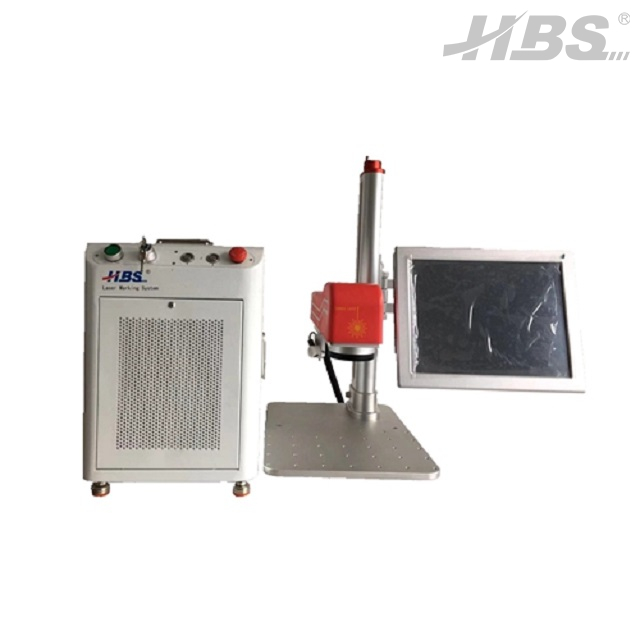
When evaluating the equipment deployed across global automotive plants, the Fiber Laser Marking Machine stands out as the most widely adopted solution. This dominance is directly driven by the heavy metallic composition of most traditional vehicle parts.
Industrial units typically feature 20W, 30W, or 50W solid-state laser sources. Operating at a wavelength of approximately 1064 nanometers, fiber lasers produce optical energy that is highly absorbed by industrial metals. This specific wavelength makes the technology exceptionally efficient for processing heavy-duty materials. Target substrates include carbon steel, stainless steel, cast iron, titanium, and aluminum alloys. By utilizing techniques like surface annealing, which draws carbon to the surface without removing material, fiber lasers create high-contrast marks. These marks easily withstand aggressive sandblasting and powder coating processes.
Beyond unmatched material compatibility, the industrial appeal of fiber technology lies in its rugged durability. Premium solid-state fiber laser sources boast a Mean Time Between Failures exceeding 100,000 operational hours. With no moving optical parts in the generation source, they require virtually zero maintenance. This reliability is an absolute necessity for automotive plants operating on grueling continuous production schedules. In these environments, unexpected machine downtime costs thousands of dollars per minute.
To truly understand the value of upgrading your assembly line, we must look at the engineering data. Below is a core comparison between modern optical systems and legacy methods.
Feature | Laser Marking | Inkjet Printing | Dot Peen Marking |
|---|---|---|---|
Consumables Required | None. Operates on standard electricity. | High. Requires proprietary inks and solvents. | Medium. Requires frequent stylus replacement. |
Contrast & Readability | Excellent. High-contrast, machine-readable marks. | Prone to smudging and fading over time. | Low contrast. Difficult for optical scanners to read. |
Substrate Stress | Zero. Entirely non-contact process. | Zero. Non-contact process. | High. Induces mechanical stress and micro-fractures. |
Cycle Time | Ultra-fast. Capable of marking on the fly. | Fast, but requires drying time. | Slow. Must physically punch each dot. |
Environmental Impact | Eco-friendly. No toxic chemicals used. | High. Generates hazardous chemical waste. | Moderate. Generates noise pollution. |
As manufacturing transitions into the highly automated era of Industry 4.0, standalone workstations are often insufficient for high-volume assembly lines. To address this throughput challenge, facilities implement an Online Laser Marking System. Plant engineers frequently refer to this on the factory floor as flying laser marking.
Picture a high-speed conveyor belt continuously feeding transmission gears down the line. Instead of a human operator manually placing each gear into a cabinet, an online laser head is mounted directly above the moving belt. Advanced models like the HBS-GQ-20 feature dedicated input and output ports for seamless programmable logic controller integration. Utilizing high-speed galvanometers and rotary encoders, the system tracks the exact velocity of the component. It adjusts the laser beam in real-time. This allows for marking speeds exceeding 7000 millimeters per second. It engraves the required 2D code flawlessly without ever stopping the conveyor.
This level of automation is a cornerstone of smart factory operations. Online systems integrate deeply with the facility Enterprise Resource Planning software. As a part approaches the laser station, the software instantly queries the database. It generates a unique serialized code and marks the part instantly. By eliminating the need to halt the production line, manufacturers remove a massive bottleneck. Furthermore, they minimize human handling errors and drastically accelerate their return on investment.
Investing in industrial laser infrastructure requires upfront capital expenditure. However, the long-term business values strongly justify the transition away from legacy marking methods.
In fully automated plants, components are continuously scanned by robotic vision systems. If a barcode is smudged or misaligned, the scanner rejects the part. This causes an immediate line stoppage. Laser marking completely eliminates the variables associated with human error and mechanical wear. The software-controlled beam guarantees that every single Data Matrix code features perfect geometric accuracy. This ensures flawless readability by Automated Optical Inspection systems.
Direct Part Marking is the process of permanently embedding data directly onto the surface of a component. This is far superior to applying a vulnerable secondary label. If a specific transmission component fails ten years after the vehicle rolls off the lot, investigators can scan the part. They trace it back to the exact date, manufacturing batch, and specific machine operator. This granular level of data forms the backbone of modern quality assurance.
From an operational expenditure perspective, traditional methods are shockingly inefficient. Inkjet printers require the constant replenishment of proprietary inks and toxic chemical solvents. These demand specialized hazardous waste disposal protocols. In stark contrast, laser marking is a clean and dry process. It consumes no inks, utilizes no solvents, and generates minimal physical waste. The primary operational cost is simply the low electrical power required to run the machine.
The automotive manufacturing sector operates under some of the most rigorous regulatory frameworks in the global industrial landscape. For original equipment manufacturers and Tier 1 suppliers, maintaining compliance is not merely a legal obligation. It is a fundamental requirement for risk management.
Modern vehicle production is governed by strict quality standards. Most notably, the IATF 16949 standard mandates comprehensive traceability for critical vehicle components. Laser technology facilitates this by creating an immutable digital record in the factory database. Furthermore, these permanent marks are vital for effective recall management. When a defective component is identified, manufacturers use laser-marked serial numbers to pinpoint the exact batch of affected parts. Instead of blindly recalling hundreds of thousands of vehicles, they target only the specific cars involved. This precision saves millions of dollars in logistics and protects brand liability.
Additionally, high-precision micro-marking serves as a robust physical barrier against counterfeiting. Manufacturers engrave complex micro-sized QR codes or proprietary logos. These are nearly impossible to replicate with cheap traditional tooling. Consequently, authorized technicians can instantly verify the authenticity of safety-critical components like brake pads and airbags.
Selecting the appropriate marking equipment goes beyond simply purchasing a machine. It requires a systematic evaluation of your production environment, material science, and integration capabilities. Use these concrete engineering guidelines to engineer a tailored workflow.
Bare Metals and Cast Iron: Choose a 30W to 50W Fiber Laser. The 1064 nanometer wavelength is highly absorbed by metals. This provides the deep engraving power required for engine blocks and chassis components.
Sensitive Plastics and EV Wiring: Choose a 3W to 5W Ultraviolet Laser. Operating at 355 nanometers, ultraviolet lasers perform cold marking. They break molecular bonds without generating excess heat, preventing damage to underlying circuitry.
Glass and Rubber Tires: Choose a 30W Carbon Dioxide Laser. Operating at 10,600 nanometers, this wavelength is perfectly suited for non-metallic ablation.
High-Volume Conveyors: Choose a Flying Laser Marking System. Ensure the unit features programmable logic controller input and output ports alongside rotary encoder feedback for seamless line integration.
While the initial capital expenditure for industrial laser equipment is higher than traditional inkjet systems, the Total Cost of Ownership demonstrates a highly compelling return on investment over a five-year period.
Traditional marking methods are heavily burdened by continuous operational expenses. Inkjet systems demand constant purchasing of inks alongside regular maintenance to clear clogged printheads. Dot peen systems suffer from mechanical wear that requires frequent stylus replacement. Because solid-state fiber lasers operate with virtually zero consumables and boast exceptional energy efficiency, they drastically reduce the cost per mark. This directly improves the manufacturing plant bottom line over time.
Automotive laser marking delivers an ultimate and uncompromising combination of precision, efficiency, and permanent traceability. As regulatory standards tighten and material sciences advance, this technology has proven itself vital for modern vehicle manufacturing.
Investing in a reliable fiber system or an automated online architecture is no longer just an operational luxury. It is a strict necessity for staying competitive. By eliminating consumable costs and preventing assembly line bottlenecks, upgrading your equipment ensures long-term operational success.
Take the time to carefully evaluate your current marking processes today. Whether you need a standalone enclosed workstation for aftermarket parts or a high-speed flying laser for a continuous transmission line, HBS Lasers offers a comprehensive portfolio of industrial-grade equipment. Reach out to our engineering team to discuss customized automation solutions, request sample testing on your specific materials, and find the perfect future-proof setup designed specifically for your production floor.
Industrial laser systems can engrave virtually any material used in modern vehicle construction. This includes hard metals like hardened steel, titanium, and anodized aluminum used in powertrains and chassis. They are equally effective on non-metals. These include automotive-grade plastics like ABS and polycarbonate, synthetic rubber for tires, safety glass, and specialized ceramics. The specific material compatibility depends entirely on the wavelength of the chosen laser source.
The automotive industry is fundamentally driven by heavy metal manufacturing. Components such as engine blocks, transmission gears, and structural chassis parts require deep and permanent identification. These marks must withstand extreme heat, oil, and friction. Fiber lasers operate at a wavelength of 1064 nanometers, which is highly absorbed by metals. This allows for rapid and high-contrast engraving. Carbon dioxide lasers operate at 10,600 nanometers. This wavelength simply reflects off bare metals and is therefore reserved for non-metallic applications like rubber and interior fabrics.
Depending on the wattage of the fiber laser and the number of passes programmed into the software, industrial lasers can engrave structural steel to depths of 0.3 millimeters to 0.5 millimeters or more. This depth easily meets and exceeds strict international legal requirements for Vehicle Identification Number marking. It ensures the number remains legible even after heavy painting, powder coating, or long-term rust exposure.
Absolutely. Modern online laser marking systems are designed specifically for smart factory integration. They feature open-architecture software and standard input and output ports for seamless programmable logic controller communication. Plant engineers can easily mount the laser head onto robotic arms or above existing conveyor belts. The system communicates directly with the factory database to automatically pull serialization data without any manual human input.
Yes, laser marking is inherently safe for sensitive components because it is a completely non-contact process. Zero mechanical stress or physical pressure is applied to the delicate part. For highly sensitive electronic components such as microchips, sensors, or thin-film dashboard displays, manufacturers utilize ultraviolet laser technology. Ultraviolet lasers perform cold marking. They break the material molecular bonds through photochemical ablation rather than thermal melting. This completely eliminates heat-affected zones, preventing any thermal damage to the underlying circuitry.

