- All
- Product Name
- Product Keyword
- Product Model
- Product Summary
- Product Description
- Multi Field Search


Views: 139 Author: Site Editor Publish Time: 2026-03-14 Origin: Site


In the world of manufacturing, precision and efficiency are essential to producing high-quality products. As industries continue to evolve, so do the tools and technologies used in production. One of the most advanced and versatile tools that has gained significant popularity in recent years is the fiber laser marking machine. These machines are transforming the way companies approach marking, engraving, and etching materials across various industries, from automotive to electronics, jewelry to medical devices.
But why should you choose a fiber laser marking machine for your business? In this article, we will explore the key advantages of fiber laser marking technology, how it compares to other types of laser machines, and why it has become the go-to solution for precise and durable markings. Additionally, we will look at the common applications of fiber laser marking machines and provide insights into selecting the right one for your needs.
A fiber laser marking machine uses a fiber laser as its light source to mark or engrave materials with high precision. The fiber laser source, made from a fiber-optic cable, produces light through a process called optical pumping, typically using rare-earth elements like ytterbium. This concentrated beam is directed onto the material’s surface, where it can be used to create permanent marks through vaporization, discoloration, or etching.
Unlike other types of lasers, such as CO2 lasers, fiber lasers use solid-state technology, making them more efficient and compact. Fiber lasers are renowned for their high-quality, high-speed marking capabilities on a wide range of materials, including metals, plastics, ceramics, and glass.
Fiber laser marking machines offer several compelling advantages over other types of laser systems and traditional marking methods. Let’s break down the key reasons why you should consider choosing a fiber laser marking machine for your business.
One of the primary reasons businesses opt for fiber laser marking machines is their exceptional precision and accuracy. Fiber lasers can achieve micron-level accuracy, making them perfect for creating intricate designs, logos, barcodes, and serial numbers. This level of precision ensures that your markings are clear, legible, and meet the highest industry standards.
Whether you’re marking small components or large surfaces, fiber lasers provide the ability to mark tiny characters or complex patterns with remarkable clarity. This high level of detail is crucial in industries like electronics and jewelry, where even the smallest imperfection could affect the product’s functionality or aesthetics.
Fiber laser marking produces permanent marks that are resistant to wear, corrosion, and fading. Unlike ink-based systems that may degrade over time, laser markings are etched directly into the material's surface. This results in a long-lasting, high-contrast mark that will not wear off, making it ideal for products that need to remain traceable for years, such as serial numbers, batch codes, or product identifiers.
This feature is especially important in industries such as medical devices, aerospace, and automotive manufacturing, where traceability and durability are paramount for regulatory compliance and safety.
Fiber laser marking machines are renowned for their speed. The marking process is fast and efficient, which makes them ideal for high-volume production environments. Fiber lasers can mark large quantities of items in a short amount of time without compromising the quality or precision of the mark.
This speed is achieved through the solid-state design of the fiber laser, which is faster than traditional CO2 lasers and requires less time to reach optimal operating temperature. Additionally, fiber lasers can operate continuously with little to no downtime, enhancing overall productivity.
Fiber laser marking machines are highly versatile and can mark a wide range of materials, including metals (aluminum, steel, titanium, brass, etc.), plastics, ceramics, glass, and even some organic materials like wood and leather. This broad material compatibility makes fiber lasers suitable for various applications across multiple industries.
For example, in the electronics industry, fiber lasers are used to mark circuit boards and microchips, while in the jewelry industry, they are used for engraving intricate designs on rings, necklaces, and bracelets. This flexibility allows companies to use fiber laser marking machines for a diverse range of products without needing multiple machines.
Fiber laser marking machines have fewer moving parts compared to other laser systems, such as CO2 lasers. This results in lower maintenance costs and longer machine lifespan. Fiber lasers don’t require regular maintenance of mirrors or gases, as is common with CO2 lasers, which can reduce downtime and keep operating costs low.
In addition, fiber lasers are more energy-efficient than other types of lasers, consuming less power and generating less heat during operation. This means you get a more cost-effective solution that can run for longer periods without requiring frequent service or repairs.
Fiber laser marking machines are a more environmentally friendly option compared to traditional marking methods like ink printing or mechanical engraving. Fiber lasers don’t use consumables like inks, solvents, or gases, which means there’s less waste and fewer chemicals involved in the marking process. This makes fiber lasers a cleaner and greener choice for businesses looking to reduce their environmental impact.
Furthermore, the low energy consumption of fiber lasers reduces the overall carbon footprint of the manufacturing process, making it a sustainable option for eco-conscious companies.
Fiber laser marking machines are compact and space-efficient, making them ideal for businesses with limited floor space. Their small footprint allows them to fit into smaller workshops, production lines, or even office settings. Despite their size, these machines are capable of delivering the same high-performance results as larger systems, making them perfect for both small-scale and large-scale operations.
Modern fiber laser marking machines come with intuitive software that makes the design and operation process easier than ever. The software is typically compatible with various design formats such as DXF, AI, and SVG, allowing for easy integration with existing design files. Operators can quickly create, import, and modify designs, as well as adjust parameters such as power, speed, and frequency to achieve the desired results.
Additionally, fiber laser marking machines often feature real-time preview capabilities, enabling operators to see how the design will look before starting the marking process.
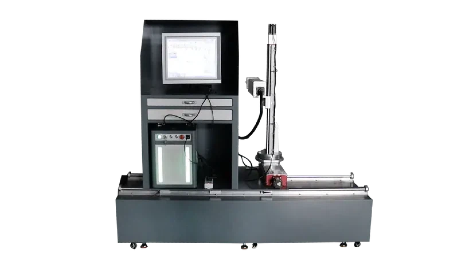
Fiber laser marking machines are used in a variety of industries and applications due to their versatility and precision. Here are some common uses:
Electronics: Marking components like circuit boards, semiconductors, and microchips with serial numbers, logos, and barcodes for identification and traceability.
Jewelry: Engraving intricate designs, logos, and personalization on rings, necklaces, and other jewelry pieces.
Aerospace: Marking aerospace parts and components with part numbers, certifications, and identification codes.
Medical Devices: Engraving serial numbers, lot numbers, and regulatory marks on medical instruments, implants, and devices.
Automotive: Marking automotive parts such as engine components, transmission parts, and chassis with part numbers and logos.
Packaging: Marking packaging materials with batch codes, expiration dates, and logos for branding and compliance.
Choosing the right fiber laser marking machine for your needs requires considering several factors:
Material Compatibility: Ensure the machine is compatible with the materials you plan to mark. Fiber lasers work well with metals, plastics, and ceramics, but some machines may be optimized for specific materials.
Marking Area: The size of the marking area determines the size of the parts you can work on. Be sure to choose a machine with a suitable marking area for your components.
Laser Power: Higher laser power is required for marking thicker or denser materials. Choose a machine with enough power to meet your requirements.
Software: The software should be user-friendly, capable of importing designs, and allowing for parameter adjustments to achieve the best results.
Maintenance and Support: Consider the machine’s maintenance needs and the support provided by the manufacturer to ensure smooth operation and minimal downtime.
Fiber laser marking machines offer a host of benefits that make them a preferred choice in many industries. From precision and speed to durability and versatility, these machines provide reliable, high-quality results for a wide range of applications. Whether you’re in electronics, jewelry, aerospace, or another industry, fiber laser marking technology can significantly improve the efficiency, accuracy, and quality of your production process.
If you're looking for a high-quality fiber laser marking machine, HBS Tech Co., Ltd. offers cutting-edge solutions designed to meet your specific needs. With expert guidance and a range of products to choose from, HBS Tech is the go-to provider for all your fiber laser marking requirements.
Q: What materials can a fiber laser marking machine mark?
A: Fiber laser marking machines can mark a wide variety of materials, including metals, plastics, ceramics, glass, and some organic materials like wood and leather.
Q: How precise are fiber laser marking machines?
A: Fiber laser marking machines offer micron-level precision, making them ideal for intricate designs, logos, and serial numbers.
Q: How fast are fiber laser marking machines?
A: Fiber laser marking machines are fast and efficient, capable of marking large quantities of items in a short amount of time without compromising quality.
Q: What industries use fiber laser marking machines?
A: Fiber laser marking machines are used in many industries, including electronics, jewelry, aerospace, automotive, medical devices, and packaging, for tasks like part identification, engraving, and logo marking.


