- All
- Product Name
- Product Keyword
- Product Model
- Product Summary
- Product Description
- Multi Field Search


Views: 162 Author: Site Editor Publish Time: 2026-09-01 Origin: Site


Industrial traceability demands identification solutions engineered for absolute permanence. Flimsy printed labels simply cannot survive harsh conditions. You need distinct marks built to endure decades of abuse. Components face extreme environments routinely in the field. Many undergo heavy painting, thick powder coating, or abrasive galvanizing routines. Superficial surface marks vanish rapidly under these harsh physical stresses. Loss of component traceability quickly leads to costly compliance failures and massive recalls.
Electric and laser markers certainly dominate specific modern manufacturing sectors. However, pneumatic dot peen systems remain the undisputed industry standard for high-depth metal marking. They handle high-stress applications reliably across heavy industries. We aim to strip away flashy marketing claims entirely. You need a practical, engineering-focused framework for sourcing industrial marking equipment. You will learn how to evaluate force, speed, and software integration accurately. Ultimately, this comprehensive guide ensures your capital investment directly supports high-volume manufacturing needs and strict compliance requirements.
Pneumatic marking machines are structurally optimized for depth, making them the only viable choice for nameplates that will undergo post-mark coating or abrasive treatments.
The primary implementation risk is not the machine itself, but the quality of the compressed air supply (moisture and pressure consistency).
Evaluating a serial number engraving machine requires prioritizing software integration (ERP/MES) and auto-incrementing reliability over sheer mechanical speed.
Focusing on clear solution categorization helps you make the correct investment. You must test technical boundaries before committing capital to a specific tracking technology.
Force and depth matter immensely when evaluating marking solutions. Pneumatic systems utilize compressed air pressure to drive the carbide stylus downward. They achieve significantly deeper indentations consistently. You will often see depths reaching 1mm or more in soft metals like aluminum. Electromagnetic coils simply cannot match this raw pneumatic driving power. We must acknowledge the practical trade-offs involved here. Electric markers offer excellent plug-and-play portability for field technicians. However, a robust pneumatic marking machine handles heavy-duty, continuous manufacturing shifts flawlessly. Electric coils often overheat during intense, continuous factory operation.
Material integrity remains a critical factor for highly regulated industries. Lasers operate by melting, annealing, or directly vaporizing surface material. This thermal process potentially introduces unwanted micro-stresses into the part geometry. Pneumatic dot peen works entirely differently. It displaces base material through rapid cold forming. This physical displacement preserves the structural integrity of the metal beautifully. Aerospace and oil industries strictly require this structural preservation. Next, consider the total deployment expenditure. Pneumatic systems represent a tiny fraction of the capital expenditure required for lasers. Class 1 fiber laser safety enclosures cost tens of thousands of dollars. You must accept slightly longer cycle times for dot peen, however.
You need to validate your exact production scenario against machine capabilities. Ask yourself a few critical engineering questions. Do your component nameplates require strict MIL-STD-130 compliance? Must you perform deep automotive VIN stamping? Do you need guaranteed machine readability after thick powder coating applications? If you answered yes to these questions, pneumatic technology is your validated path forward. Superficial lasers or light electric markers will fail these specific durability tests.
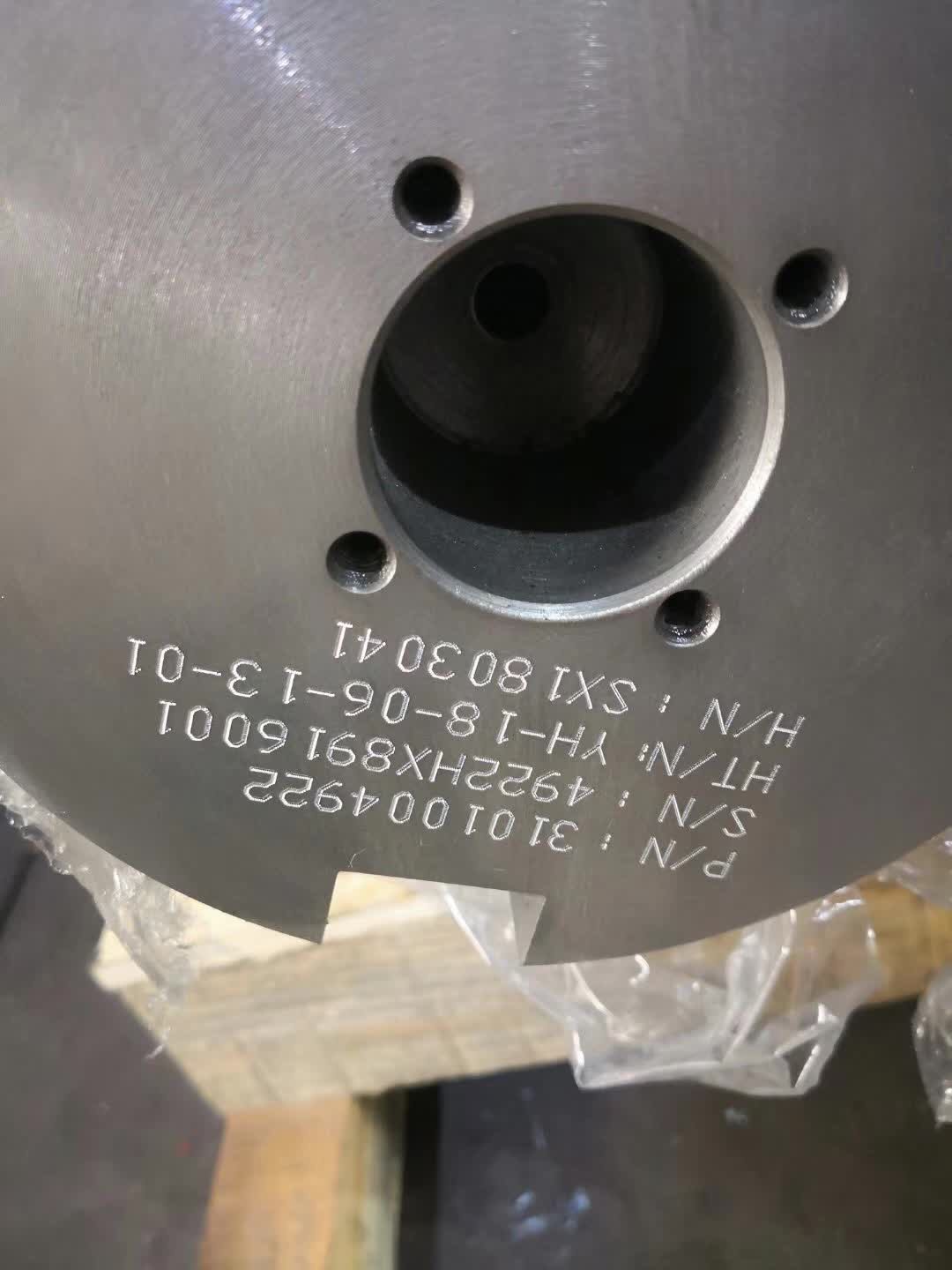
Translating specific machine features into tangible production outcomes is essential. Let us explore the technical parameters you must evaluate when selecting a reliable nameplate marking machine.
Many procurement teams make a common assumption error regarding size. Do not buy hardware based solely on the maximum plate size. Buy equipment based on the maximum markable area required in a single machine cycle. Your tag might measure 200mm across, but the actual text block might only span 80mm. We highly recommend specifying a 100mm x 100mm working window. This optimal footprint comfortably covers 90% of standard industrial nameplate applications without wasting space.
Look closely for high-frequency vibration capabilities during your evaluation. Hardware speeds reaching 300+ Hz perform exceptionally well. You need this high frequency if continuous line aesthetics are required. We call this technique vibro-peening. Vibro-peening creates solid lines rather than distinct dot-matrix patterns. Furthermore, you must assess the internal X/Y rail construction carefully. Dual-linear guides reduce long-term mechanical slop dramatically. They handle lateral side-loads much better than cheaper single-rail designs over thousands of cycles.
Industrial pins endure massive physical impact forces continuously. Standard carbide pins effectively mark untreated materials up to 62 HRC. You must verify the machine force settings systematically during setup. Operators need completely different air pressures for hardened tool steel versus soft aluminum tags. Soft anodized aluminum requires significantly lower driving pressure. High pneumatic pressure will distort thin aluminum tags and warp the final nameplate rapidly.
Component Specification | Recommended Baseline | Primary Production Benefit |
|---|---|---|
X/Y Marking Window | 100mm x 100mm | Accommodates standard text blocks while keeping the machine footprint compact. |
Drive Mechanism | Dual-Linear Guides | Prevents long-term mechanical drift and ensures consistent character alignment. |
Stylus Frequency | 300+ Hz | Enables smooth vibro-peening for continuous line fonts and better aesthetics. |
Hardness Capacity | Up to 62 HRC | Provides versatility across soft aluminum, brass, and hardened industrial steel. |
Scalability, error-proofing, and data security define modern automated manufacturing. Hardware tells only half the story. Your software infrastructure dictates everyday production efficiency.
Your digital controller must natively support robust sequential serialization. It should handle complex date coding, time stamps, and shift codes automatically. You want to eliminate manual operator text input completely. Typing numbers manually introduces catastrophic human error onto the assembly line. A smart serial number engraving machine increments digits automatically after every successful cycle. This locked automation ensures flawless batch traceability.
Evaluate the communication protocols rigorously before making a purchase. Does the proprietary controller accept RS232, TCP/IP, or standard I/O signals? Can it fetch dynamic production variables directly? You need smooth data extraction from your network database or a handheld barcode scanner. Modern controllers must act as seamless digital nodes. They integrate into your broader manufacturing execution system seamlessly. Isolated machines create frustrating data silos on your factory floor.
Ensure the included software generates compliant 2D Data Matrix codes easily. Modern supply chains require automated optical inspection (AOI) down the line. Clean, geometrically perfect 2D codes guarantee your metal parts pass these automated digital gates. Poor software rendering leads to unreadable matrix codes and instant part rejection.
Experience-based warnings prepare you for actual operational readiness. Preparing your facility prevents frustrating deployment delays.
The primary operational risk stems directly from your shop air supply. Moisture, compressor oil, or microscopic debris will corrode the internal pneumatic cylinder. These contaminants cause wildly inconsistent marking depths across a single batch. The fix involves strictly mandating an in-line coalescing filter. You must add a precision pressure regulator directly at the machine inlet. Most demanding facilities require ISO 8573-1 compliant clean air for optimal dot peen performance.
Pneumatic action against thin metal generates significant high-frequency noise. Operators describe this sound as a harsh, rapid chattering. You must evaluate your distinct need for acoustic enclosures. Specialized fixturing techniques, like heavy dampening pads, prove highly effective here. You must remain strictly below standard OSHA 85 dBA workplace thresholds. Excessive industrial noise degrades operator safety and morale rapidly.
An engraving system relies heavily on its physical holding fixture. Inaccurate, loose fixtures produce sloppy, misaligned results every single time. Look for dedicated suppliers offering automated nameplate feeders. Customized magnetic or specialized pneumatic clamps handle high-volume batches securely. Stable parts yield crisp, permanent characters. Vibration is the enemy of readable industrial text.
Follow these actionable steps for smart, stress-free equipment procurement. Moving methodically prevents expensive purchasing mistakes.
Define the Throughput: Calculate your exact parts-per-hour requirements. If your marking volume exceeds 1,000 nameplates a day, adapt your strategy. You must prioritize automated tag feeders over basic manual benchtop models to hit those targets.
Request Application Testing: Never buy heavy machinery based purely on a glossy spec sheet. Send your exact blank metal tags directly to the manufacturer. Request an unedited video of the actual marking process. Demand the return of the physical sample for inspection.
Verify Post-Mark Readability: Subject the marked samples to your actual production environment immediately. Put them through your paint booth, shot blasting cabinet, or acid wash line. This physical testing verifies the chosen pressure and depth settings are truly sufficient.
Assess Vendor Support: Prioritize manufacturers offering excellent aftermarket logistics. They should offer overnight shipping on consumable carbide pins. Remote software troubleshooting capabilities via internet connection save days of frustrating downtime.
Choosing the right industrial hardware remains a delicate balancing act. You must constantly weigh marking depth, cycle time, and software automation against each other. Superficial identification simply cannot survive heavy industrial processes. Deep dot peen displacement solves this durability problem elegantly. Anchor your final procurement decision heavily on rigorous sample testing. Prioritize robust software integration capabilities rather than strictly focusing on base hardware costs. True value lies in daily operational reliability. We encourage you to schedule a technical consultation today. Request a custom sample mark on your own materials, or download a comprehensive technical specification sheet to begin your evaluation process.
A: Most industrial units require a clean, dry air supply between 0.2 to 0.6 MPa (30 to 90 PSI). Operators adjust this pressure dynamically based on the desired mark depth and the specific material hardness of the nameplate.
A: Pin life depends heavily on material hardness and your operating pressure. On standard aluminum nameplates, a single pin can easily last several months of continuous daily use. Operators can also repeatedly re-sharpen these pins before requiring a total replacement.
A: Yes. Modern pneumatic controllers import standard DXF or PLT files to recreate vector logos. They also natively generate compliant 2D Data Matrix or QR codes. However, overall image resolution remains naturally limited by the physical dot size compared to lasers.
A: Benchtop systems are highly recommended for nameplates. Portable handheld units are designed specifically for large, immovable components like heavy pipes or engine blocks. Small nameplates require the rigid, stable fixturing of a benchtop column to prevent vibration entirely.


