- All
- Product Name
- Product Keyword
- Product Model
- Product Summary
- Product Description
- Multi Field Search


Views: 0 Author: Site Editor Publish Time: 2025-02-25 Origin: Site


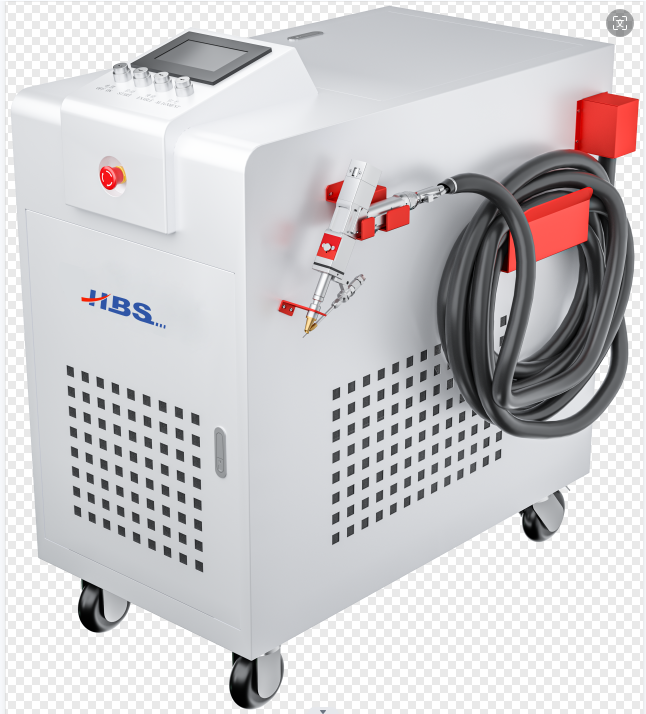
Tired of bent metal and slow welding? Handheld laser welding is a cleaner, faster choice. These handheld laser welders are fast, precise, easy to carry, and need little cleanup. A hand-held laser welding machine can weld up to four times faster than old methods. This laser welding machine makes clean, strong joints without filler material. It lowers heat distortion, so you skip most grinding and polishing. Simple controls let any operator start welding quickly. The infrared wavelength absorbs well in most metals, giving reliable results. But are these machines worth the money? This guide looks at each benefit to help you decide.
Handheld laser welders work up to 4 times faster than TIG welding. This means you finish more jobs in less time.
These machines produce clean, precise welds with very little heat distortion. You spend less time on grinding and polishing.
The lightweight design lets you weld in tight spaces and overhead. You can take the machine to the job.
You save money on labor and materials. Most shops recover their investment in just a few months.
Anyone can learn to use a handheld laser welder in hours. No special certification is needed.
Speed is very important on a production floor. When you put handheld laser welding next to old arc methods, the difference is huge. This part explains how much time you save and why it matters for your profits.
The numbers tell the story. Handheld laser welders work 5 to 10 times faster than TIG. Laser penetration speeds are 0.5 to 1.5 meters per minute, based on material thickness. Welding speed goes from 40 to 400 inches per minute for different models and uses. According to IPG, the LightWELD handheld laser welder can be up to 4 times faster than TIG welding. Bodor showed about 4 times higher welding speed compared to TIG, with less distortion and a smaller heat‑affected zone.
| Source | Speed Comparison |
|---|---|
| General comparison | Laser welding is about 4X faster than TIG welding |
| QTR Inc. case study | Welding time dropped from 90 minutes per part with TIG to 10 minutes with laser |
| IPG LightWELD claim | Up to 4x faster than TIG welding |
| Bodor demonstration | Approximately 4 times higher welding speed compared to TIG |
Laser welding is the fastest way to weld, going more than 4 times faster than TIG.
The QTR Inc. case study shows what happens in real life. Their welding time fell from 90 minutes per part with TIG to only 10 minutes with laser. That is a huge gain in productivity. TIG is one of the slowest welding methods, and laser is even faster than MIG. You get very high speed and efficiency without losing joint quality.
Fiber lasers, the kind often used in handheld laser welding machines, reach about 30% energy efficiency. This helps with heat control and lowers operating costs. You pay less for electricity to get the same work. The machine also stays cooler, which makes parts last longer and cuts time spent on repairs.
Faster work directly boosts productivity in the shop. When each weld is quicker, you finish more parts per shift. Your workers wait less for heat to go down between passes. The lower heat means less strain on the machine. This welding technology keeps your line moving.
The speed benefit adds up over a full workday. A job that needs eight hours with TIG might be done in two hours with a handheld laser welder. You have room for more orders without hiring more people or buying more machines. That is the main speed advantage: more work from the same resources.
Handheld laser welders give you this speed without a hard setup. You pick up the torch, point it, and weld. The machine does the rest. For shops that care about output, this speed alone often makes the cost worth it.
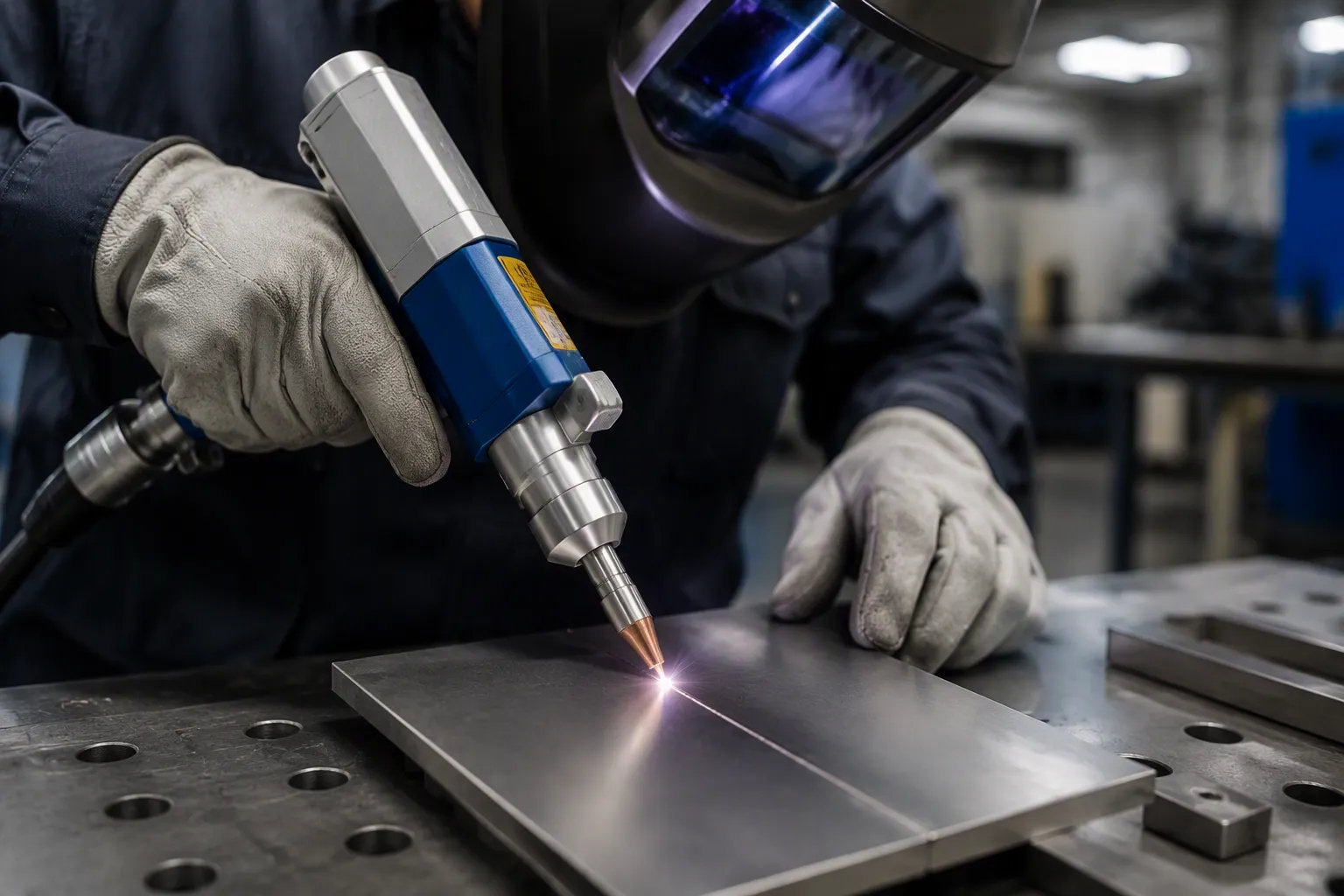
Precision separates handheld laser welding from older methods. You get tight control over the weld pool, and that control shows up in the final part. This section explains how that precision works and why it matters for your output.
Handheld laser welders achieve typical precision tolerances of plus or minus 0.1 mm to 0.5 mm. The exact range depends on your machine and settings. For high-level precision work in aerospace and medical devices, plus or minus 0.1 mm is common. General industrial jobs in automotive and manufacturing usually land around plus or minus 0.5 mm. Reaching the tightest tolerances requires fine-tuning power, speed, and material thickness. Operator skill also plays a role.
Beam quality drives this precision. A high energy concentration lets you focus the beam tightly. That focus minimizes heat input and distortion. You can weld at high speeds while keeping quality, especially on thin sheets. Wobble welding with adjustable width and speed improves seam control. It also helps when parts do not fit together perfectly. Continuous wave and pulsed modes let you balance weld quality against heat input. An adjustable focal position gives you precise control over power density and spot size.
The result is cleaner welds with a uniform appearance. Clean, consistent seams reduce the need for touch-up work. That saves time and improves how the finished product looks.
The heat-affected zone tells the real story. Handheld laser welding produces a minimal heat-affected zone. That reduces distortion and cuts the need for post-processing repairs.
| Welding Method | Heat-Affected Zone (HAZ) Size |
|---|---|
| Handheld Laser | Small; minimal distortion |
| MIG | Larger than laser |
| TIG | Larger than laser |
A peer-reviewed study on 304 stainless steel found laser-welded joints had a fusion area of 6.7 mm² versus 13.9 mm² for TIG. The HAZ visible in TIG joints was absent in laser-welded samples.
A laser's energy is highly concentrated, which leads to a much smaller heat-affected zone (HAZ) compared to traditional welding methods. Combined with the faster travel speeds typically achieved with the process, laser welding introduces significantly less heat into the target material. Besides reducing distortion, a reduced HAZ minimizes localized stresses that can lead to weaker welds.
The infrared wavelength also boosts welding effectiveness. Near-infrared fiber lasers around 1064 nm show strong absorption in most metals. Carbon steel absorbs roughly 88 to 92 percent. Stainless steel absorbs about 92 percent. Aluminum starts lower at around 5 to 8 percent at room temperature. That absorption rises to about 15 to 25 percent when heated to 400 to 600 degrees Celsius. Absorption climbs further as the metal nears melting. This temperature dependence means the weld gets more efficient as it progresses.
Less heat means less warping. You skip most grinding and polishing. Your parts stay flat and true. That protects the performance of the final assembly. For shops that value quality and speed, this precision advantage makes handheld laser welders a strong choice.
Old welding setups often make it hard to move. You struggle with heavy torches, trailing cables, and big power supplies. A hand-held laser welding machine totally changes that. Its small design lets you get to spots that arc welding can't reach. You can weld in corners, on vertical seams, and even above you without moving the piece. This freedom saves hours on each job.
The gun-style handle and light build make handheld laser welders feel like a power tool, not a welding torch. You bring the machine to the job, not the job to the machine. Big parts stay in place. This alone cuts setup time and lowers the chance of damage.
Tight spaces are no problem. The nozzle fits into gaps where a TIG torch can't go. You weld inside frames, on brackets, and along edges where space is only inches wide. The thin nozzle gets past things that block old torches. The fiber cable brings power from the laser, so the handpiece stays small and easy to move. Operators weld in any position — flat, up, sideways, overhead — with the same speed and accuracy. Handheld laser welders handle corners and tight spots without the angle problems of old methods. One pass does the work of many hard tries.
Handheld laser welding doesn't need years of practice. The controls are easy to use. You set power, speed, and focus on a touchscreen. Pull the trigger and you weld. The machine keeps a steady seam without the rocking or filler rod skill that TIG needs.
New operators get good fast. Old welding takes months to learn. A easy-to-use handheld laser welder lets a beginner make clean, strong welds after just a few hours. No special certification is needed to start. You learn in hours, not weeks. The weld pool stays visible through the safety window, so you see results right away. Feedback is instant, not hidden behind a helmet lens.
The smooth weld look from handheld laser welding says it all. Even beads with no spatter or undercut. Little cleanup means you ship parts faster. This easy use makes handheld laser welders more popular in shops of all sizes. A laser welding machine that anyone can run pays for itself faster than equipment that sits unused waiting for a certified welder.
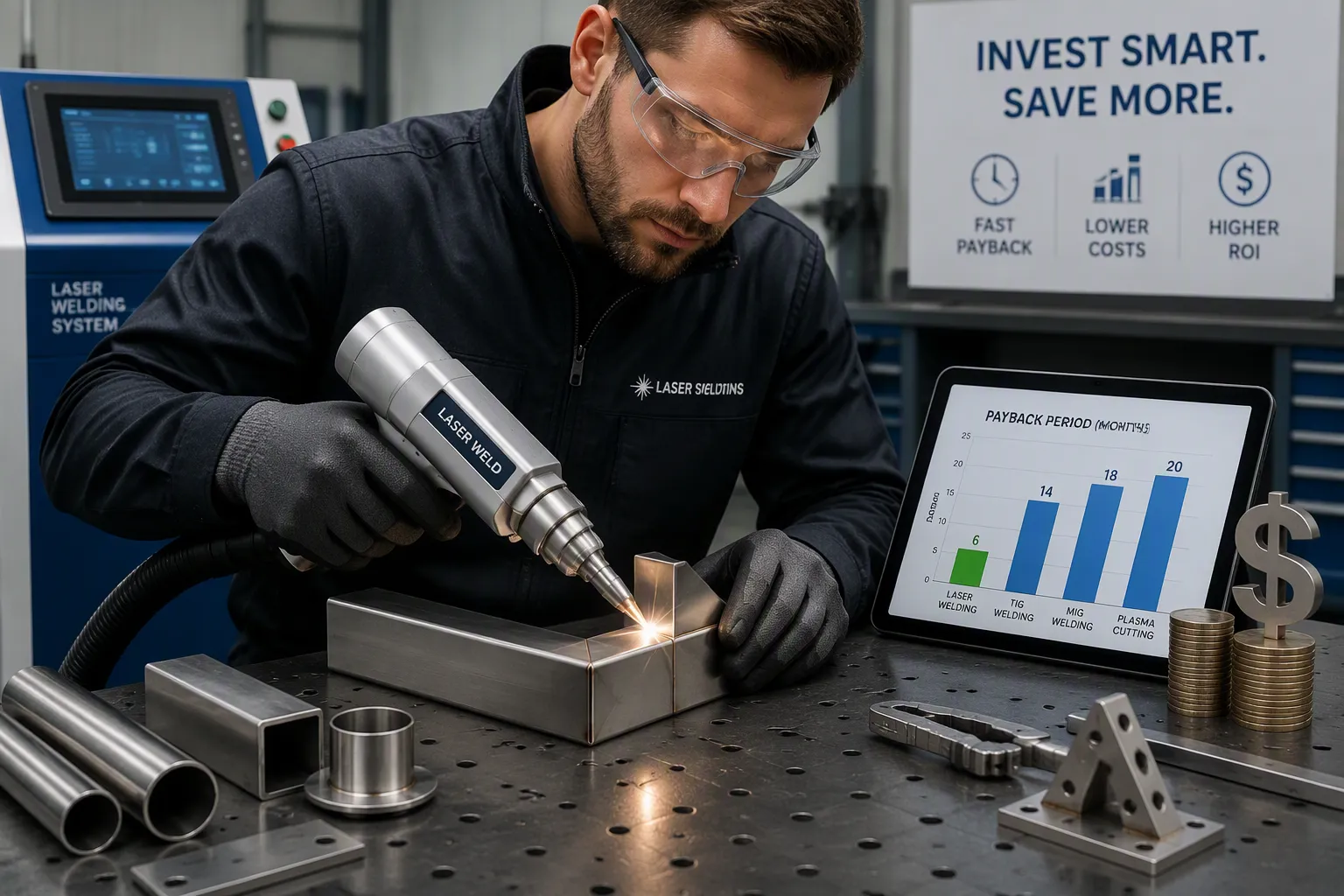
Money talks on any shop floor. You want equipment that pays for itself and keeps paying. Handheld laser welding delivers on both fronts. The savings come from two places: lower input costs and less cleanup work.
Many handheld laser welding processes need no filler material. You skip the wire, the rods, and the gas that shield old methods. That absence cuts your consumable bill right away. It also produces stronger joints. A weld without filler has fewer points of weakness. The bond forms directly between the base metals.
Labor costs drop too. One operator runs the machine. You do not need a second person to feed filler or clean spatter. The fast weld speeds mean you finish jobs in less time. Fewer hours on each part equals lower labor cost per unit.
The payback numbers show how quickly these savings add up. Most shops recover their investment in a few months.
| Category | Average Payback | Range |
|---|---|---|
| Kitchen Equipment (Stainless) | 2.8 months | 1.5–5 months |
| Agricultural Equipment | 4.1 months | 2–8 months |
| Furniture/Architectural | 4.5 months | 2–9 months |
| Automotive Parts | 3.2 months | 1.5–6 months |
| HVAC Ductwork | 5.8 months | 3–10 months |
| General Fabrication | 4.9 months | 2–9 months |
| Overall Average | 4.2 months | 1.5–10 months |

Real shops confirm these figures. A stainless steel kitchen equipment maker in Ohio bought a 1500W handheld laser welder for $40,000. The machine delivered $412,500 in annual benefit. Payback came in 2.3 months. An agricultural equipment fabricator in Nebraska spent $45,000 on a 2000W unit. Annual benefit reached $283,000. Payback took 3.8 months. A custom metal furniture studio in California invested $44,000 in a 1500W machine. Annual benefit hit $259,500. Payback arrived in 4.2 months.
Higher power costs more upfront but often pays back faster. A 1000W unit runs $24,000 to $28,000 with a 5.5-month average payback. A 2000W unit costs $36,000 to $42,000 and pays back in 3.8 months on average. The efficiency of these machines keeps operating costs low while output stays high.
Minimal heat distortion changes your finishing department. A handheld laser welder puts less heat into the part. The metal stays flat. You skip most grinding and polishing. That saves hours of labor on every job.
Old welding methods leave spatter, undercut, and warped seams. You pay someone to fix those problems. Handheld laser welding produces clean, uniform beads. The weld looks good right off the torch. Your team ships parts faster with less touch-up.
Less rework also means less material waste. You do not scrap parts that warped or failed inspection. You do not spend money on grinding wheels and polishing compounds. The savings stack up across every order.
These cost advantages answer the investment question directly. A machine that pays for itself in months and cuts daily operating costs is not an expense. It is a tool that returns money to your business. The precision and speed of handheld laser welders turn into real dollars on your bottom line. That benefit makes the decision easy for most shops.
Some industries get more from this technology. Speed, portability, and low heat make the hand-held laser welding machine great for certain jobs. This laser welding machine works best where old methods fall short.
Automotive manufacturing needs fast, precise welds on thin materials. Body panels need low heat so they do not warp. Exhaust system parts need clean, strong joints that do not leak. Battery housings in electric vehicles must be airtight. The hand-held laser welding machine does all these jobs easily. You weld in tight engine bays and under frames. The low heat protects nearby parts. This precision cuts scrap and rework.
Aerospace repair has even tougher demands. Turbine blades and engine casings wear down over time. Handheld laser welders fix the material with very little heat. The parent metal stays strong. Rex Alexandre on SpaceX's Starship program started using handheld laser welding in 2020. He added a wire-feeding system in 2021. Thousands of handheld laser welds have flown to space and come back. That real-world test proves they are reliable for critical joints.
General fabrication shops gain from this tool. You weld stainless steel kitchenware seams, metal furniture, and custom art. Clean beads need little post-processing. That saves hours of grinding. Sheet metal parts come out flat and true.
Repair work is a strong use case. You fix cracks on site without taking the structure apart. Handheld laser welders reach joints in tight corners and overhead spots. Traditional welding methods have a hard time there. You restore worn parts instead of replacing them. That cuts material costs and downtime.
This is a truly versatile welding approach. It serves automotive lines, aerospace repair stations, and custom shops just as well. The key benefit you get is one tool that replaces old machines.
Handheld laser welding gives you speed, precision, and portability that are hard to beat. You save money on labor and materials. Anyone can use it to make clean welds fast. The welding process needs very little training. These benefits make the hand-held laser welding machine a smart buy for your shop. You get more done on every job. Shops that use handheld laser welders earn their money back faster and get better quality. The advantages go straight to your bottom line. Do not wait to see these gains. Contact a supplier today or ask for a demo. See how this technology changes your workflow. Your business deserves the upgrade.
A handheld laser welder can run up to 4 times faster than TIG. One case study showed weld time dropping from 90 minutes per part to just 10 minutes. You finish more jobs each shift without adding staff or equipment.
No. The controls are simple. You set power, speed, and focus on a touchscreen. A beginner can make clean, strong welds after just a few hours of practice. No special certification is required to start.
Most metals absorb the near-infrared wavelength well. Carbon steel absorbs roughly 88 to 92 percent. Stainless steel absorbs about 92 percent. Aluminum starts lower but absorbs more as it heats up. This makes the process effective across common shop materials.
Most shops recover their investment in a few months. The overall average payback is 4.2 months. Some applications, like stainless steel kitchen equipment, see payback in under 3 months. Lower labor and material costs drive these savings.
Yes. The lightweight gun-style handle lets you reach corners, vertical seams, and overhead joints. The thin nozzle fits where a TIG torch cannot go. You bring the machine to the job, not the other way around.

