- All
- Product Name
- Product Keyword
- Product Model
- Product Summary
- Product Description
- Multi Field Search


Views: 174 Author: Site Editor Publish Time: 2026-04-22 Origin: Site


Manufacturing demands relentless speed and flawless precision. As global supply chains tighten, tracking every component from the assembly line to the end-user is no longer optional. You need a reliable method to imprint permanent data on your parts.
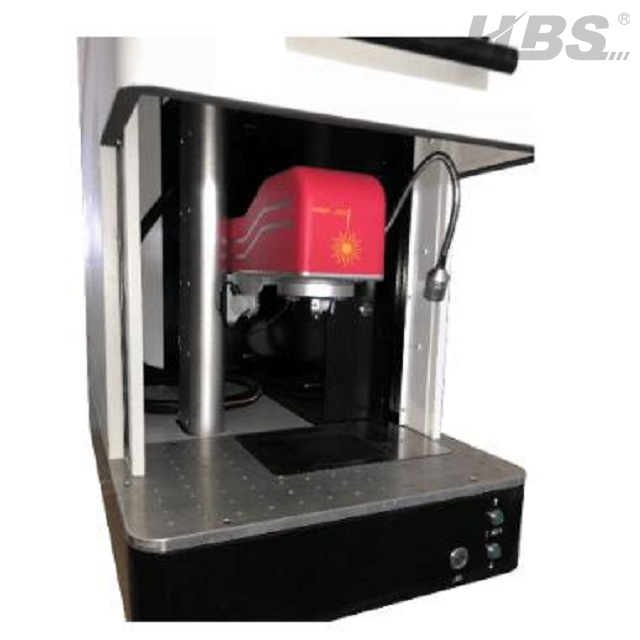
An industrial fiber laser marking machine is a solid-state, non-contact Direct Part Marking (DPM) system. It utilizes Ytterbium-doped fibers to generate a highly focused 1064nm wavelength. Modern facilities do not just view this technology as a simple engraving tool. They treat it as an automated production efficiency platform. It operates seamlessly to eliminate consumable costs and ensure permanent traceability.
While fiber lasers deliver exceptional precision for metals and hard plastics, they demand careful planning. You must accurately specify power levels, pulse dynamics, and safety enclosures. Implementing these systems correctly prevents costly downtime. It also secures your compliance with strict regulatory standards and guarantees a positive return on investment.

Zero Consumables: Fiber lasers replace inks and labels, radically lowering operational expenditures (OpEx) despite higher initial Capital Expenditure (CapEx).
Material Specificity: Standard fiber lasers dominate metal applications but fail on organic materials (wood, clear glass) and soft packaging, which require alternative wavelengths.
Compliance-Ready: Capable of high-contrast marking that survives harsh post-treatments (e-coating, shotblasting) and meets strict GS1, FSMA, and MIL-STD-130 standards.
Automation Focus: Enterprise-grade ROI depends on seamless PLC integration (PROFINET/Modbus TCP) and Class 4 laser safety compliance (ISO 13849-1).
To maximize production efficiency, we must first understand how this technology interacts with different materials. The fundamental physics rely on highly precise optical delivery.
Inside the laser head, X-Y galvanometers direct the focused beam across the target surface. These fast-moving mirrors shift the beam at incredible speeds. They guide the light through an f-theta lens, flattening the focal plane. The intense energy induces distinct surface-level changes. Because the process is entirely non-contact, it causes zero mechanical wear to your valuable tooling.
Operators frequently use the terms marking, etching, and engraving interchangeably. However, they represent three very distinct physical processes. Choosing the wrong method can ruin a part or slow down your cycle times.
Annealing: This process relies on sub-surface oxidation. The laser heats the metal without melting it, drawing carbon to the surface to create a dark mark. It leaves the metal perfectly smooth. Annealing is critical for medical devices and hygiene equipment where bacteria could hide in microscopic crevices.
Etching: Etching melts the top layer of the material. As the material cools and expands, it creates a high-contrast, slightly raised mark. It operates at maximum speed, making it the preferred choice for high-volume automotive parts.
Engraving: Engraving actively vaporizes the material. It creates deep, wear-resistant cavities. We rely on engraving when the part will face heavy industrial abrasion or require post-process coating.
You will often see the "M2 value" listed on a specification sheet. It measures beam quality. An M2 value closer to 1.0 indicates a nearly perfect, Gaussian beam profile. Why does this matter? A lower M2 value increases your depth of focus. It maintains crisp edges on your barcodes. This becomes extremely important when you mark cast parts or components with slight height variations.
Not all lasers are created equal. Matching the correct wavelength and pulse capability to your material is the most important step in the buying process.
The standard fiber laser operates at a 1064nm wavelength. It uses a fixed pulse duration. Think of it as the baseline workhorse for industrial manufacturing. We use it for deep metal engraving and high-speed part tracking in aerospace and automotive facilities. It thrives on raw steel, aluminum, and brass.
MOPA stands for Master Oscillator Power Amplifier. A MOPA fiber laser features variable pulse widths. This gives operators granular control over heat input. It is essential for precise heat management. You can use a MOPA system to create vibrant color marking on stainless steel. It also enables high-contrast dark marks on specific plastics without burning the edges.
When you deal with extreme heat sensitivity, standard fiber lasers will burn your product. This is where a UV Laser Marking Machine becomes necessary. It operates at a 355nm wavelength. Instead of melting the material, it uses a "cold marking" photochemical process. It breaks the molecular bonds directly. You must position this technology as the primary alternative for flexible packaging, thin films, and medical-grade silicones.
It is crucial to know what fiber technology cannot do. Standard and MOPA fiber lasers fail on organic materials. If you need to process wood, leather, clear acrylic, or textiles, you require a 10600nm CO2 laser. Attempting to process these organics with a fiber system will result in dangerous burning or the beam passing straight through the material.
Technology | Wavelength | Pulse Control | Best Applications |
|---|---|---|---|
Standard Fiber | 1064nm | Fixed | Deep metal engraving, fast barcodes on steel. |
MOPA Fiber | 1064nm | Variable | Color on stainless, precise plastic marking. |
UV Laser | 355nm | Variable | Cold marking, glass, soft packaging, silicone. |
CO2 Laser | 10600nm | Continuous/Pulsed | Wood, leather, paper, clear acrylic. |
A traceability system only holds value if the data survives the entire lifecycle of the product. Industrial environments are unforgiving.
Heavy manufacturing puts immense stress on surface marks. Castings and engine blocks often undergo brutal post-processing. A well-configured deep engraving will survive extreme treatments like powder coating, intense shotblasting, and chemical e-coating. The laser excavates enough material so the barcode remains machine-readable even after thick paint fills the cavity.
Global regulations now mandate item-level tracking. Automated software within the laser controller handles this heavy lifting. It connects to your database to generate sequential UDI (Unique Device Identification) and UID barcodes in real-time. High-contrast marks easily fulfill strict readability requirements. For example, defense contractors rely on this contrast to meet MIL-STD-130 standards. Food and pharmaceutical companies use it to satisfy GS1 and FSMA tracing laws.
Best Practice: Lasers are highly versatile, but they cannot perform miracles on filthy surfaces. Optimal contrast on raw metals often requires pre-treatment. We advise integrating a degreasing station or a light abrasive blasting step before marking. Removing heavy grease, rust, or thick oxidation layers ensures the beam interacts uniformly with the base metal. This prevents barcode grading failures.
Buying the equipment represents only half the battle. Successfully deploying it on a busy factory floor dictates your ultimate success.
Standalone, manual workstations work fine for small job shops. Enterprise production lines require a much higher level of integration. You must select a Laser Marking Machine equipped with robust embedded controllers. Look for systems that support true PC-free operation. They must communicate natively via standard industrial protocols like RS-232, EtherNet/IP, and PROFINET. This allows your central PLC to dictate marking data seamlessly.
Industrial lasers output highly dangerous invisible radiation. Unshielded 1064nm light causes instant, permanent retinal damage. A viable industrial unit must satisfy strict Environmental Health and Safety (EHS) requirements. Insist on Class 4 safety enclosures. The system must integrate dual-channel interlocks and fast-acting mechanical shutters. To pass corporate safety audits, ensure your safety circuits meet ISO 13849-1 (PLe rating) standards.
Common Mistake: Do not overlook hazardous byproducts. Vaporizing plastics releases toxic VOCs. Engraving metals releases microscopic particulate matter. Operating without extraction damages the laser lens and endangers your workforce. You must pair the laser with a dedicated fume extraction and multi-stage HEPA filtration system.
Set realistic expectations regarding software configuration and parameter tuning. Adjusting the focal length, pulse frequency, and marking speed requires patience. We highly recommend initial engineer training. Without proper guidance, operators will experience sub-optimal cycle times, burnt parts, or unreadable barcodes during the first few weeks of deployment.
Purchasing an industrial laser system is a strategic investment in your overarching traceability infrastructure. It is not merely a standalone engraving tool. By eliminating consumable costs and automating data application, you secure a highly efficient, future-proof production line.
Next Steps for Buyers:
Initiate a material sample testing phase (a Pilot) with your chosen vendor.
Strictly verify cycle times, barcode contrast levels, and beam quality on your actual parts.
Complete these material tests prior to issuing a formal Request for Proposal (RFP).
Carefully evaluate the vendor's post-sale integration support and engineering training capabilities.
A: A direct inverse relationship exists between the marking field size and laser intensity. A shorter focal length provides a smaller, tightly concentrated spot. This intense beam is perfect for deep engraving. Conversely, a longer focal length accommodates a much wider marking area for large parts. However, the larger spot disperses energy, requiring you to use more power to achieve the same mark.
A: Yes, they handle copper and brass effectively. However, it requires careful parameter tuning. Improper settings can cause the intense light to reflect backward into the fiber optic cable, causing catastrophic back-reflection damage to the diode. Always select a system specifically engineered with built-in optical isolators to handle highly reflective materials safely.
A: Direct Part Marking (DPM) alters the physical material of the component permanently. Because the mark becomes part of the metal or plastic, the traceability data cannot be lost, washed off, or degraded in harsh environments. In contrast, traditional adhesive labels can peel away, burn off, or fade under industrial chemicals.


