- All
- Product Name
- Product Keyword
- Product Model
- Product Summary
- Product Description
- Multi Field Search


Views: 120 Author: Site Editor Publish Time: 2026-05-12 Origin: Site


Modern manufacturing lines face a difficult balancing act today. Production managers demand strict parts traceability. They also require flawless cosmetic aesthetics. However, traditional marking methods often fail to deliver both. Inkjet printers require constant maintenance. Thermal lasers frequently damage heat-sensitive materials. They warp thin substrates and leave burnt, unacceptable edges.
Enter the UV Laser Marking Machine. Industry experts recognize it as the ultimate standard for "cold marking." It processes delicate parts safely while delivering permanent, high-contrast results.
This article provides a clear framework for your engineering, operations, and procurement teams. You will learn how to evaluate UV laser technology. We will help you compare it against traditional alternatives. Ultimately, you will know exactly how to specify the right equipment for your specific production environment.
"Cold" Processing: UV lasers operate at a 355nm wavelength, using photolytic degradation to break molecular bonds without transferring destructive heat.
Material Versatility: Safely marks sensitive polymers, thin glass, ceramics, and medical-grade materials without causing micro-fractures or altering structural integrity.
Consumable-Free ROI: Replaces Continuous Inkjet (CIJ) systems, eliminating chemical additives, maintenance downtime, and recurring ink costs.
Precision Specs: Capable of achieving line widths as narrow as 0.01mm with a Heat-Affected Zone (HAZ) of ≤5μm.
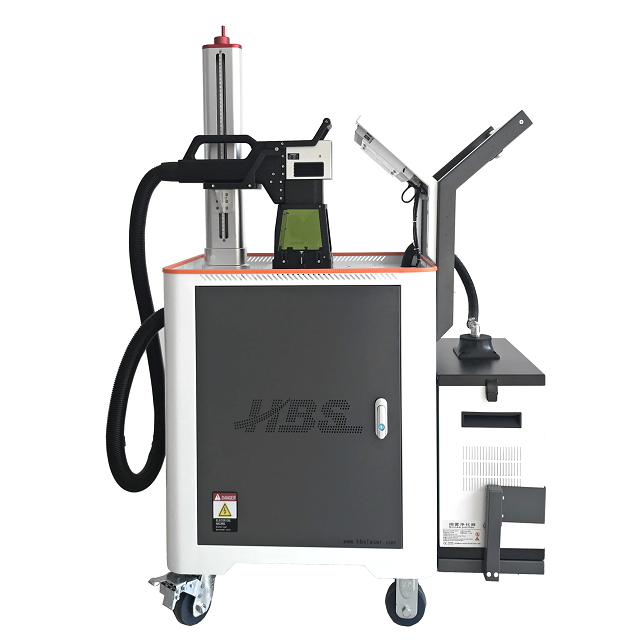
Understanding how a UV system works helps you appreciate its unique capabilities. The technology relies on complex optical physics, but the operational result is remarkably straightforward.
Most industrial lasers start as infrared light. A standard fiber laser generates a 1064nm beam. A UV laser uses a process called Third Harmonic Generation (THG) to alter this light. The initial 1064nm beam passes through a specialized non-linear crystal. This crystal converts the light into a 532nm green beam. Next, the beam passes through a second crystal. This final stage shifts the wavelength down to exactly 355nm. You now have highly energetic ultraviolet light.
Traditional lasers rely on thermal processing. They bombard a surface until it heats up. The material then melts, vaporizes, or burns to create a visible mark. UV lasers operate entirely differently. Because ultraviolet photons carry intense energy, they directly break the molecular bonds of the target material. We call this photolytic degradation. The laser alters the chemical structure at the surface rather than burning it away.
Engineers often refer to UV processing as "cold marking." It does not mean the laser is literally freezing. Instead, it means the surrounding material absorbs almost zero heat. The Heat-Affected Zone (HAZ) remains remarkably small—typically ≤5μm. You eliminate material warping entirely. You also stop scorching and prevent soot generation. This makes the technology indispensable for fragile or thermally sensitive substrates.
Wavelength dictates focus. Because 355nm is a very short wavelength, a UV laser achieves a remarkably tiny spot size. The beam focuses much tighter than a standard fiber laser. This tiny spot diameter enables flawless 2D micro-codes. You can execute ultra-fine serialization on microscopic electronic components without bleeding edges.
When selecting a new Laser Marking Machine, teams usually debate between three primary technologies. Each option serves a distinct industrial purpose.
Technology | Wavelength | Primary Mechanism | Best Suited For | Major Limitation |
|---|---|---|---|---|
UV Laser | 355 nm | Photolytic (Cold) | Glass, plastics, medical | Slower on thick metals |
Fiber Laser | 1064 nm | Thermal (Hot) | Deep metal engraving | Melts thin plastics |
CO2 Laser | 10600 nm | Thermal (Hot) | Wood, paper, organics | Poor contrast on glass |
CIJ (Inkjet) | N/A | Chemical Adhesion | Porous packaging | High consumable costs |
Fiber lasers excel at raw power. They offer higher absolute speeds for deep metal engraving. If you need to carve deep serial numbers into steel engine blocks, choose fiber. However, fiber lasers transfer immense heat. UV lasers hold a distinct advantage when processing thin metals. They prevent heat warping completely. Furthermore, plastics absorb 355nm light much better than 1064nm light. Therefore, a low-power UV laser often marks specific polymers much faster than a high-power fiber laser.
CO2 lasers dominate the packaging and organics sector. They remain highly economical for marking wood, thick cardboard, and leather. But CO2 lasers struggle with fine plastics. They tend to melt or foam synthetic surfaces. UV lasers provide superior contrast on delicate plastics and glass. They create crisp, readable marks without inducing any thermal foaming.
Many facilities are actively replacing CIJ printers with UV lasers. The driving factors involve compliance and ecology. Continuous inkjet systems rely on harmful chemical solvents. They emit Volatile Organic Compounds (VOCs). Inks require curing times and frequent surface pre-treatment. A UV laser eliminates all these headaches. It offers a permanent, tamper-proof mark while creating a cleaner, safer production floor.
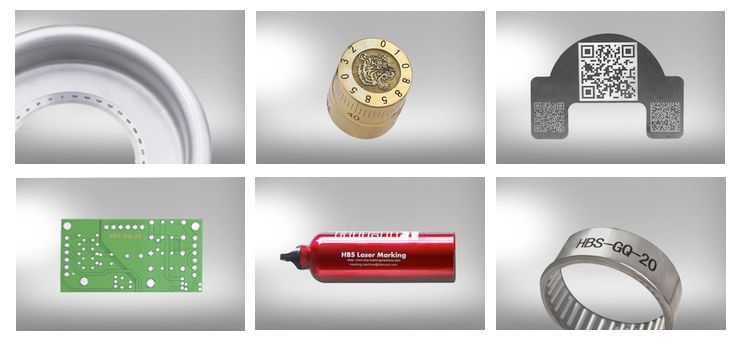
The true value of a UV laser shines when you look at its material versatility. It handles substrates that frustrate conventional machines.
Glass & Ceramics (Displays & Vials): Marking glass normally risks micro-fractures. A thermal shock can shatter the entire piece. UV lasers prevent these micro-fractures entirely. They represent a crucial tool for manufacturing smartphone displays, laboratory equipment, and fragile cosmetic packaging.
Medical Devices & UDI Compliance: The FDA requires Unique Device Identification (UDI) on surgical tools. These marks must survive repeated autoclave sterilization. A thermal laser creates deep crevices where dangerous bacteria can harbor. A UV laser creates a damage-free, high-contrast surface mark. It keeps the medical device smooth, sterile, and fully compliant.
Polymers & Electronics (PE, PC, ABS, IC Chips): Plastics react uniquely to ultraviolet light. The UV photons trigger a chemical color change at the material surface. This delivers exceptionally clean, high-contrast marking on both light and dark plastics. It achieves this without causing any structural degradation to delicate electronic housings or IC chips.
Packaging Integration: Modern packaging uses very thin foils, flexible films, and coated cartons. A CO2 or fiber laser would quickly burn straight through these substrates. UV lasers alter the top layer precisely. They prove ideal for tracking codes on thin food and pharmaceutical packaging.
You cannot buy a UV laser off the shelf without checking its specifications. Matching the machine to your production environment guarantees long-term success.
Power does not always equal better performance. You must size the laser to your specific material.
3W Systems: These represent the precision workhorses. We recommend them for micro-electronics and delicate IC chips. They suit any environment demanding the lowest possible thermal impact.
5W Systems: This serves as the versatile industry standard. A 5W unit perfectly balances speed and precision. It handles glass and standard plastic packaging effortlessly.
10W to 15W Systems: High-speed automated production lines require these units. You also need 10W+ systems for deep marking on highly resistant films.
A UV laser generates internal heat as it converts light through its THG crystals. You must manage this heat to maintain beam stability.
Air-Cooled Systems: Air cooling is perfectly sufficient for 3W to 5W lasers. If you run low-volume or intermittent shifts, air cooling saves money. It also offers a much smaller factory footprint.
Water-Cooled (Chillers): You must use water cooling for 10W+ machines. It is also mandatory for any 24/7 continuous industrial operation. Water chillers strictly regulate temperature. This protects the delicate internal optics and maintains absolute beam stability over a long shift.
Hardware is only half the equation. Look for systems featuring centralized controller platforms. Your IT team needs easy ERP/MES integration to handle dynamic serialization. Furthermore, investigate built-in vision and camera systems. Automated alignment ensures the laser hits the exact target every time, even if a part shifts slightly on the conveyor belt.
Procurement teams must look past the initial sticker shock. You need to calculate the true lifecycle cost of the equipment.
We must acknowledge reality. A UV laser typically carries a significantly higher initial capital cost (CapEx) than a basic CO2 or low-end fiber laser. The non-linear crystals inside the UV source are expensive to manufacture. However, your operating expenses (OpEx) drop dramatically the moment you install the machine.
The ROI timeline usually impresses financial teams. Several major factors drive this rapid payback.
Zero Consumables: You completely eliminate expensive inks, harsh solvents, and replacement printheads.
Energy Efficiency: A UV system offers up to 50% energy savings compared to traditional mechanical engraving methods or older industrial lasers.
Facility Optimization: UV machines require reduced floor space. You can expect up to a 30% smaller footprint. Streamlined, single-platform control reduces operator training time.
No machine runs forever without care. UV laser diodes and internal crystals have a finite lifespan. You can generally expect 20,000 hours of operation before requiring refurbishment. We highly recommend implementing strict environmental controls. You must protect precision THG crystals from heavy factory dust and excessive machine vibration. Proper care easily doubles the practical lifespan of your investment.
Modern manufacturing leaves no room for damaged substrates or illegible serial codes. Upgrading your traceability hardware is a strategic necessity.
The Final Verdict: UV lasers are certainly not the solution for heavy metal cutting or deep structural engraving. However, they stand as the undisputed choice for high-value, heat-sensitive, and strict-compliance manufacturing. If you process fragile glass, thin plastics, or sterile medical devices, no other technology matches its pristine, cold-marking capability.
Next Steps for Buyers:
Identify the three most challenging materials on your current production line.
Contact vendors to request a free material sample test (Proof of Concept).
Verify the contrast quality and check the actual cycle times under a microscope.
Draft your formal RFQ only after you physically validate the sample results.
A: No. UV lasers are designed specifically for precise surface marking and micro-machining. They lack the thermal energy needed for thick material separation. Cutting metal requires a high-power Fiber laser (usually 50W+), and properly cutting thick acrylic requires a CO2 laser.
A: Yes. UV lasers excel at creating highly legible, high-contrast marks on both light and dark plastics. They often turn dark plastics white. They achieve this through photochemical alteration at the molecular level, rather than burning the surface.
A: Industrial-grade UV lasers generally last around 20,000 operational hours before the internal non-linear crystals or diodes require refurbishment. However, this lifespan depends heavily on maintaining a clean operating environment and ensuring proper cooling protocols.
A: Yes, they fit physically and structurally into similar automated setups. However, you must re-test your cycle times. While a UV laser marks plastics significantly faster than a fiber laser, it will mark solid metals much slower.


