- All
- Product Name
- Product Keyword
- Product Model
- Product Summary
- Product Description
- Multi Field Search


Views: 141 Author: Site Editor Publish Time: 2026-05-01 Origin: Site


Selecting the wrong laser system for sensitive materials carries massive stakes. A poor procurement decision quickly leads to irreversible thermal damage, skyrocketing scrap rates, and severely compromised product traceability. You cannot afford to guess when outfitting a production line.
Ultraviolet (UV) technology operates at a highly specialized 355nm wavelength. This unique property positions it perfectly for true "cold marking" applications. Traditional infrared (IR) or CO2 options rely heavily on intense heat generation to alter material surfaces. If you expose delicate substrates to these thermal methods, they will warp, crack, or burn. UV lasers bypass this issue by breaking chemical bonds directly without excessive heat.
This article provides engineers and procurement teams with a strict, compliance-aware evaluation framework. You will learn exactly how to assess hardware reliability, total cost of ownership (TCO), and critical application limits. Following this guide ensures you confidently shortlist a UV Laser Marking Machine capable of meeting stringent industrial demands.
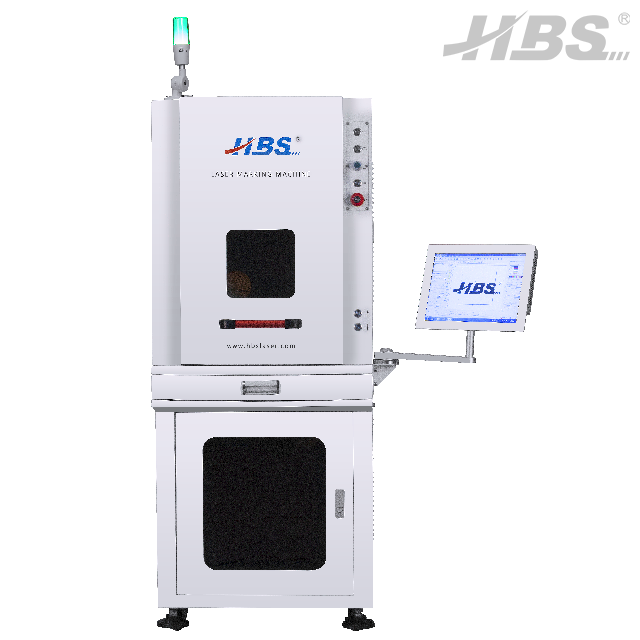
Wavelength dictates application: UV lasers (355nm) enable true cold marking, preventing micro-cracks in glass/ceramics and melt-zones in medical-grade plastics.
Cooling mechanisms are make-or-break: For 24/7 industrial scaling, water-cooled systems (±0.3°C variance) drastically outperform air-cooled systems in preventing power drift and focal shift.
Precision over raw power: High wattage isn't always better; optimal selection balances power (typically 3W–10W) against the need for ultra-fine spot sizes (~20 µm).
TCO goes beyond purchase price: True ROI calculations must include Mean Time Between Failures (MTBF), lack of consumables, and revenue protected by high-contrast, tamper-proof compliance marking.
Engineers often face rigid manufacturing thresholds demanding specific processing tools. You must choose UV technology over standard Fiber or CO2 lasers when thermal sensitivity and extreme contrast requirements intersect. Traditional fiber lasers operate at 1064nm. They generate intense localized heat. If you use thermal lasers on delicate components, you risk instant material degradation. A Laser Marking Machine equipped with a 355nm UV source solves this. It utilizes high photon energy to break molecular bonds. This photochemical reaction leaves the surrounding material virtually untouched by heat.
Matching the machine to your material substrate remains your most critical first step. Different materials react wildly differently to specific wavelengths. You must understand these interactions to prevent costly manufacturing errors.
Glass & Ceramics: UV processing produces a beautiful, high-contrast frosted effect on these materials. Thermal lasers often cause severe structural micro-cracking in glass. UV prevents this fracturing, ensuring the underlying integrity remains perfectly intact.
Sensitive Polymers/Plastics: You must prevent carbonization or melting on synthetic materials. This proves absolutely crucial for medical devices. High-heat processes destroy biological compatibility. UV lasers alter the pigment at a molecular level, leaving the surface perfectly smooth and sterile.
Specialty Substrates: UV technology excels on notoriously difficult materials. It easily marks natural rubbers, highly reflective metals (like copper or gold), and ultra-thin packaging films without burning through the layers.
You also need to clarify what the equipment will actually accomplish on your factory floor. Distinguish clearly between surface etching and deep engraving. UV systems excel at surface etching. They trigger a highly visible color change via a photochemical reaction. They do not aggressively remove deep layers of material. If you need deep engraving to carve heavy grooves into thick steel blocks, a high-power fiber system serves you better. However, for flawless, high-contrast surface marks, UV remains unmatched.
Best Practice: Always audit your material's thermal tolerance before writing a technical specification. If your substrate warps at low temperatures, UV processing becomes entirely mandatory.
Once you validate your material requirements, you must evaluate the internal hardware specifications. Buyers easily get distracted by flashy software interfaces. Instead, you should focus intensely on spot size, power output limits, and focal flexibility. These parameters directly dictate your production quality.
Instruct your procurement team to demand ultra-fine spot sizes. A high-quality UV system typically achieves spot sizes as small as 20 µm. Standard IR lasers generally output spot sizes between 50 and 100 µm. This microscopic precision allows you to create high-resolution 2D barcodes or UID matrices on incredibly small components. Think of microchips, tiny medical screws, or printed circuit boards. A smaller spot size guarantees sharper edges and superior machine-readability.
Power output strategy also requires careful consideration. High wattage does not automatically mean better results. You must balance the power against your specific application needs. A typical UV system ranges from 3W to 10W.
Power Range | Ideal Application | Production Speed | Risk of Thermal Damage |
|---|---|---|---|
3W - 5W | Hyper-delicate electronics, thin films | Moderate | Extremely Low |
8W - 10W+ | Industrial glass, durable plastics | High | Low to Moderate (requires tuning) |
Lower power limits (3W-5W) protect hyper-delicate electronics. They offer maximum control over the photon interaction. Higher power limits (8W-10W+) significantly increase your production speed. You deploy these higher wattages on less sensitive substrates where throughput dictates your profit margins.
Finally, evaluate the focal and axis capabilities of the shortlisted systems. Modern manufacturing rarely deals with perfectly flat surfaces. Recommend evaluating systems featuring motorized Z-axes or automatic focusing systems. These dynamic focal features prove critical for maintaining tight precision on 3D, curved, or highly irregular components. Without an automated Z-axis, operators waste countless hours manually adjusting focal lengths between batches.
Many buyers completely overlook the cooling system during procurement. This oversight frequently leads to catastrophic production failures. UV laser crystals are exceptionally sensitive to ambient thermal fluctuations. If a system lacks robust temperature control, you will experience severe power drift. The focal point will misalign. Crisp barcodes will turn into blurry smudges over the course of a long shift.
The cooling mechanism serves as the literal lifeblood of the equipment. We divide these mechanisms into two distinct categories: air-cooled and water-cooled systems. You must understand the limitations of each to avoid costly downtime.
Air-cooled systems utilize internal fans to dissipate heat. They typically suffer from a temperature variance of ±3°C. This constant fluctuation impacts the UV crystal's stability. Frame air-cooled systems as suitable only for light-duty operations. They work well for prototyping labs, small bespoke shops, or highly climate-controlled environments. If you run an air-cooled unit hard in a hot factory, the power output will drop noticeably after a few hours.
Water-cooled systems represent the true industrial standard. These units feature built-in, closed-loop liquid chillers. Advanced water cooling maintains an incredibly tight ±0.3°C thermal stability. This precise control ensures absolute consistent quality. They prevent thermal lensing inside the optical pathway. For 24/7 continuous manufacturing scaling, water-cooled systems easily outperform air-cooled alternatives. They guarantee your first marked part looks exactly identical to your ten-thousandth marked part.
Common Mistake: Purchasing an air-cooled UV system for a non-air-conditioned warehouse. The ambient heat overwhelms the internal fans, drastically shortening the laser diode's lifespan.
Evaluating the total cost of ownership goes far beyond checking the upfront capital expenditure. A cheaper machine often hides massive long-term costs. You must guide your buyers to analyze direct cost drivers, production yields, and overarching compliance benefits.
Begin by mapping out the direct cost drivers. Compare the anticipated Mean Time Between Failures (MTBF) of the UV source against alternative marking methods. High-quality UV systems boast impressive MTBF hours, minimizing emergency maintenance. Furthermore, emphasize the complete elimination of physical consumables. Inkjet systems require expensive inks, solvents, and printhead replacements. Chemical etching requires hazardous material disposal. Lasers eliminate these recurring line items entirely.
Next, calculate how cold marking improves production yield and scrap reduction. Material waste destroys profitability. Consider the impact of ruining high-value aerospace components or expensive titanium medical implants during the final serialization stage. Cold processing directly improves ROI by minimizing thermal damage. A lower scrap rate immediately accelerates your break-even point on the capital equipment purchase.
We must also frame this investment as a powerful compliance and revenue safeguard. Modern industries face intense regulatory scrutiny. Deep, clear, and permanent marking prevents malicious tampering. This proves vital for firearms tracking and aerospace part authentication. Furthermore, it ensures strict regulatory compliance for FDA/UDI medical traceability. Reliable compliance directly protects your organization against devastating recall liabilities and legal penalties.
Follow these steps to structure your internal ROI calculation:
Calculate your current monthly spend on inks, solvents, and chemical consumables.
Estimate the financial value of parts scrapped monthly due to poor-quality marks.
Determine the labor cost spent manually adjusting outdated, unreliable marking equipment.
Factor in potential legal or compliance fines linked to unreadable serial numbers.
Hardware excellence means very little if the machine cannot communicate with your factory floor. Software architecture, integration flexibility, and safety readiness form the final pillars of your equipment evaluation.
Automation compatibility remains non-negotiable for modern production. You must detail the necessity of checking "Mark-on-the-fly" capabilities. This feature synchronizes the laser pulses with the speed of a moving conveyor belt. It allows seamless integration into existing automated assembly lines. Without mark-on-the-fly functionality, you must stop the line completely for every single part, destroying your throughput metrics.
Evaluate the native software architecture critically. It must handle dynamic data seamlessly. The software needs the ability to pull serial numbers, real-time timestamps, and batch codes directly from your central ERP system. It should natively accept standard vector and raster file formats (such as DXF, AI, BMP, and PLT). Avoid proprietary software ecosystems that trap you into paying endless licensing fees just to import a simple logo.
Safety standards require strict verification. UV radiation presents specific occupational hazards. Remind buyers to verify Class 1 safety enclosure options. These enclosures block stray radiation, protecting operators perfectly. Additionally, verify fume extraction compatibility. Even minimal UV ablation produces microscopic particulates and gaseous byproducts. Proper exhaust mechanisms keep the optics clean and ensure a safe breathing environment for your workforce. Always check for proper interlocking mechanisms that instantly shut down the beam if an operator opens the enclosure door.
You now possess the technical framework needed to evaluate these complex systems. Moving from theoretical evaluation to a final purchase order requires strict discipline. Do not rely solely on glossy brochures or vendor promises. Force the vendor to prove their machine's capability on your actual products.
Use the following shortlisting logic to finalize your purchase securely:
Step 1 - Material Proofing: Insist on sending actual production samples directly to the vendor's application lab. Demand they perform tests mimicking your exact factory conditions. Evaluate the returned samples under magnification to test marking speed, contrast clarity, and structural integrity.
Step 2 - Cycle Time Verification: Ensure the quoted marking speed matches your actual factory floor throughput requirements. A beautiful mark means nothing if it takes 45 seconds per part and your line runs at 10 seconds per part. Get the cycle times guaranteed in writing.
Step 3 - Support & SLA Validation: Evaluate the vendor's local maintenance presence carefully. Review the warranty terms specifically covering the UV diode and optical crystals. Confirm their guaranteed availability of replacement parts. A robust Service Level Agreement (SLA) mitigates disastrous downtime when an unexpected failure occurs.
Choosing the correct equipment comes down to balancing ultra-fine precision with robust thermal management. You must prioritize stable cooling systems and seamless workflow integration to ensure long-term manufacturing success. A well-selected machine eliminates thermal damage, slashes consumable costs, and secures your product traceability.
We encourage procurement teams to prioritize absolute vendor transparency. Demand extensive pre-purchase material testing before signing any contracts. Ask for clear TCO breakdowns covering energy usage, preventative maintenance, and MTBF metrics. By following this strict evaluation framework, you secure an asset that protects your revenue and elevates your production quality for years to come.
A: While technically possible with multiple slow passes, UV technology is not optimized for deep metal removal. It is specifically engineered for surface-level cold marking and generating high contrast. If your primary application requires deep metal engraving, traditional fiber lasers are much better suited for that task.
A: High-quality industrial UV sources typically offer a Mean Time Between Failures (MTBF) of 20,000 to 30,000 hours. However, this lifespan is heavily influenced by the operating environment and the cooling mechanism. Robust water-cooled systems significantly extend diode longevity compared to basic air-cooled setups.
A: No. UV processing is a non-contact, residue-free technology. It alters the material via a photochemical reaction rather than burning it. This eliminates the need for post-mark cleaning or chemical washing, making it a major advantage for sterile medical devices and food-packaging applications.


