- All
- Product Name
- Product Keyword
- Product Model
- Product Summary
- Product Description
- Multi Field Search


Views: 158 Author: Site Editor Publish Time: 2026-04-27 Origin: Site


Upgrading industrial marking capabilities is no longer just about speed; it is about risk mitigation, permanent traceability, and avoiding recurring consumable costs. Outdated systems expose production lines to unexpected delays and hidden expenses. As manufacturing transitions toward automated, high-throughput environments, choosing the right Laser Marking Machine dictates long-term operational efficiency. Faulty marks lead to failed quality control checks. Endless ink supplies quietly drain maintenance budgets. Factory floors demand robust systems capable of handling rigorous production runs without fail. This guide unpacks the technical, financial, and compliance-driven reasons why fiber lasers dominate metal and high-density plastic applications, providing a clear framework for your procurement decision. We examine core performance metrics and compare alternative technologies. You will learn exactly how to align your next equipment upgrade with strict industry standards.
Zero Consumables & Low Maintenance: Fiber lasers eliminate inks, acids, and alignment downtime, drastically lowering Total Cost of Ownership (TCO) despite a higher initial CAPEX.
Industrial Resilience: Enclosed optical paths and air-cooled designs provide immunity to assembly line vibrations, dust, and temperature fluctuations.
Strict Compliance Ready: Delivers permanent, high-contrast marks that withstand harsh post-processing (e.g., shot blasting) to meet FDA UDI and IPC-1782 traceability standards.
Clear Material Boundaries: While exceptional for metals and rigid plastics, applications involving glass, wood, or highly sensitive polymers may require alternative technologies like CO2 or a UV Laser Marking Machine.
Manufacturers constantly battle production bottlenecks. Traditional marking methods often cause these delays. Inkjet printers clog easily. Dot peen machines suffer mechanical wear. Chemical etching introduces toxic hazards. These legacy methods introduce hidden costs. They rely on expensive consumables. They also produce unreadable marks. Bad marks fail automated quality control checks.
Modern production lines demand much more. They require specific success criteria for upgrading.
Marks must be permanent and indestructible.
Codes must be machine-readable, accommodating high-density 2D and QR formats.
The process must be environmentally safe to ensure ESG compliance.
Application cannot slow down throughput.
Speeds must keep pace with modern automation. Some lines process items at speeds reaching up to 7,000 mm/s. Continuous canning operations often hit 900 m/min. Legacy printers cannot sustain this pace without sacrificing clarity.
The fiber laser solves these problems efficiently. It utilizes a rare-earth doped fiber. Manufacturers typically use Ytterbium for this doping process. The system generates a highly focused light beam. It alters the surface through localized heating. The beam causes precise ablation or carbon migration. This happens without compromising the structural integrity of the part. You get a perfect mark every single time.
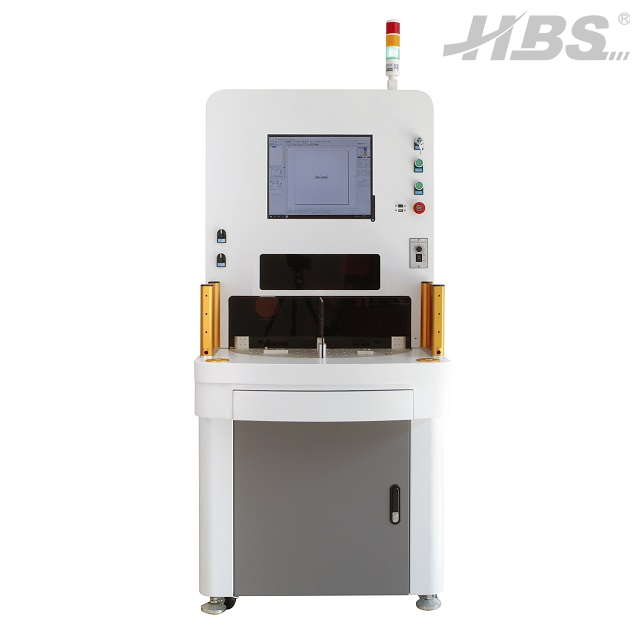
Industrial environments are harsh. Equipment must withstand constant abuse. Fiber lasers offer a massive technical edge here.
Let us look at vibration and misalignment immunity. Traditional solid-state (Nd:YAG) lasers rely on sensitive mirrors. They need complex optical alignments. A slight bump ruins their focus. Fiber lasers operate differently. They generate light within a flexible optical fiber. This creates an enclosed optical path. They become virtually impervious to factory floor bumps. Vibrations from heavy machinery do not affect them.
They also boast an extended lifespan. Industrial fiber laser diodes are incredibly durable. Consider these reliability metrics:
They routinely offer up to 100,000 hours of operational life.
They easily support continuous 24/7 manufacturing schedules.
They run for over a decade before experiencing measurable power degradation.
Thermal management is another major advantage. They feature near 100% input-to-output electro-optical conversion efficiency. The system wastes very little heat. You do not need bulky water chillers. You can rely on compact, air-cooled designs. They integrate seamlessly into existing automated cells. This saves valuable floor space.
You must choose the right tool for your material. Fiber lasers do not mark everything perfectly. You need to understand when to use alternative technologies.
Here is a comparison chart detailing the primary laser categories:
Laser Type | Wavelength | Ideal Materials | Primary Application |
|---|---|---|---|
Fiber Laser | 1064 nm | Metals, hard plastics | Deep engraving, annealing |
CO2 Laser | 10,600 nm | Wood, acrylic, glass | Organic material processing |
UV Laser | 355 nm | Sensitive polymers, glass | Cold marking, medical parts |
Bulk / Diode | Various | High-reflective metals | High-pulse-energy tasks |
Fiber lasers operate at 1064 nm. They are the undisputed choice for metals. They mark steel, aluminum, and titanium effortlessly. They also handle hard plastics beautifully. They provide deep engraving and high-contrast annealing.
CO2 lasers operate at 10,600 nm. They are the necessary alternative for organic materials. You should choose CO2 when processing wood or acrylic. A fiber laser beam simply passes through transparent glass. It might also burn paper unpredictably.
For delicate tasks, you need a UV Laser Marking Machine. Operating at 355 nm, it is the "cold marking" specialist. Highly sensitive materials require this technology. Thin films and medical-grade plastics cannot handle heat. The thermal footprint of a fiber laser causes melting. It might induce micro-cracking or deformation. UV lasers prevent these issues entirely.
Direct diode or bulk lasers retain niche advantages. They excel in specific ultra-short, high-pulse-energy scenarios. However, fiber lasers offer vastly superior beam quality. They also provide continuous stability for most industrial needs.
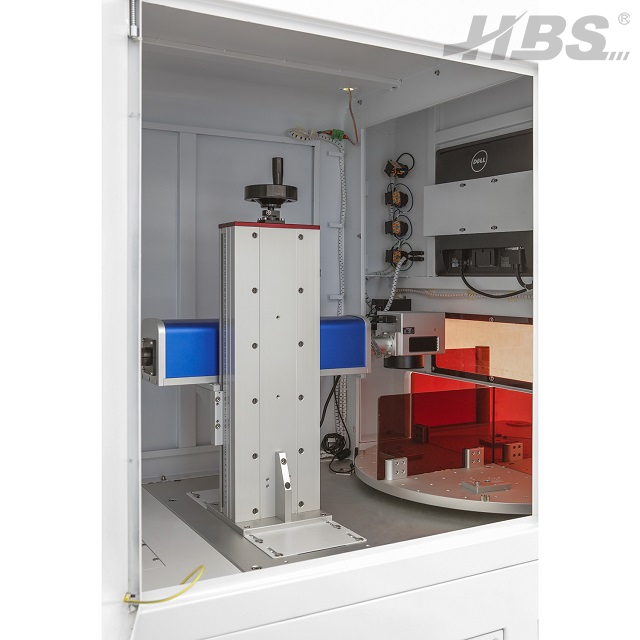
Procurement involves more than the sticker price. You must evaluate the CAPEX versus OPEX trade-off. The initial procurement cost of a fiber laser is high. It costs more upfront than dot peen systems. It is also pricier than standard inkjet printers.
However, ROI is rapidly achieved. You eliminate all consumable costs. Stop purchasing expensive proprietary inks. Eliminate harsh chemical solvents. Stop replacing broken drill bits. Discard specialized cleaning chemicals. Your operating expenses drop immediately.
Energy and ESG benefits also drive ROI. Exceptionally low power consumption reduces utility costs. This supports corporate carbon footprint reduction goals. The process produces zero VOC emissions. You eliminate toxic waste disposal fees entirely.
Consider predictive maintenance versus reactive downtime. Modern systems utilize advanced thermopile power monitors. These sensors detect gradual power drops instantly. They trigger alerts long before an unplanned stoppage occurs. Routine maintenance is minimal. Operators simply perform basic lens cleaning. This keeps production moving smoothly.
Traceability regulations are becoming stricter globally. A highly accurate tracking system helps you stay compliant.
Medical device traceability requires FDA UDI compliance. Manufacturers must mark surgical tools and implants. They use high-density 2D matrix codes. These codes must survive repeated high-temperature autoclave sterilization. They cannot fade over time. Furthermore, the marks cannot harbor dangerous bacteria. Fiber lasers create smooth, sterile marks effortlessly.
Electronics manufacturing follows IPC-1782 standards. PCB tracking demands micron-level precision. You must mark semiconductors without causing damage. The process cannot induce mechanical stress. It cannot expose microscopic components to acid damage. Fiber lasers provide this necessary gentle precision.
Industrial durability demands extreme resilience. Parts often undergo aggressive post-processing. Marks must survive industrial shot blasting. They must withstand e-coating and severe heat treating. Deep engraving capabilities ensure tracking codes remain readable. They maintain their integrity through IP-64 level environmental exposure.
Adopting this technology requires careful planning. You must navigate a few implementation realities before deploying your new equipment.
First, expect a setup learning curve. Physical maintenance is undeniably minimal. However, operators face initial software challenges. They must learn focal lengths and frequency adjustments. They need to master CAD and software integration. Proper training is absolutely essential here. A common mistake is skipping formal operator training. This leads to poor initial mark quality.
Second, acknowledge clear material exclusions. Transparent honesty regarding limitations saves money. Fiber lasers are not a universal tool. They will fail on uncoated wood. They cannot mark transparent glass. They are useless on certain fabrics. Do not force the wrong application.
Finally, evaluate vendor support carefully. Shortlist partners based on integration engineering capabilities. Can they tie the system into your ERP or PLC? Ask about their operator training programs. Ensure they offer responsive, localized technical support. You will need their help for initial software configurations.
Choosing a fiber laser system transforms your production line. It guarantees operational uptime and strict regulatory compliance. You eliminate consumables while securing long-term efficiency.
Take these actionable next steps to secure your investment:
Audit your current annual consumable spend to understand your potential baseline savings.
Map your primary materials, separating metals and hard plastics from organics or sensitive polymers.
Request sample markings from shortlisted vendors to verify contrast under your exact factory conditions.
Test these marked samples against your harshest post-processing environments.
A: Industrial-grade fiber lasers typically feature diode lifespans of up to 100,000 hours. This equates to over a decade of continuous 24/7 operation. They achieve this longevity while requiring minimal physical maintenance.
A: Yes, it marks many high-density industrial plastics effectively via carbonization or foaming. It works well on materials like ABS and PEEK. However, for highly sensitive or thin plastics, a UV system is recommended to prevent thermal damage.
A: No. Due to their high electrical-to-optical efficiency, most fiber laser markers are entirely air-cooled. This applies to machines up to 100W. Air cooling reduces maintenance, eliminates leak risks, and minimizes the overall machine footprint.
A: Scanning speeds can reach up to 7,000 mm/s depending on the material and depth required. This makes them ideal for high-speed, continuous-motion assembly lines and rapid canning operations. They vastly outperform standard dot peen or inkjet speeds.


