- All
- Product Name
- Product Keyword
- Product Model
- Product Summary
- Product Description
- Multi Field Search


Views: 122 Author: Site Editor Publish Time: 2026-09-16 Origin: Site


Investing in industrial traceability technology profoundly impacts your production floor. Modern manufacturing demands precise part identification to ensure continuous compliance and streamline cycle times. A dedicated marking system provides permanent serialization, but making the right equipment choice requires deep technical evaluation.
Unfortunately, standard specification sheets rarely reveal the entire picture. Selecting an inappropriate wavelength or wattage frequently causes production bottlenecks. It can create poor visual contrast. It might even cause irreversible thermal damage to sensitive substrates. Many facilities struggle because they misalign their hardware with their actual material requirements.
You need a clear, vendor-neutral methodology to evaluate these advanced systems. We will explore how to shortlist equipment based on exact material properties, production volume demands, and factory integration capabilities. This framework will help you implement a reliable, high-performance solution tailored to your operational realities.
Power does not equal performance: Higher wattage speeds up deep metal engraving but can melt or warp sensitive plastics; wavelength and pulse duration are equally critical.
Material dictates the technology: While fiber is the undisputed standard for a metal laser marking machine, plastic applications often require specialized MOPA fiber setups or testing to ensure high-contrast marks.
Integration drives ROI: True cost is determined by automation readiness (I/O, PLC communication), safety enclosures (Class 1 vs. Class 4), and software usability, not just the base price of the laser source.
Proof of concept is mandatory: Never purchase without vendor-provided sample marking on your exact production materials.
You must establish clear operational parameters before reviewing hardware specifications. Every successful implementation begins with a thorough functional requirements document. This prevents scope creep and ensures the equipment aligns with your specific factory environment.
Begin by mapping out your exact workflow needs using these three distinct evaluation phases:
Determine the Primary Objective: Identify why you need permanent marks. Are you tracking work-in-progress (WIP) materials internally? Perhaps you need robust anti-counterfeiting measures. Many industries mandate regulatory compliance, such as Unique Device Identification (UDI) for medical instruments or Vehicle Identification Numbers (VIN) for automotive chassis. Each objective dictates different depth and contrast requirements.
Analyze Cycle Time Constraints: You must calculate the maximum allowable mark time per part. High-speed continuous production lines require "on-the-fly" processing. This approach uses specialized galvanometer scanners and advanced software to track moving targets. Conversely, batch-loaded static workstations allow for longer cycle times and prioritize operator ergonomics over sheer speed.
Assess Environmental Factors: Evaluate your exact installation environment. Heavy industrial facilities often present harsh conditions. Airborne particulates and ambient heat can degrade delicate optics. You might require IP-rated protective enclosures, active closed-loop cooling systems, and specialized fume extraction units to maintain consistent operation.
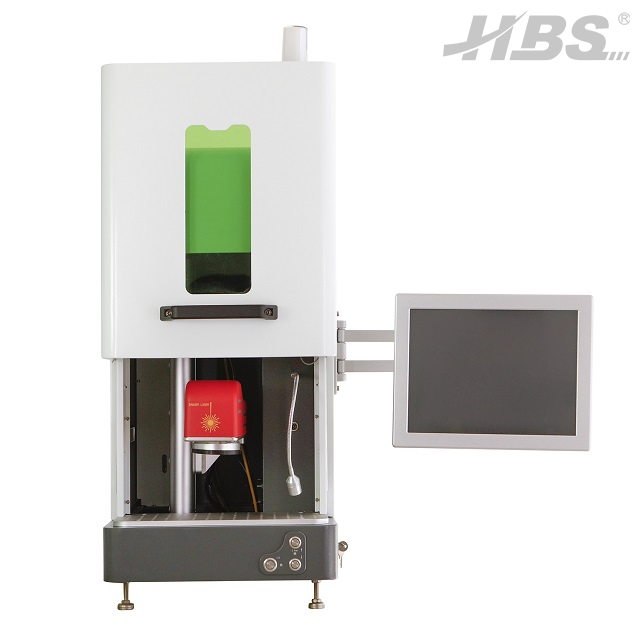
Material science sits at the heart of any reliable traceability strategy. You cannot force a single optical configuration to perform flawlessly across every substrate. Understanding how laser light interacts with different molecular structures will guide your purchasing decision.
The standard 1064nm wavelength represents the absolute industry standard for processing metallic substrates. Metals like stainless steel, anodized aluminum, brass, and titanium absorb this specific wavelength exceptionally well. This high absorption rate translates into efficient energy transfer and rapid processing speeds. When sourcing a reliable metal laser marking machine, you must understand the three primary surface interactions.
First, surface oxidation, commonly known as annealing, creates dark marks on titanium and stainless steel. It heats the carbon beneath the surface without disrupting the material structure. Medical device manufacturers rely heavily on annealing because it leaves no microscopic crevices for bacteria to hide.
Second, deep engraving physically removes material to create cavities. Automotive and heavy tooling industries use this method to ensure marks survive harsh post-processing treatments like sandblasting. Finally, ablation involves vaporizing a surface coating, such as paint or anodization, to reveal the contrasting bare metal underneath.
Polymers present a significantly higher challenge. The technical reality is straightforward: standard continuous-wave or fixed-pulse fibers frequently burn, melt, or completely fail to produce contrast on certain plastics. Uncontrolled thermal buildup destroys the structural integrity of the polymer.
You can overcome this challenge by deploying a MOPA (Master Oscillator Power Amplifier) architecture. A MOPA-equipped plastic laser marking machine offers highly adjustable pulse widths. You can tune the laser from extremely short nanosecond pulses up to longer durations. Short pulses minimize the heat-affected zone.
This fine control enables two critical plastic reactions. "Foaming" traps microscopic gas bubbles just under the surface, creating a bright white mark on dark plastics. "Carbonization" intentionally burns specific pigment bonds, yielding a dark, high-contrast mark on light-colored plastics.
While MOPA systems handle most polymers, some highly transparent or thermally sensitive plastics remain resistant. In those strict edge cases, you may need to abandon fiber technology entirely and utilize a "cold marking" UV laser instead.
The following reference chart outlines typical material responses to standard technological configurations.
Material Type | Primary Processing Method | Recommended Technology | Thermal Risk Level |
|---|---|---|---|
Stainless Steel | Annealing (Oxidation) | Standard Fiber (1064nm) | Low |
Anodized Aluminum | Ablation (Coating Removal) | Standard Fiber (1064nm) | Low |
Dark ABS/Polycarbonate | Foaming (Light Contrast) | MOPA Fiber | Medium |
Transparent Polymers | Photochemical Degradation | UV Laser (355nm) | High (If using Fiber) |
Engineers often mistakenly equate higher wattage strictly with better performance. You must match the power output directly to your required cycle times and material thermal limits. Selecting the correct fiber laser marking machine requires a balanced approach to wattage.
A 20W to 30W system represents the industry baseline. These units are perfect for high-contrast surface marking and medical-grade annealing. They impart a lower thermal footprint into the substrate, making them ideal for standard plastics and thin metal foils where warping is a concern. They also operate with excellent electrical efficiency.
The 50W systems serve as the versatile middle ground. They suit facilities requiring faster cycle times or moderate engraving depths. If you frequently process harder metals like tool steel or titanium but still need to manage heat input, a 50W source provides excellent flexibility.
Systems rated at 100W and above are highly specialized tools. You should strictly reserve them for deep, aggressive engraving tasks, such as serialization on firearms or heavy industrial castings. They are also mandatory for extreme high-speed extrusion lines where the target material moves rapidly past the lens.
Always perform an efficiency reality check. Do not overbuy wattage. A 100W source is entirely unnecessary if your station takt time comfortably allows a 30W system to finish the job. Excess power often leads to unintentional material melting and poor edge definition on delicate parts.
The core laser module is only one component of a successful installation. How the equipment interacts with your operators and your existing factory network determines long-term viability. You must evaluate the physical and digital integration capabilities.
Evaluate your layout based on these deployment strategies:
Standalone Workstations: These require manual part loading. You should focus heavily on operator ergonomics. Look for programmable Z-axis controls for rapid focal height adjustments. Rotary attachments are essential if you process cylindrical parts like pipes or aerospace bearings.
Inline OEM Integration: This approach embeds the laser directly into an automated cell. You must scrutinize the physical footprint of the scanning head. Measure the umbilical cable length connecting the head to the main controller. Verify native support for industrial communication protocols like PROFINET, EtherNet/IP, or standard TCP/IP.
Software and Vision Capabilities: Modern traceability requires intelligent data handling. Your marking software must dynamically pull serialization strings directly from your ERP or MES system. Advanced setups incorporate integrated vision systems. This "mark-and-read" validation guarantees every barcode is perfectly scannable before the part leaves the station.
Safety and Compliance Standards: Operator safety remains paramount. Class 1 systems feature fully interlocked enclosures, making them inherently safe for open factory floors. Class 4 systems lack enclosures. They require dedicated safety rooms, strict access controls, and mandatory personal protective equipment (PPE).
Industrial machinery must perform reliably across multiple shift rotations. You must evaluate the operational longevity and the ongoing maintenance requirements of the entire system architecture.
Solid-state fiber sources generally feature an impressive Mean Time Between Failures (MTBF) of approximately 100,000 hours. They utilize optical fibers doped with rare-earth elements and robust diode pumps. This design eliminates the mirrors, gas mixtures, and frequent alignment routines required by older technologies. It drastically reduces daily consumable reliance.
However, you must factor in ancillary equipment requirements. High-energy material processing generates localized fumes and dangerous micro-particulates. Mandatory fume extraction systems are not optional accessories; they are vital health and safety requirements. You also need to schedule preventative maintenance for consumable external lenses and maintain the delicate moving mirrors inside the galvo head.
Finally, establish strict vendor vetting criteria. Treat the supplier as an ongoing technical partner. Always demand free material sampling backed by a detailed laboratory report detailing the exact speed, power, frequency, and focal lens utilized. Review their Service Level Agreement (SLA) regarding replacement part availability and diagnostic support. Determine if they provide local, on-site engineering assistance or if they simply drop-ship crates to your loading dock.
Purchasing industrial traceability equipment requires rigorous engineering evaluation. You must align the hardware's capabilities with your precise material properties, production speeds, and network architecture. Standard standard fiber sources excel at processing rugged metals, while MOPA configurations provide the necessary thermal control for sensitive polymers.
Avoid the common mistake of over-specifying wattage. Instead, prioritize automation readiness, reliable software integration, and comprehensive safety enclosures. Treat the acquisition as a long-term operational partnership rather than a basic commodity transaction.
Your immediate next step is to compile a diverse material sample kit representing your toughest applications. Draft a concise functional requirements document detailing your cycle times and data integration needs. Send these materials to two or three shortlisted vendors, and demand a rigorous proof-of-concept demonstration before finalizing any procurement decision.
A: A standard fiber laser uses fixed pulse durations, which can easily overheat sensitive materials. A MOPA (Master Oscillator Power Amplifier) laser allows you to independently adjust both pulse frequency and pulse width. This precise thermal control is essential for creating high-contrast marks on sensitive plastics and producing color marks on stainless steel.
A: While high-wattage markers can technically cut very thin metal foils by running multiple high-power passes, they are not designed for this. Marking lasers utilize scanning mirrors optimized for rapid surface interaction. For continuous, precise metal cutting, you should use a dedicated flatbed cutting system equipped with a fixed cutting head.
A: Yes. Material processing vaporizes substrates, creating hazardous airborne particulates and toxic gases. Fume extractors are mandatory for maintaining health and safety compliance, protecting operator lungs, and preventing debris from settling on and destroying the machine's precision optical lenses.
A: The industry standard lifespan for a high-quality solid-state diode source is approximately 100,000 operational hours. Degradation occurs very slowly over time. Factors that can accelerate diode wear include operating in highly volatile ambient temperatures, inadequate cooling maintenance, and heavy electrical fluctuations in the facility.


